


Bayer, the manufacturer of Roundup, the world’s best-selling weed killer, has faced thousands of lawsuits in the US, for the main ingredient of the product, glyphosate, has been linked to non-Hodgkin lymphoma and other forms of cancer. Now a widely cited research that declared the product safe has been retracted and declared fraudulent. At the same time, the European Commission recently extended Roundup’s marketing authorization by another ten years, validating it until 2033.
In December, the renowned scientific journal Regulatory Toxicology and Pharmacology decided to retract a scientific study published there 25 years earlier, which claimed the weed killer glyphosate (Roundup) posed no threat to human health. The authors of the study, Gary Williams, Robert Kroes, and Ian Munro, had confirmed that there is no evidence that Roundup would cause cancer, endocrine disruption, or toxicity for humans. Published in 2000, the study has been one of the most cited studies in glyphosate research. However, it has now come to light that the study was largely written by Monsanto employees under the guise of independent authorship. The cancer risk and toxicity assessments were based solely on unpublished Monsanto studies, while many other long-term studies were completely ignored. As a result, the authors were not independent, and the study is now considered an example of industry manipulation. This is a striking example of how money can buy “scientific legitimacy,” but at a very high price to the health of the public who use the product.
Cause of cancer
The reality of Monsanto’s (or Bayer’s since 2018) product Roundup is quite the opposite – its effect on human health is severely harmful in its potential to cause forms of cancer. The information is not new, as thousands of claims from people who have suffered harm have already been upheld in US courts. In all of these claims, the plaintiffs allege that they became ill due to the use of Roundup, which was launched onto the market in 1974. The company has had to pay approximately $11 billion (around €9.37 billion) in compensation for the approximately 100,000 claims that have been settled so far. However, around 61,000 cases are still pending, and more lawsuits are being filed, according to the Lawsuit Information Center.
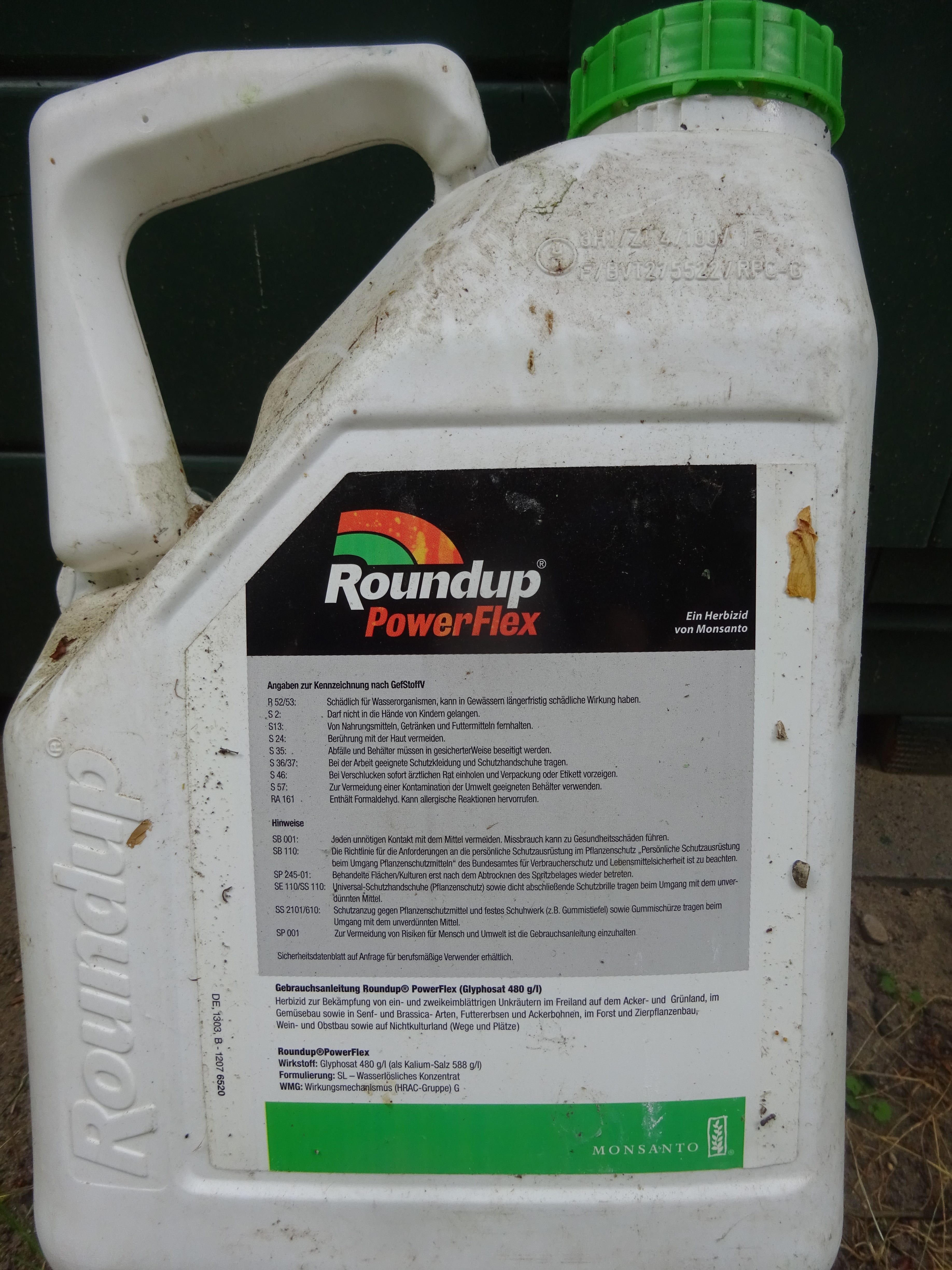
Despite this, Bayer’s website continues to state that the chemical is safe to use when used according to the instructions. The company considers glyphosate to be the most researched herbicide in the world and believes that only one study, the Agricultural Health Study, has found a link between glyphosate and cancer risk.
The European Commission extended the authorization for use
It is also worth noting that as recently as 2023, when the Roundup lawsuits were already in full swing in the US and first significant rulings had long since been made, the European Commission extended the marketing authorization for glyphosate for another 10 years. The Commission based its decision on the assessment of the European Chemicals Agency (ECHA), according to which there is no reason to classify glyphosate as a carcinogenic substance, and the assessment of the European Food Safety Authority (EFSA), according to which no critical issues have been identified in regard to glyphosate.
In the US, however, the Roundup saga began already in the mid-2010s, when scientific studies and reports by the International Agency for Research on Cancer indicated that glyphosate was likely to be carcinogenic to humans and that long-term use could cause cancers such as non-Hodgkin lymphoma. The finding triggered a flood of lawsuits against Monsanto, with plaintiffs claiming that their cancer diagnoses were due to years of using Roundup without warning. The plaintiffs referred to Monsanto’s internal documents, which showed that the company was aware of the dangers of glyphosate, but downplayed their significance, thereby violating its duty to warn.
The first lawsuit, Dewayne Johnson v. Monsanto, reached the San Francisco County Superior Court in 2018. Johnson, a school groundskeeper, claimed that his constant use of Roundup caused his non-Hodgkin lymphoma. Johnson won the case and the court issued him $289 million (approximately €246 million) in damages for Monsanto’s malice and breach of its duty to warn. In subsequent court proceedings, the compensation was reduced to $78 million (approximately €66 million), but the court case set a precedent, after which lawsuits against the company have kept piling.
In most cases, the courts have ruled in favour of the plaintiffs, awarding substantial damages, for example $2.25 billion (approx. €1.92 billion, later reduced to €341 million or $400 million); $2.1 billion (approx. €1.79 billion); $611 million (approx. €521 million); $175 million (approx. €149 million), $332 million (approx. €283 million) and $3.5 million (approx. €3 million). At the same time, the defense, namely Bayer, has had only a few isolated victories, for example in Illinois in 2025 and in Philadelphia in 2024.
The law firms representing the plaintiffs have stated that Monsanto was unique in its decision to ignore evidence that Roundup causes cancer. The company initially supported its hypothesis with unreliable data, and as more evidence emerged, Monsanto decided to ignore it.
Years of extremely costly litigation have now forced the company, now known as Bayer, to finally change its attitude to some extent, and the company seems to have turned its focus to settlement proceedings. Bayer’s crucial issue is probably its future liability, as Roundup users may develop lymphoma even many years after exposure. This means that Bayer could face a steady stream of new Roundup lawsuits over the next 20 years or so.
In addition, US authorities have announced plans to change pesticide regulations this year, making it a decisive year for glyphosate, Roundup, and other agricultural weed killers. The Environmental Protection Agency (EPA), which renews pesticide registrations every 15 years, is also expected to release a new risk assessment of glyphosate on human health this year. However, despite the fact that courts have so far ruled in favour of plaintiffs and the public opinion is leaning toward a ban on glyphosate, there are fears that the EPA will confirm the safety of glyphosate and its limited ecological impact and will only change the labelling requirements. According to the agency, their decisions are based on science, but critics believe they are more likely to be influenced by pressure from manufacturers.
Personaly, I believe this post has heads-up value for those concerned about the (multitude of) carcinogens in our environments, and/or absence of corresponding regulator protections.
Weed Killer; no ?