


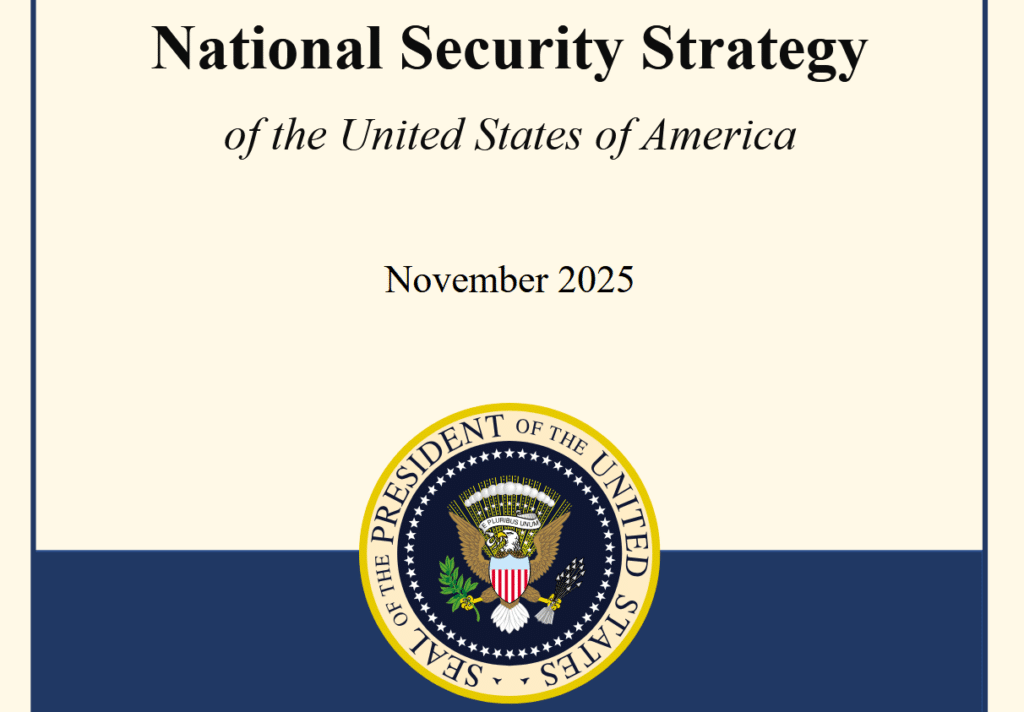
In the United States security strategy, Washington states outright that some of the most significant threats to the political freedom and sovereignty of the European Union (EU) stem from its very own actions. The strategy describes the EU’s migration policy, identity crisis, freedom of speech and censorship, as well as suppression of political opposition, and the decline of national self-confidence as phenomena that have not arisen by chance, but towards which the EU itself has actively contributed.
Sadly, it is to be acknowledged that the diagnosis by the US strategists is correct. The European Union’s political model is no longer a pragmatic platform for economic cooperation to its populace, which it was originally promised to be, but has rather become a system whose sole purpose is to reproduce itself – instead of responding to the will of the citizens of its member states, to shape, direct, and restrict it.
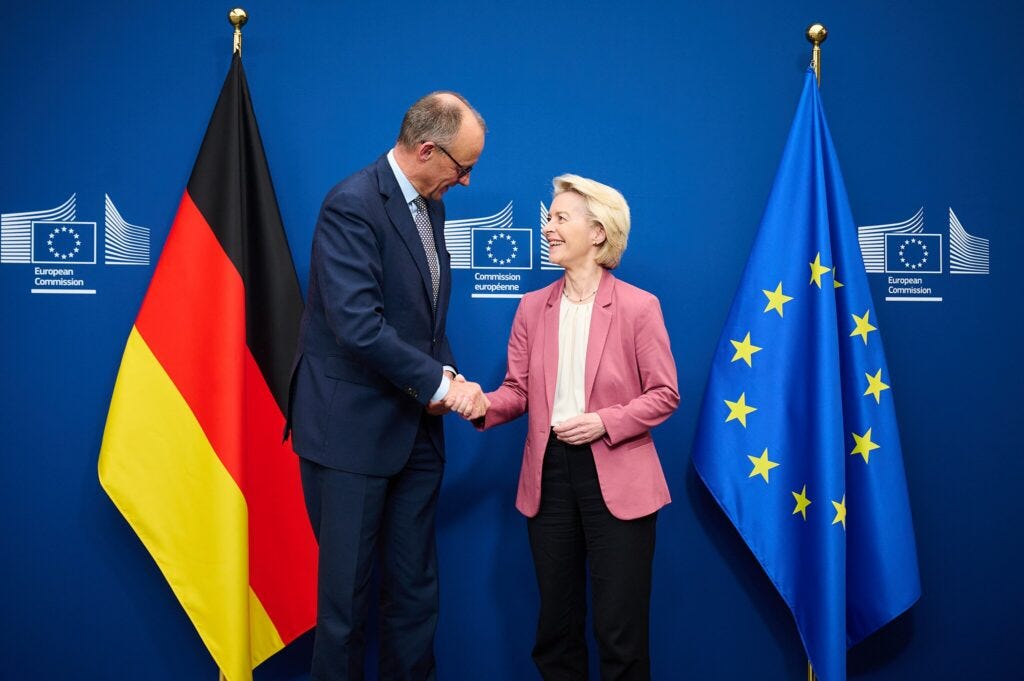
Critics have aptly noted that the political organization of the European Union resembles the post-totalitarian society described by Václav Havel: forms of democracy remain, but its possible outcomes are predetermined and the political life of the society keeps being played out within predetermined boundaries.
Today’s Brussels does not build iron prisons, as did the former Soviet Union, but in some ways, its tools are even more effective. Soft totalitarianism does not kill or terrorize, but makes its alternatives morally reprehensible and technically impossible. Legislation of the Union is created at the European Commission, whose members no European has ever elected. The European Parliament cannot initiate laws, and countries cannot reverse regulations once they have been established. Politics is now no longer the domain of politicians; real power has shifted to a network of commissions, councils, and courts.
The new US security doctrine aptly points out that Europe has begun to use various measures, under the name of “defending democracy”, that actually undermine the very foundations of the democratic system – sovereignty, pluralism, and freedom of speech.
Cordon sanitaire – Brussels’ sacred ritual
The nature of soft totalitarianism is evident not only in the institutional structure of the Union, but also in its political culture. The cordon sanitaire, which supposedly protects “democracy from extremism,” has in fact become a way for Brussels and the national political elites to effectively remove a part of the voters from the political process.
The cordon sanitaire is an informal but very real agreement not to cooperate with certain parties, regardless of their level of support amongst the voters. The “legitimacy” of the political system thus no longer comes from the people, but from normative decisions made in Brussels, which reward only those parties that follow the accepted ideology of the European Union.
Such political hygiene does not protect democracy, but sterilizes it. Political competition is no longer free, but controlled, and the voter’s voice only counts if they vote “correctly.”
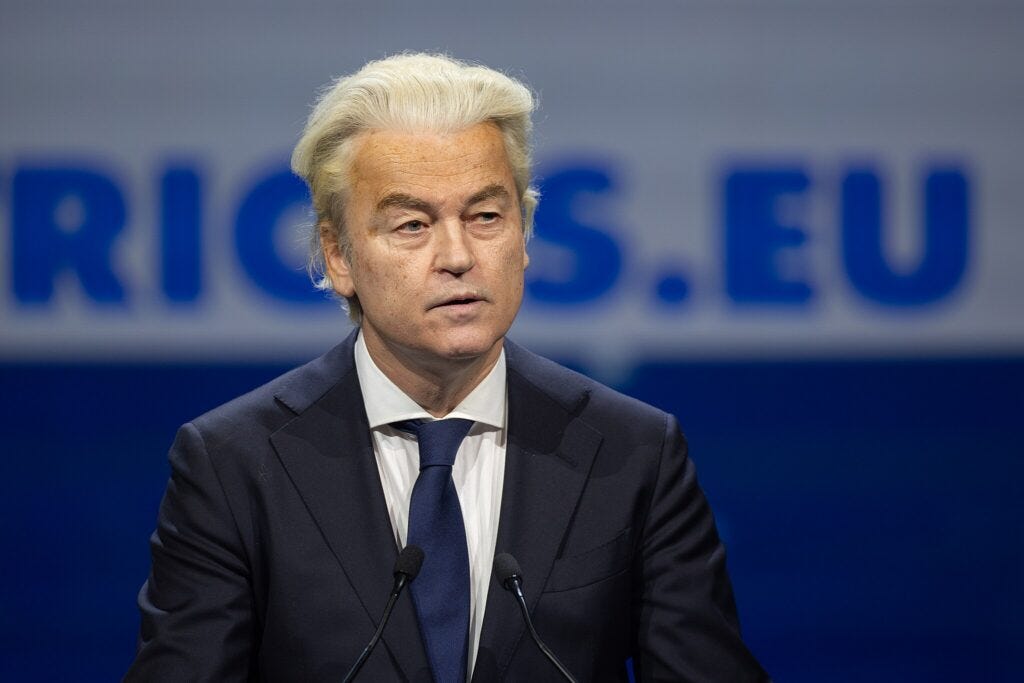
Freedom of speech as a regulated privilege
The Digital Services Act and hate speech regulations have created a system in which fact-checking centres, civil society organizations, and government agencies funded by the European Union essentially act as filters for political censorship. These organizations monitor platforms, compile reports, and shape perceptions of what is “acceptable” and what is “harmful” speech.
Hate speech laws also extend to messages that are not criminal but may be “offensive” or “degrading.” Criticism of immigration, national identity or cultural policy can become punishable, if interpreted accordingly. This gives birth to a society where citizens are silenced and dissent is treated as a pathology rather than a natural part of debate.
Invisible influence, lobbying scandals, and inadequate oversight
A scandal the media has so far remained silent about a transfer of hundreds of millions of euros from the European Commission to non-governmental organizations (NGOs) that have directly been lobbying for the benefit the EU’s Green Deal, or so-called climate neutrality, and done so in both the European Commission and Parliament. Despite not breaking any laws, the practice hardly reflects the transparency the EU claims to represent. Acted out as “civil society”, the taxpayer has essentially funded a lobbying structure whose aim has been to influence the Commission and Parliament members in their decision-making and help shape public opinion in support of the green policy, and to thereby reinforce Brussels’ ideological agenda.
In November, the European Court of Auditors (ECA) published a special report entitled Financial Corrections in Cohesion Policy, the conclusions of which were devastating. The monitoring system for the use of cohesion policy funds was found far too complex and operating badly. Although the European Commission has extensive powers to recover financial corrections, i.e. aid that has been misused or found contrary to the rules, only one (!) official financial correction has been made from 2014 through 2020, and that in a situation where a total of 317 billion euros have been distributed by the institution within that time period. The European Court of Auditors hence found that the current mechanism does not ensure the necessary transparency and reliability expected of the policy and is in need of an urgent reform in order to protect taxpayers’ money.
Several research reports and media publications have also raised the question of whether projects in the Gaza Strip financed by the European Union could have been vulnerable to Hamas influence. Leaked documents indicate that at least in some of the projects, the implementation of those projects and the use of those funds was monitored by individuals who were under Hamas influence. There have been gaps detected also in project reporting and monitoring, and there is a lack of transparent data, which has made it difficult to track cash flows, allowing for situations where resources intended for humanitarian aid could have been used for other purposes. The EU’s control mechanisms for the use of such funds have thus been insufficient.
Europe faces a decision
It is becoming increasingly clear that the current structure of the European Union is no longer sustainable. While the external forms of democracy remain, the substance of democracy is being lost and the system has begun to disintegrate – not because of the populists, as often claimed, but because of people no longer seeing their votes and decisions having an impact. Decisions about freedom of speech, family policy, borders, and culture need to be remade in Rome, Warsaw, Madrid, Budapest and Paris, and not in the anonymous offices of Brussels and Luxembourg.
European countries can and must cooperate on trade, defense and infrastructure, but the cooperation must be based on clear agreements, for which politicians will actually be accountable, and not on a structure that cannot be changed even through elections.
The US security strategy clearly states what many of the ordinary citizens already think – that the EU no longer operates according to the values that enabled Europe to free itself from the past empires and totalitarianism.
If Europe wants to remain a continent where its citizens are the source and not merely the object of its power, it has to abandon the illusion that technocratic control is the solution to all problems. Freedom cannot be a privilege reserved for bureaucrats. If the system excludes political competition, regulates freedom of speech, controls the ideological narrative, and rewards only those loyal to the central dogma of the union, it can no longer be called a democracy. Cordon sanitaire, censorship practices, and the supremacy of bureaucratic power cannot protect the future of Europe – they will only undermine it.
The political system must remain based on freedom, or else there will soon be no freedom at all.

Accurate summation.