


Over the past few days, the following topics attracted our attention:
Guterres: “Fossil fuels must go the way of the dinosaurs”
Houellebecq Faces Charges for Calling Muslims a Threat
Mercedes Freezes German Plant Investment
Guterres: “Fossil fuels must go the way of the dinosaurs”
At the UN COP31 climate conference, UN Secretary-General António Guterres warned of the devastating consequences of climate change for the planet and humanity. He called on the world to continue the fight “to protect our shared future”.
Guterres said the climate crisis is spiralling out of control, with global temperatures rising, intensifying impacts and increasingly precarious energy security. Everyone must work towards phasing out fossil fuels, adapting to the impacts and building resilience. “Fossil fuels must go the way of the dinosaurs,” he said, adding: “We are in the fight for our lives and our children’s future. And we must win.”

Guterres noted that fossil fuel companies have made windfall profits. In the last quarter alone, the nine largest oil companies made $95 billion. “It’s time for governments to tax these windfall profits – and use them to help vulnerable countries recover,” he said, emphasising that those who benefit most from fossil fuels must help cover the damage they have caused.
Guterres urged countries to conclude a Climate Justice Compact centred on a faster, fair transition away from fossil fuels and on protecting people, since “as temperatures rise, adaptation is a matter of survival”. Also adequate, affordable and easily accessible funding and cooperation.
In conclusion, the UN Secretary-General said: “Together, let’s keep telling the truth about the climate crisis. Let’s keep demanding the action that truth requires. And let’s keep fighting for the sustainable future we know is in our hands.”
Against the backdrop of Guterres’s remarks, we recommend watching Freedom Research’s new climate documentary “No Boiling Planet: A Climate of False Alarm”. It critically examines climate claims circulating in the public sphere and poses straightforward questions. With prominent scientists and experts, it presents a different picture: scientists lack a clear understanding or consensus on the causes of climate change, and the frightening ‘end-of-the-world’ scenarios often read about in the media should be treated with scepticism. It also paints a clear picture of the economic problems Europe faces because of climate-related energy policies and explains why they do not work.
Houellebecq Faces Charges for Calling Muslims a Threat
The renowned French author Michel Houellebecq faces charges of complicity in incitement to discrimination, hatred or violence. Proceedings were initiated following an interview given to the magazine Front Populaire in November 2022, in which the author described Islam and Muslims as dangerous, prompting the French Union of Mosques to lodge a complaint, reports Le Parisien.
Many of Houellebecq’s works are socially critical, including critiques of Islam. For example, in the novel Submission an Islamic party gains power in France and quickly imposes new norms: schools must follow the Koran, and women are expected to leave work for the home. In other words, Houellebecq portrayed Islam and Muslims as a threat to native French people.
In an interview with philosopher Michel Onfray in November 2022, Houellebecq stated: “The native French, as we say, do not want Muslims to assimilate, but rather for them to stop stealing from them and attacking them. Or, alternatively, that they leave.” He also discussed the theory of demographic replacement, advanced by Renaud Camus, according to which the white European “native population” is being replaced by a non-European and Muslim one. Houellebecq called this not a theory but a statistical fact. He added that if entire regions fell under Islamic control, resistance could follow: “Attacks and shootings will take place in mosques and Muslim cafés – in short, the opposite of the Bataclan,” referring to the jihadist attacks of 13 November 2015.


His remarks drew sharp criticism, and the Grand Mosque of Paris threatened legal action. Houellebecq later acknowledged that several statements had been vague and replaced some references to Muslims with references to foreign criminals who should be deported. In his book “A Few Days in My Life, October 2022 – March 2023” he described the original remarks as clumsy and attributed them to his own stupidity or naivety. The Grand Mosque of Paris later withdrew from the proceedings. In January 2023, however, the Union of Mosques of France (l’Union des mosquées de France, UMF) lodged a complaint with the Nanterre court against Houellebecq, Onfray and Stéphane Simon, editor-in-chief of Front Populaire.
According to the writer’s lawyers, Thibault de Montbrial and Louis Cailliez, Houellebecq contests the charge. “The statements that gave rise to the charges do not contain even an indirect call to action or incitement, and therefore fall within the scope of freedom of opinion and expression,” they said. They added that the “prophet of doom” does not wish for disaster but the opposite, and that his place is not in court. “Michel Houellebecq can only regret the increasing judicial scrutiny of intellectual debate,” the lawyers stated.
Mercedes-Benz is Suspending All Further Investment in its German Plants
Mercedes-Benz has announced that it is suspending all further investment in its German plants and is also considering closing plants. The German luxury car manufacturer cites difficulties with the works council and the IG Metall trade union, as well as substantial investment in electric cars against modest sales, reports Deutsche Welle.
Michael Schiebe, a member of the Mercedes-Benz board and head of production, announced that the company’s board has decided to suspend all further investment in its German factories, as this is no longer feasible given current costs. Labour costs in Germany are in some cases five times higher than in factories in Eastern Europe, and administrative costs are similarly elevated. The company must therefore assess in detail which factories it is actually possible to keep open in Germany. Although the company says it wants to avoid plant closures at all costs, it must also consider this possibility in more concrete terms.
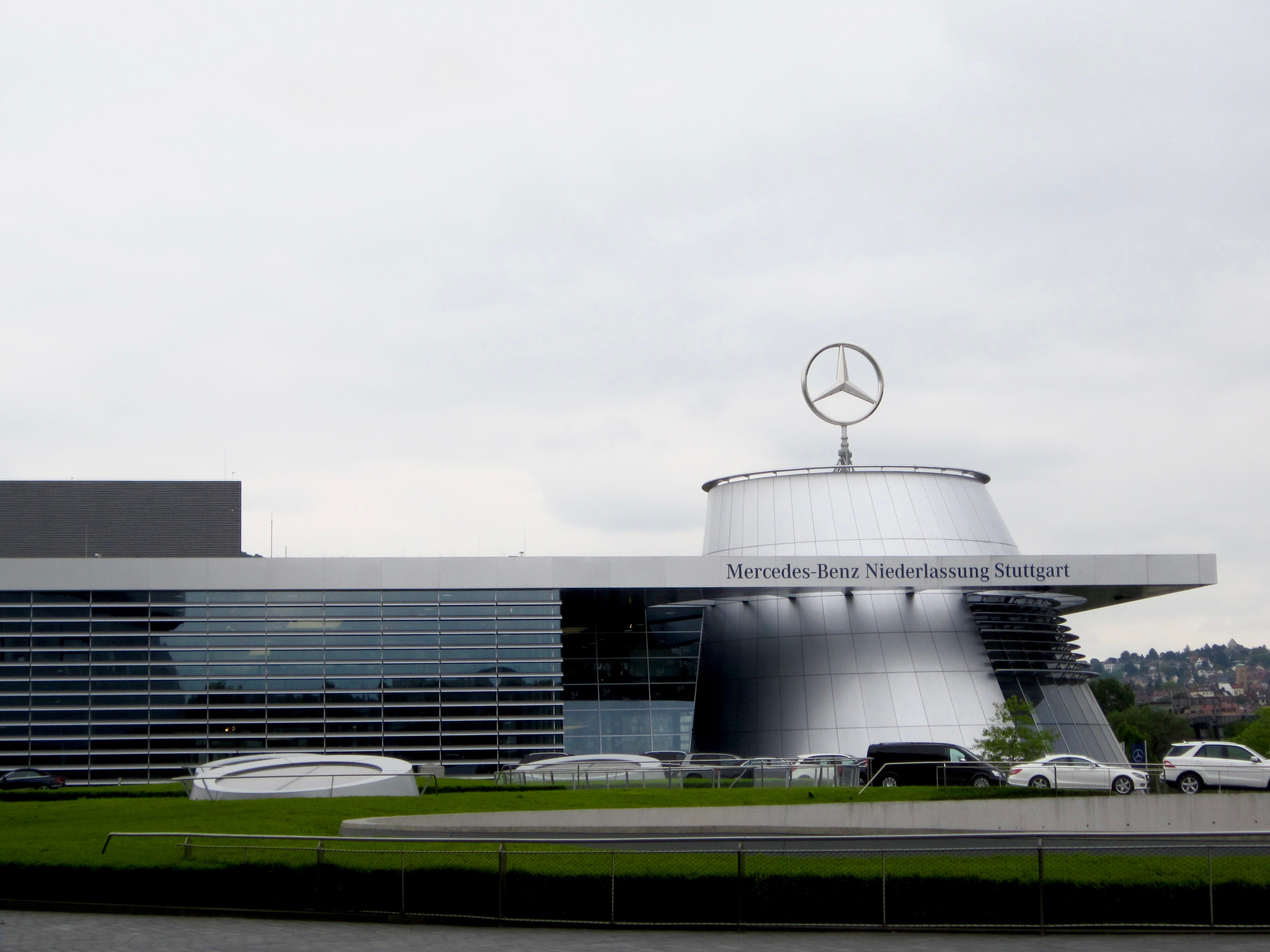
In recent years, Mercedes has been struggling with falling sales and profits. Whilst the Chinese market previously accounted for around a third of Mercedes’ passenger car sales, this share has fallen significantly. Last year alone, the Chinese market declined by around 19 per cent.
In addition, the car manufacturer has had to invest heavily in electric cars due to the demand for electric vehicles driven by the climate transition. At the same time, demand for electric cars in Europe and North America is not particularly high. Moreover, cheaper electric cars imported from China tend to capture even that limited share. Furthermore, the company’s profits have been eroded by higher US tariffs, which, according to Mercedes, reduced profits by approximately 1 billion euros last year.
Previously, Volkswagen, BMW, Audi and Porsche have reported similar problems and cost-cutting plans.