


In 2020, when Germany and the European Commission launched their hydrogen strategies, I devoted a book, The Hydrogen Illusion, and a series of articles on the subject, including with Italian energy expert Alessandro Clerici. Six years later, I return to it. Not out of any wish to repeat myself, but because public communication presenting hydrogen as a major energy solution continues unabated, often with little regard for the underlying chemistry and physics, while the experience accumulated, in the meantime, has largely confirmed the doubts expressed at the time. It therefore seems useful to bring the arguments together once more, to update them with what we have learned since, and to explain as clearly as possible why hydrogen, whatever its merits as a chemical, is a poor choice as a fuel.
The comparison with the handbag may sound provocative. It is nevertheless a useful way of summarising one of the fundamental misunderstandings surrounding today’s hydrogen policies. Hydrogen is a remarkable molecule. It is indispensable to modern industry and has been used for more than a century in processes essential to our prosperity. Precisely because it is valuable, manufacturing it at considerable energetic and economic cost merely to burn it is difficult to justify.
This distinction between hydrogen as a chemical product and hydrogen as an energy carrier has largely disappeared from the political debate. Hydrogen is increasingly presented as a universal answer to decarbonisation: it should fuel cars, trucks, ships and perhaps aircraft; heat buildings; store intermittent electricity; provide high-temperature industrial heat; manufacture steel; and compensate for fluctuations in wind and solar generation.
The problem is that hydrogen is not a source of energy. It must first be produced. And that elementary fact changes almost everything.

Hydrogen is not an energy source
Coal, oil, natural gas, uranium, flowing water, wind and solar radiation are primary energy resources available in nature. Hydrogen is different. Although hydrogen atoms are extraordinarily abundant, practically no molecular hydrogen is freely available for us to exploit on the scale required by an energy system. Exploration for natural, or ‘white’, hydrogen – at Bourakébougou in Mali or in Lorraine in France, for instance – has recently attracted considerable media attention. Some caution is nevertheless warranted. The geologists who, over more than a century, found the coal, oil and gas deposits on which our prosperity was built never regarded natural hydrogen as a significant energy resource – until it became fashionable. To date, no deposit has been demonstrated on a scale relevant to an energy system.
For industrial energy purposes, hydrogen therefore has to be extracted ultimately from water or hydrocarbons. Many other substances, including complex organic molecules such as glucose or sucrose, contain hydrogen atoms, but they are not realistic primary feedstocks for large-scale hydrogen production. Hydrogen should therefore be compared not with natural gas or petroleum, but with electricity: it is an energy carrier that must first be produced from another source of energy. That may sound like semantics. It is not.
Whenever energy is converted from one form into another, losses occur. Producing electricity, using that electricity to manufacture hydrogen, compressing or liquefying the hydrogen, transporting and storing it, and eventually transforming it back into useful energy creates a succession of conversion losses. There is no political directive, subsidy or industrial strategy capable of repealing thermodynamics. This is why the current hydrogen enthusiasm deserves to be examined first through chemistry and physics, and only afterwards through climate targets, industrial strategies and subsidy programmes.
We have been here before
The idea of a hydrogen economy is far older than the European Green Deal.
As early as 1923, in his Cambridge lecture Daedalus, or Science and the Future, the British scientist J. B. S. Haldane imagined wind-generated electricity producing hydrogen. The concept resurfaced spectacularly during the nuclear enthusiasm of the 1960s and 1970s, and again after the oil shocks of 1973 and 1979.
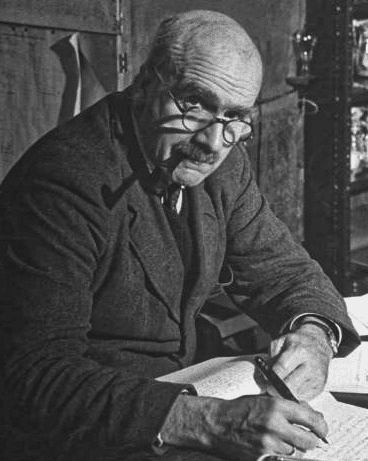
One of the most interesting figures in that history was Cesare Marchetti, an Italian physicist working at the European Community’s Joint Research Centre at Ispra. It was there, in the 1960s, that he developed his thinking about hydrogen as a means of extending nuclear energy beyond electricity and into the much larger world of fuels and heat. He later moved to the International Institute for Applied Systems Analysis, IIASA, near Vienna, where he continued his work on energy systems and technological evolution.
In the middle of the 1960s, Marchetti identified what he regarded as a strategic weakness in the emerging nuclear vision. Nuclear energy was overwhelmingly conceived as a means of producing electricity. But electricity represented only part of society’s total energy consumption. Even an enormous expansion of nuclear electricity would therefore leave much of the energy economy untouched.
Marchetti consequently began thinking about how nuclear energy might penetrate the much larger market then dominated by combustible fuels – what I like to describe as the world of electrons versus molecules, or even more simply, electricity versus flames. Hydrogen appeared to provide the bridge.
At Ispra, serious work followed. A 1969 round table examined the direct production of hydrogen using nuclear heat. In 1970 Marchetti and Giuseppe De Beni published Hydrogen, Key to the Energy Market. In 1971 Marchetti went even further with Hydrogen, Master Key to the Energy Market. Research was conducted into thermochemical decomposition of water using high-temperature nuclear heat. When I joined the Directorate General Energy of the European Commission, I naturally collaborated with this hydrogen team.
This historical episode is important because it demolishes the idea that hydrogen is a technological discovery of the twenty-first century. Europe has been studying the hydrogen-energy concept for more than half a century. And the scientists working on it then had one potential advantage that many contemporary hydrogen projects do not have: they expected the availability of abundant, continuous nuclear energy.
Yet the hydrogen economy did not emerge. That should at least invite a question: why? The answer, as the following sections show, lies less in politics than in chemistry, thermodynamics and cost: the expected abundance of cheap nuclear heat never materialised, the oil shocks faded, and producing hydrogen from hydrocarbons remained far cheaper than any alternative.
Industry already knows hydrogen
There is another misconception in the current debate: hydrogen is sometimes presented as though the industry were waiting for governments to invent a new sector. Nothing could be further from reality.
Hydrogen has long been an important industrial chemical. It is indispensable for ammonia production and therefore for nitrogen fertilisers, which in turn play a fundamental role in feeding billions of people. It is used extensively in oil refining, including hydrocracking and hydrotreating, and for removing sulphur from petroleum products. It is also used in methanol production and numerous other chemical processes.
Industry therefore understands hydrogen very well. Engineers know how to produce it. They know how to handle it. They know its physical properties, its advantages and its difficulties. They know that it is the smallest molecule, that leakage is consequently an issue, that its volumetric energy density is low, and that compression or liquefaction requires additional energy and equipment. Most importantly, the chemical industry has spent decades optimising hydrogen production. And what route did industry choose?
It overwhelmingly chose fossil-based production – mainly natural gas and, particularly in China, coal – rather than water electrolysis, while a further share is obtained as a by-product of refinery and chemical processes. The dominant route is steam methane reforming, or SMR – not to be confused with the nuclear term ‘small modular reactor’, which uses the same abbreviation.
That was not because generations of chemical engineers had somehow failed to discover electrolysis. Electrolysis has been known since the nineteenth century and every chemistry student has seen water split into hydrogen and oxygen.
Electrolysis was, in fact, used industrially for decades wherever electricity was exceptionally cheap. Norsk Hydro produced hydrogen for ammonia at Rjukan and Glomfjord using Norwegian hydropower, and similar plants operated at Aswan in Egypt and at Trail in Canada. These installations were eventually closed or converted to natural gas. Even with some of the cheapest electricity in the world, electrolysis could not hold its own against reforming. Industry selected reforming for a much more stubborn reason: chemistry.
The factor of seven
In 2021, Henri Masson and I published an article in The European Scientist entitled ‘Why is industrial hydrogen produced from natural gas and not by water electrolysis?’. We returned to the basic thermodynamics. To produce one mole of hydrogen by decomposing liquid water, the relevant energy requirement expressed through the enthalpy of the reaction is:
H₂O → H₂ + ½ O₂
corresponding to approximately 285.8 kJ per mole of hydrogen. Of this, at least 237 kJ – the Gibbs free energy of the reaction – must be supplied as electricity; the remainder can in principle be provided as heat.
Now compare this with steam methane reforming.
CH4 + 2 H2 O → CO2 + 4H2
When steam already available from an industrial complex is used, the corresponding reaction requires approximately 41.2 kJ per mole of hydrogen produced.
The ratio is:
285.8/41.2 = 6.94
In round numbers: seven.
Producing a mole of hydrogen starting from water by electrolysis involves roughly seven times the external energy input, expressed as reaction enthalpy, compared with producing the same mole through steam methane reforming when process steam is available.
One may object that this comparison ignores the methane consumed by reforming. It does not; it simply places it where it belongs. One mole of methane, with a heating value of about 890 kJ, yields four moles of hydrogen. Most of the chemical energy of the methane is therefore not lost but transferred into the hydrogen molecules: reforming rearranges energy that is already present in the feedstock, and needs only about 41 kJ of additional heat per mole of hydrogen to do so.
Water, by contrast, contains no usable chemical energy. Electrolysis must supply the entire 285.8 kJ from outside – and most of it as electricity, the noblest and costliest form of energy, which in thermal power stations itself requires two and a half to three units of primary energy for each unit delivered. That is the real meaning of the factor of seven: it measures not the energy contained in the hydrogen, which is the same whatever the production route, but the external energy that must be supplied to obtain it.
If liquid water rather than available steam is taken as the starting point for the SMR comparison, the ratio is lower but still approximately 4.5. In practice, however, chemical plants usually have steam available from other processes, heat recovery or integrated utilities.
These are not small differences that can simply be eliminated by improving an electrolyser by a few percentage points. They arise from chemistry.
Of course, real industrial systems require a more complete accounting than a comparison of reaction enthalpies alone: electricity generation, electrolyser efficiency, heat integration, feedstock prices, capital costs and operating conditions all matter. But the basic thermodynamic comparison explains something extremely important: why industry developed hydrogen production around hydrocarbons rather than around electricity.
Industrial history is itself an experiment conducted over the decades. If electrolysis had offered an energetically and economically superior way of producing the vast quantities of hydrogen required by refineries and chemical plants, industry would hardly have waited for the European Commission to tell it so.
Electricity is too valuable to waste
The difficulty becomes still clearer when the electricity used for electrolysis is itself considered. Electricity is a particularly valuable form of energy. It can power motors, electronics, lighting, communications, railways, pumps, machine tools, computers and practically every sophisticated device of a modern economy.
Using electricity to split water produces hydrogen, but with conversion losses. If that hydrogen is subsequently compressed, stored and transported, further energy is consumed. If it is finally reconverted into electricity in a fuel cell or turbine, another substantial loss occurs.
There is also a cannibalisation effect that is too often overlooked. Electricity diverted to hydrogen production is electricity that cannot be used directly to feed the electricity network. When electricity is scarce or expensive, electrolysis therefore competes with – and effectively cannibalises – the direct electrification of uses for which electricity is already the most efficient energy carrier. Producing hydrogen does not create additional energy; it diverts valuable electricity into a conversion chain in which a significant part of that energy is inevitably lost.
We therefore start with electricity, transform it into another energy carrier at a loss, handle and store that carrier at additional cost, and sometimes transform it back into electricity with another loss.
This is not an energy source. It is an energy conversion chain – and one that can cannibalise the direct, more efficient use of the electricity from which it originates.
Hydrogen cannot make intermittency disappear
Hydrogen is often presented as the solution to the intermittency of wind and solar power. The reasoning appears attractive: when there is excess electricity, use it to produce hydrogen; store the hydrogen; and when electricity is needed again, feed it into a fuel cell. Technically, this works. Energetically, however, the result is sobering.
Using Eurostat data, I calculated an average wind load factor of approximately 23% across the EU Member States, onshore and offshore wind combined. This figure hardly changes from one period to another, because it depends not on turbine technology but on average meteorological conditions across the EU.
Take a 6 MW wind turbine. If it operated continuously at its nominal capacity throughout the year, it would generate 52,560 MWh. With a 23% load factor, its annual output is only about 12,000 MWh – the equivalent of roughly 2,000 full-load hours.
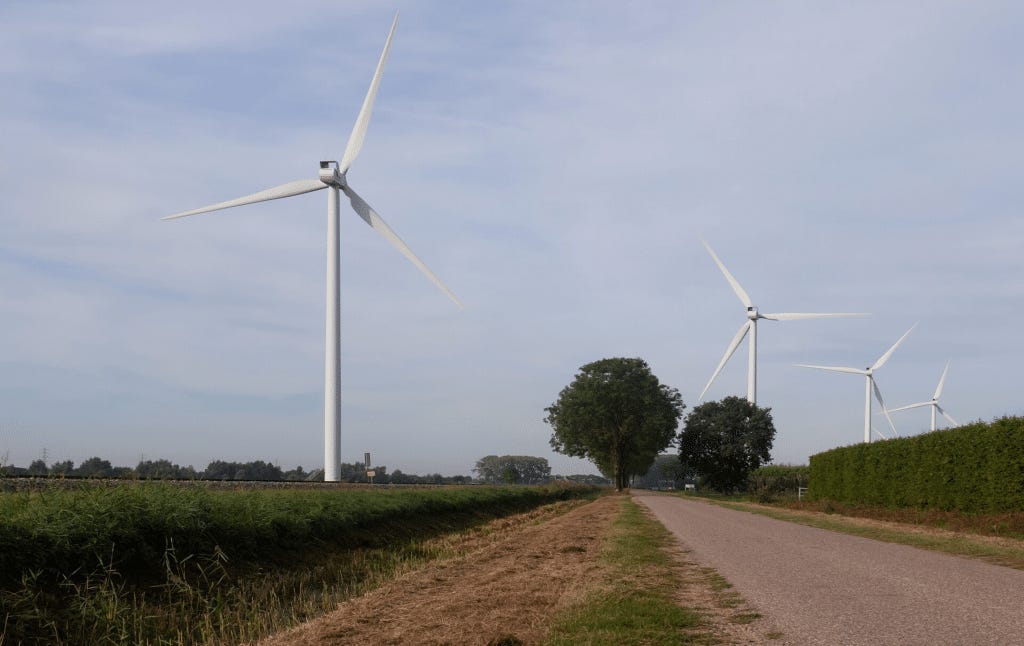
If the objective is to provide the equivalent of a continuous 6 MW supply, the remaining 77% must be supplied when the wind generation is insufficient. Suppose that this electricity is stored through hydrogen. Electricity is first converted into hydrogen by electrolysis, the hydrogen must then be compressed, transported and stored, and finally converted back into electricity in a fuel cell.
Using representative efficiency of 66% for electrolysis – the value achieved in practice, well below the theoretical figure often quoted – about 75% for compression, transport and storage, and 50% for the reconversion in a fuel cell, the overall electricity-to-hydrogen-to-electricity efficiency is only about 25%. In other words, roughly three quarters of the electricity entering the hydrogen storage chain is lost before electricity is delivered again.
To recover the approximately 40,500 MWh missing during the year therefore requires about 163,500 MWh of additional wind electricity before the hydrogen-storage chain. At the same 23% load factor, producing that electricity requires thirteen and a half additional 6 MW wind turbines – in practice, fourteen.
The arithmetic is striking: one wind turbine supplies electricity directly when wind is available, while another fourteen are needed to generate the electricity required to pass through the hydrogen storage cycle. In this simplified energy-balance example, providing the equivalent of a continuous 6 MW output therefore requires about fifteen 6 MW wind turbines, together with electrolysers, compression, hydrogen storage and fuel cells.
The conclusion is not sensitive to the precise assumptions. Even with a more optimistic 85–90% for compression, transport and storage, the round-trip efficiency rises only to about 28–30%, and some eleven to twelve additional turbines would still be required.
Hydrogen does not abolish intermittency. It compensates for it at the price of massive overcapacity and very large conversion losses.
Hydrogen advocates often reply that electrolysers can use ‘surplus’ renewable electricity that would otherwise be curtailed. In specific circumstances this can indeed make sense. But an industrial hydrogen economy cannot be built on electricity that is simultaneously abundant enough to be surplus, cheap enough to make hydrogen competitive, and available for enough hours each year to amortise expensive electrolysers.
An electrolyser is an industrial installation. Its economy depends directly on its hours of operation. A machine operating only during occasional periods of surplus wind or solar production may consume cheap electricity during those hours, but its capital cost must then be recovered over a small quantity of hydrogen.
Conversely, increasing its operating hours requires electricity during many more periods – including hours when electricity is no longer surplus or cheap.
This contradiction is too often hidden behind the attractive expression ‘green hydrogen’.
Colours do not change molecules
Hydrogen has acquired an extraordinary rainbow. There is grey hydrogen, blue hydrogen, green hydrogen, pink hydrogen, turquoise hydrogen, white hydrogen and several other colours depending on the production route or origin. The molecule, of course, has no colour. H₂ remains H₂.
The terminology is political and economic rather than chemical. It describes how the hydrogen was manufactured and, increasingly, which regulatory category determines whether it qualifies for subsidies or particular climate-policy objectives.
This colour code has no place in science. No chemistry textbook, no nomenclature and no thermodynamic table distinguishes hydrogen by colour. A chemist or a physicist characterises a substance by its composition, purity, pressure and temperature, not by the virtue attributed to the way it was produced. The colours belong to the vocabulary of marketing and regulation: they are designed to make a product attractive to the public and to sort projects into categories eligible, or not, for public support. By attaching a reassuring label to an identical molecule, they shift attention away from the questions that really matter – how much energy is consumed, at what cost, and for what useful service – towards a question of image. This multiplication of colours can obscure the fundamental question. Before asking what colour hydrogen should be, we should ask: Do we need hydrogen for this application at all?
Where hydrogen is required as a chemical feedstock, the answer is obviously yes. We then need to determine the most efficient, affordable and environmentally appropriate production method.
Steel is an instructive borderline case. In the direct reduction of iron ore, hydrogen is used not as a fuel but as a reducing agent – a genuinely chemical role. Yet iron ore does not need hydrogen specifically; it needs a reducing agent, and carbon, in the form of coke in the blast furnace or natural gas in direct-reduction plants, has performed that function efficiently and cheaply for generations. Hydrogen replaces carbon here not because the chemistry requires it, but because policy wishes to avoid CO₂ emissions. That is a political choice, and its cost should be stated openly rather than presented as a technical necessity.
But where hydrogen is proposed merely as an intermediary between a primary energy resource and the final consumption of energy, the burden of proof should be reversed.
Why manufacture an expensive molecule if the original energy can be used more directly?
The fundamental confusion between electrons and molecules
One reason for the political attraction of hydrogen is that modern energy policy has become overwhelmingly focused on electricity. Yet electricity represents only part of the energy system. Modern civilisation needs both electrons and molecules.
We need electricity, but we also need enormous quantities of heat and chemical feedstocks. We need high-temperature industrial processes. We need fuels with high energy density. We need molecules for petrochemicals, fertilisers, plastics, pharmaceuticals, aviation and maritime transport.

This is precisely what Marchetti had understood in the 1960s. His reasoning was intellectually coherent: if nuclear energy were going to become extremely abundant, how could nuclear energy move beyond electricity into the enormous market served by fuels? Hydrogen appeared as a possible means of converting nuclear heat into a transportable and storable molecule. The irony is striking.
More than fifty years later, European policy has rediscovered hydrogen, but in a very different energy system. Instead of starting from the prospect of abundant continuous nuclear energy, much of the new hydrogen strategy is based on variable wind and solar electricity. The 2000 European Commission has revived an old idea while weakening one of the assumptions that once made the idea attractive, abundant nuclear electricity.
What about hydrogen for heating?
This brings us to perhaps the clearest example of the problem: producing hydrogen in order to burn it for heat – whether to warm buildings or to supply the flames of industrial processes.
Heat is thermodynamically one of the least sophisticated forms of energy. Hydrogen, by contrast, is an industrial molecule that must be manufactured, purified, transported and stored.
If electricity is available and the objective is simply to generate low-temperature heat, converting electricity into hydrogen before burning the hydrogen introduces an unnecessary intermediate step with unavoidable losses.
If natural gas is available, converting methane into hydrogen and subsequently burning the hydrogen is similarly difficult to justify purely on energetic grounds. We take a naturally available combustible molecule, process it in an industrial installation into another combustible molecule, incur conversion losses and costs, and then burn the resulting product.
The same reasoning applies to high-temperature industrial heat. Furnaces and kilns that require flames are already served directly and efficiently by natural gas, coal or oil. Replacing these fuels with hydrogen adds a costly conversion step without providing any capability the original fuel lacked – and, when the hydrogen is made from natural gas, it merely passes on the methane’s own energy, minus the losses.
This is where the image of the Louis Vuitton handbag becomes apt. The handbag will certainly burn. It will certainly produce heat. The question is not whether it works. The question is why anyone would first manufacture an expensive, sophisticated product only to destroy its value for the most elementary possible purpose.
Policy cannot abolish thermodynamics
In June 2020 Germany launched a major national hydrogen strategy. A few weeks later, the European Commission presented its own hydrogen strategy, making renewable hydrogen an important component of the EU’s decarbonisation plans. In 2022, the REPowerEU plan went further still, targeting 10 million tonnes of domestic renewable hydrogen production and 10 million tonnes of imports by 2030. That political enthusiasm prompted me to write The Hydrogen Illusion.
My argument was never that hydrogen technologies cannot work or that research should stop. The argument is that hydrogen should not be confused with primary energy, and that public policy cannot transform an inefficient energy-conversion chain into an efficient one simply by subsidising it.
Subsidies can change prices paid by individual economic actors. They cannot change the quantity of energy required by a chemical reaction. Regulations can create a market. They cannot change thermodynamics. Mandates can force industries to purchase a particular product. They cannot make the underlying conversion losses disappear. And reality is now beginning to test the ambitions announced at the beginning of the decade.

Across Europe and elsewhere, numerous hydrogen projects have been postponed, reduced or abandoned. This is no longer a collection of isolated corporate decisions. In its Global Hydrogen Review 2026, the International Energy Agency reports that the pipeline of announced low-emissions hydrogen projects for 2030 has shrunk by 10 million tonnes in a single year, to about 27 million tonnes, while the volume of projects that are committed or have strong potential to be operating by 2030 has fallen from 10 million to just over 6 million tonnes. In 2025, low-emissions hydrogen amounted to barely 1 million tonnes – around 1% of a global hydrogen production exceeding 100 million tonnes. As early as 2024, the European Court of Auditors had concluded that the EU’s 2030 targets were unrealistic and called for a ‘reality check’. Costs remain high, demand is uncertain, infrastructure is lacking and many potential customers are unwilling to sign long-term contracts at the prices required to make projects viable.
This is particularly revealing because many of these projects were conceived in an extraordinarily favourable political environment, with subsidies, targets, mandates and public financing available to support them. Yet economy continues to intrude.
The hydrogen industry is not disappearing, nor should it. But the retreat from some of the most ambitious projects suggests that the distinction between technically feasible and economically sustainable is finally reasserting itself.
This matters particularly for Europe. European industries already face high energy costs compared with several major international competitors. Adding expensive mandatory energy transformations to industrial processes risks aggravating that disadvantage.
The relevant question is therefore not how many gigawatts of electrolyser capacity Europe can announce. The relevant question is what useful service society obtains from each unit of primary energy consumed – and at what total system cost.
Hydrogen has a future – where hydrogen is needed
None of this means that hydrogen has no future. Quite the contrary. Hydrogen already has a substantial present. Its most important future applications are likely to remain those in which we actually need the hydrogen molecule itself, rather than merely its energy content.
Ammonia production is an obvious example. Refining and petrochemicals are others. Methanol and various chemical processes require hydrogen. New industrial applications may develop, and technological research should, of course, continue.
There may also be specialised energy applications in which hydrogen or hydrogen-derived fuels provide characteristics valuable enough to compensate for their energetic disadvantages. Each case should be assessed on its own technical and economic merits.
What should be rejected is the idea that hydrogen must become a universal energy vector merely because public policy has decided that direct use of hydrocarbons should disappear.
The distinction is essential: Hydrogen as a chemical feedstock is indispensable. Hydrogen as a universal fuel is another matter entirely.
More than half a century after Marchetti’s work at Ispra, the essential lesson is remarkably simple. Hydrogen is neither a new energy source nor a miracle solution. It is a valuable industrial molecule and, in some circumstances, a useful energy carrier. It should be used where its particular properties justify the energy and cost required to produce it.
Europe needs research and innovation, but above all it needs abundant, reliable and affordable energy if it wants to preserve its industry and prosperity.
Produce hydrogen when we need hydrogen. Use electricity when we need electricity. Use fuels when we need fuels. And never confuse an energy carrier with an energy source. Hydrogen is a wonderful molecule. That is precisely why we should not waste it. And burning it merely to produce heat really would be like burning a Louis Vuitton handbag to keep warm.
For readers wishing to explore the subject further, I have developed these arguments in my book The Hydrogen Illusion, drawing on my work on hydrogen since my PhD research and throughout my career at the European Commission’s Directorate-General for Energy.

I am a chemist and understand the thermodynamics of energy conversion as presented by the author. However, I also understand the importance of Carbon Dioxide in the life cycle of living things. The fact is that Carbon Dioxide is necessary for plant growth and demonizing it and having public policy that requires it to be removed from the atmosphere by pumping it into abandoned oil wells is simply wrong. Removing Carbon Dioxide from the atmosphere would require removing all living things, including humans, from the planet.