


Since early March, residents of Moscow, St. Petersburg, and other Russian cities have faced widespread mobile internet outages. The Kremlin claims these are necessary to “ensure security.” However, human rights groups argue that the outages further restrict freedom of speech and push citizens toward state-controlled apps, according to Meduza.
Moscow users started reporting issues on the evening of March 5, struggling to load websites and apps. Some lost service entirely and could no longer make phone calls. Connectivity varied by location: in some areas everything worked fine, but a few streets away the network vanished completely. Kremlin spokesperson Dmitry Peskov stated that all disruptions and restrictions are “fully in accordance with the law” and stem from “an essential need: ensuring security.” Authorities describe the measure as a way to combat terrorism and Ukrainian drones. For instance, after Leningrad Oblast Governor Alexander Drozdenko reported a drone threat on March 9, users across St. Petersburg lost internet access for about six hours. Peskov acknowledged the outages’ impact on businesses as an issue needing further analysis and promised solutions.
Communication outages in Russia have continued and become relatively common since May 2025, although prior to the legislative amendment that took effect on March 3, they were not as long-lasting or widespread. In February, President Vladimir Putin specifically signed a law that expanded the powers of the Federal Security Service (FSB), granting it the right to completely block communication networks by presidential decree to “protect citizens and the state from emerging security threats.” The law does not define what constitutes a “security threat”; it is a deliberately vague term, thereby giving both the president and the FSB wide latitude in interpretation. In addition, the new law grants telecommunications companies protection from legal liability for service disruptions. This provision is reportedly partly due to last year’s tendency of citizens to sue companies over outages and demand compensation for breach of contract.
Following recent outages in Moscow, sources in the telecommunications sector claimed that operators had been ordered to restrict mobile internet access in certain areas of the city. However, major operators such as Beeline and T2 officially claim that their networks are functioning normally and blame external restrictions for the outages.
The civil rights organization Human Rights Watch believes that Russian authorities have intensified internet censorship over the past month. It is also worth noting that according to an analysis by VPN provider Proton, governments are increasingly using targeted internet outages to strengthen censorship and enhance monitoring of online activity during blackouts. “State control over internet infrastructure has long been a top priority for the Russian government,” said Hugh Williamson, director of Human Rights Watch’s Europe and Central Asia division.
Russian Authorities Also Block Messaging Apps, Social Media, and VPN Services
In addition to internet outages, authorities have frequently blocked or restricted messaging apps and social media platforms. For example, in February, restrictions on Telegram and WhatsApp were tightened, although users had experienced problems with these apps for some time. According to Roskomnadzor, Telegram needs to be increasingly restricted since the platform violates Russian laws and fails to ensure citizens’ safety. Russian media reports indicate that authorities plan to fully block Telegram in April, while a criminal case has been initiated against its founder Pavel Durov on charges of supporting terrorism. Durov linked the case to an attempt to “restrict the right to privacy and freedom of speech.”
According to Human Rights Watch, authorities are thus forcing users to switch to the state-approved platform Max. This app was created in 2025 by Vkontakte (VK), which is controlled by entities that have close ties with the Russian government. Last July, the government designated Max as the national messaging app as part of a state program integrating messaging with government services. Max allows users to send messages and make calls, but it also provides access to government services, digital documents, and age verification.
Last September, the government announced that Max should be pre-installed on all smartphones and tablets sold in Russia. Schools and universities have already switched their communications to Max, and under a threat of hefty fines, housing cooperatives and property management companies have been forced to use it as well. It has also been reported that Russian users cannot access the digital government services portal Gosuslugi without Max installed.
In January of this year, Max had 73.7 million monthly users; by February, that number rose to 77.6 million. Meanwhile, Telegram had 95.9 million users in January and WhatsApp had 89.4 million, but by February both had lost users – Telegram dropped by 280,000 to about 95.7 million, while WhatsApp fell by 9 million to 80.3 million.
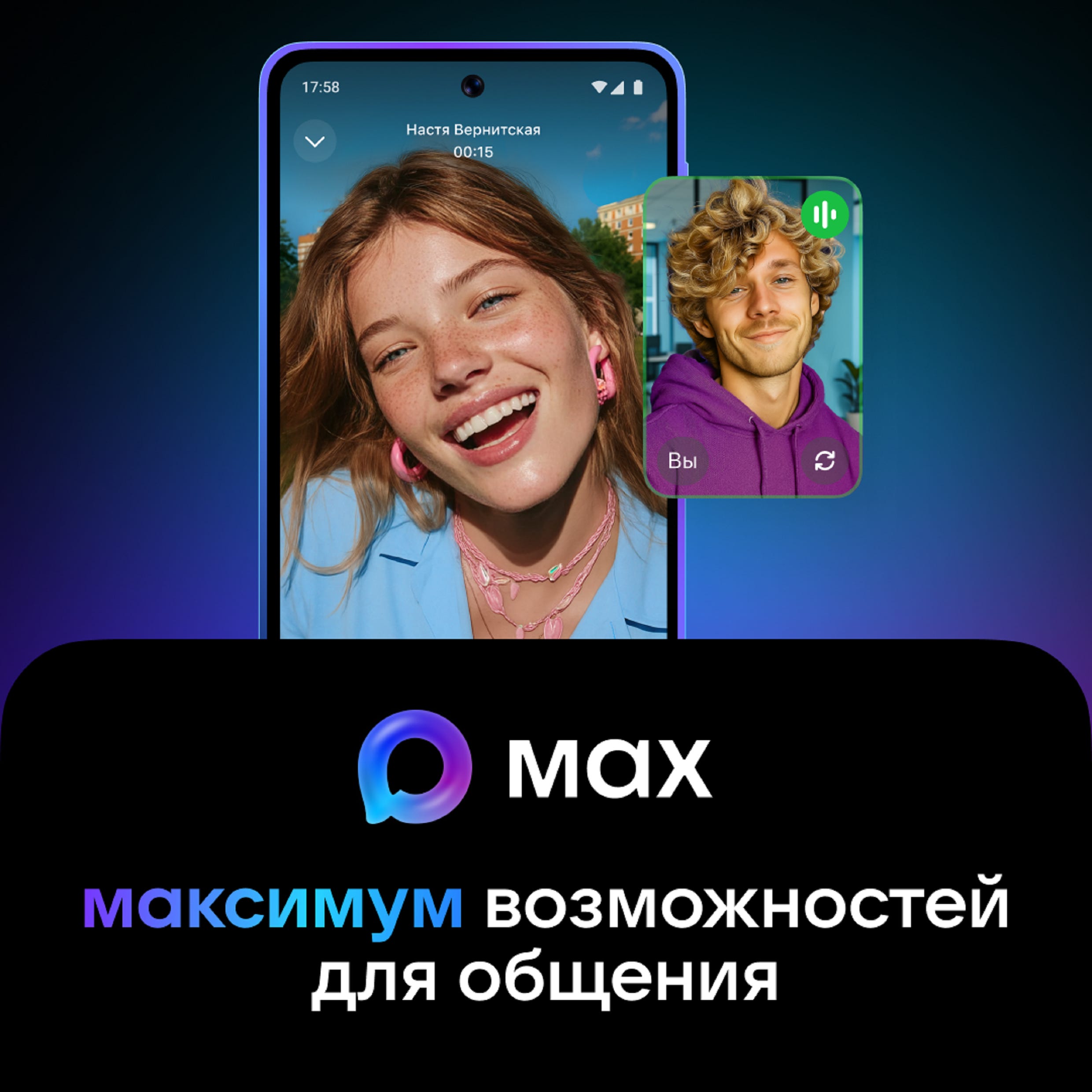
However, the state-run messaging app Max has had a reputation as a government surveillance tool from the start. Critics describe it as enabling user surveillance and sharing data with third parties and government agencies. Max users and web experts have warned that the app collects vast amounts of data and requires extensive permissions. It has also been reported that the app sends queries to WhatsApp and Telegram domains and checks for VPN connections. Max has denied these allegations.
Furthermore, since 2019, internet service providers have been required to install the state-distributed and controlled technological means known as TSPU/ТСПУ in their networks, acclaimedly for countering threats. This technology allows the authorities to monitor, eavesdrop on, filter, redirect, and manipulate internet traffic, giving the government centralized control to block the internet.
However, in addition to internet traffic, authorities have targeted virtual private networks (VPNs). In February, Roskomnadzor confirmed it had blocked 469 VPN services, including the three most popular ones. Fines have been imposed for advertising VPNs, and since last July, Russian users may also face fine for “intentionally” searching for “extremist” content online, including via VPN.
Oh dear, it looks as if Russia is getting as bad as the UK at repressing freedom of speech.
Wow. Coming soon to a country near you.