


Over the past few days, the following topics attracted our attention:
Apple Rolls Out Age Verification for UK iPhones
Russia Tightens VPN Restrictions
Russia Removes 30% of Books from Ural Libraries
Apple Rolls Out Age Verification for UK iPhones
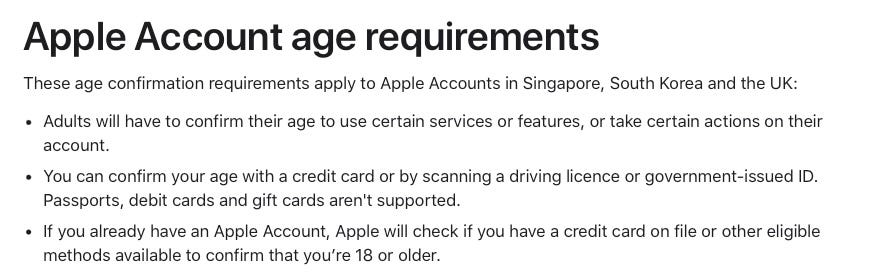
In the UK, Apple iPhone and iPad users must now verify their age after Apple quietly added an age verification feature in the latest iOS 18.4 update. Until the user verifies their age, their device will function as a child-safe smartphone with web content filters automatically activated, reports the BBC.
According to Apple Support, users can verify their age by providing a credit card or ID. In some cases, Apple may use the customer’s existing account and registered payment method. Following the update, Apple devices in the UK now display the message: “UK law requires you to confirm you are an adult to change content restrictions.” However, the Online Safety Act does not require age verification to be performed directly on the device. The law, which came into effect last year, requires technology companies to strengthen child protection online, including age checks for certain websites.
According to the communications regulator Ofcom, the agency worked closely with Apple to ensure the measure “can be applied in a variety of contexts to ensure users are protected.” Ofcom called Apple’s decision “a win for children and families.”
However, Silkie Carlo, director of Big Brother Watch, an organisation advocating for digital freedoms, believes Apple is stifling Britons’ freedom of expression online. Carlo stated that with this software update, Apple has crossed the Rubicon and is essentially acting like ransomware, leaving millions of Britons with “kids’ devices” if they do not complete age verification. She acknowledged that children’s safety online is extremely important, but argued that a more responsible approach is needed instead of imposing sweeping and draconian requirements such as presenting ID or a credit card.


Russia Tightens VPN Restrictions
Russian Digital Minister Maksut Shadayev announced that the country plans to further restrict the use of virtual private networks (VPNs). VPNs remain quite popular in Russia, as citizens use them to circumvent internet controls and censorship, Reuters reports.
According to Digital Minister Shadayev, the goal is to reduce the use of VPNs. He added that the Ministry of Digital Development aims to implement the restrictions in a way that affects users as little as possible. The minister published the announcement on the notorious state-backed messaging service MAX, which has been accused of surveillance and control.
Just a few days earlier, government official Andrey Svintsov claimed that Roskomnadzor had developed the technical capability to selectively restrict VPN traffic. According to the newspaper Kommersant, Russia had blocked more than 400 VPNs by mid-January – 70% more than at the end of last year. At the same time, for every VPN that is shut down, new services tend to emerge, and many young people switch VPNs every day.

Apple is reportedly among the first to have removed VPN services from the Russian App Store; for example, Streisand, V2Box, v2RayTun, and Happ Proxy Utility are no longer available. AppleCensorship confirms that these apps have been removed from both the Russian and Chinese App Stores. This is not the first time Apple has removed VPN services from the Russian App Store. In 2024 alone, the tech giant removed at least 60 VPN apps, including NordVPN, ExpressVPN, and Proton VPN. Although these apps can no longer be downloaded, they can still be used by those who had previously installed them. However, they will no longer receive software updates, security fixes, or new features.
In any case, the latest cleanup of the Apple App Store marks a new phase in Russian internet censorship, with Roskomnadzor systematically closing “loopholes.” Diplomats are calling this a “major crackdown.” In addition to VPNs, authorities have repeatedly blocked mobile internet and major messaging apps such as Telegram and WhatsApp in recent months. Allegedly, these platforms failed to comply with the law, and the internet blocks were necessary to prevent Ukrainian drone attacks.
Russia Removes 30% of Books from Ural Libraries
Approximately 30% of the books in Yekaterinburg’s libraries must be removed because they were purchased with funds from the George Soros Foundation. The Soros Foundation operated in Russia from the late 1980s until 2003. In 2015, Russian authorities declared it an undesirable organization, accusing it of undermining the country’s constitutional order, reports Meduza.
According to Irina Cheremisova, director of the Yekaterinburg library network, most of the books slated for removal were purchased in the 1990s. “We have to remove some books from the collection because they were purchased with Soros’s money. This accounts for about 30% of our collection,” she said. Cheremisova added that the book purge stems from changes in the law requiring the removal of works funded by undesirable organizations. She noted that the same problem now exists in almost all libraries in the region. At the same time, however, libraries face a shortage of books, while lacking funds to acquire new ones.
The Soros Foundation operated in Russia from the late 1980s until 2003. Its main partners were the non-profit organizations Open Society and Sodeistviye. The foundation supported educational programs, helped students and researchers, funded internet centers, and paid for printing books and textbooks. As said, in 2015, the Russian Prosecutor General’s Office declared it an “undesirable organization” and accused it of undermining Russia’s constitutional order.