


Over the past few days, the following topics attracted our attention:
75% of Australian Youth Ignoring Social Media Ban
UK Online Age Restrictions Easily Bypassed
UK Flights May Be Cancelled Weeks in Advance
75% of Australian Youth Ignoring Social Media Ban
A social media ban for those under 16 came into full effect in Australia last December, and the country has been enforcing it for four months. Researchers at the Becker Friedman Institute at the University of Chicago examined the results and found that approximately three-quarters of young people are ignoring the ban, writes Reclaim The Net.
In the paper “Why Bans Fail: Turning Points and the Australian Social Media Ban,” the researchers surveyed 746 Australian teenagers from March to April 2026. They found that only about 27% of 14- to 15-year-olds comply with the ban, while 73% still use ten prohibited platforms — Facebook, Instagram, Snapchat, TikTok, X, YouTube, Reddit, Twitch, Threads, or Kik.
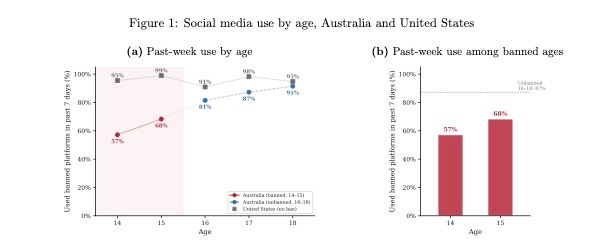
Teens continue to use social media despite nearly universal awareness of the ban (86%). Young people are well aware that no consequences await them for breaking the law. Nearly half (47%) correctly know that the law places full responsibility on the platforms, which face fines of up to 49.5 million Australian dollars. Only 22% of young people believe that ignoring the ban carries any consequences to them. As a result, most have concluded that the law is not aimed at them.
75% of teenagers believe that the social media ban can be circumvented very easily or with minimal effort. The most common methods cited include lying about their age in verification questions (57%), entering a false date of birth during registration (44%), borrowing a parent’s or older sibling’s account (42%), and using a VPN (30%). According to a quarter of respondents, a parent or older sibling helped them register a new account. Moreover, 64% of survey participants noted that the platforms hadn’t detected them in four months and their accounts had never been suspended.
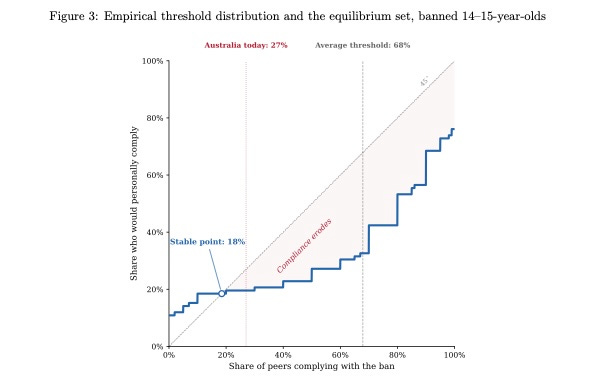
Researchers also asked the teenagers how many of their peers should stop using social media before they would. The average response was that 69% of their peers should stop. The result did not change depending on the wording of the question or the comparison group. In each scenario, at least 62–69% of others would need to leave the platforms before the respondent would quit as well.
The study also revealed a sad reality: 47% of the teenagers surveyed believed that less popular kids are the ones who follow the rules, while young people with greater social influence are likely to have stayed on social media. Among those who still use the platforms, 52% believed that rule-followers are definitely less popular. Only 5% believed that those who follow the rules are more popular. The authors highlight the example of smoking, where popular students were the first to quit. In contrast, Australia’s social media ban shows the opposite: popular kids stay, less popular kids leave, and being on social media is still seen as cool.
In summary, Australia has created a law that its target audience does not follow, that is easy to circumvent, and that seems to hit less popular children and young people the hardest. The ban has in no way changed the social environment it was meant to change. However, it does teach young people how laws “work” when they are created about them, but not for them.
UK Online Age Restrictions Easily Bypassed
Last summer, the Online Safety Act came into force in the UK. It introduced measures to improve online safety for children and young people, including age restrictions on certain websites. Internet Matters has now published an analysis showing that children are circumventing age verification with highly creative solutions, while many parents are helping their children bypass them.
The report’s authors examined the impact of the Online Safety Act through families’ experiences, using survey and focus group data collected after the provisions took effect. Overall, families have noticed some improvements. About seven out of ten children and parents (68%/67%) have noticed better safety features, such as improved notification tools, more content being flagged, and certain features being restricted. 64% of parents have also observed improved parental control measures, and 53% of children report having to verify their age when creating an account. As a result, 39% of parents and 42% of children believe the online environment has become safer. However, 28% of parents and 16% of children hold the opposite view, believing that the internet is now even less safe.
However, despite some progress, families believe children are still exposed to a vast amount of harmful content. 49% of children said they have recently encountered harmful content online, including violence (12%), content promoting unrealistic body images (11%), and content inciting hatred (10%). All of this should be inaccessible to children.
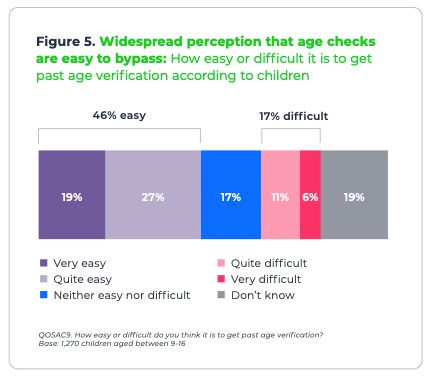
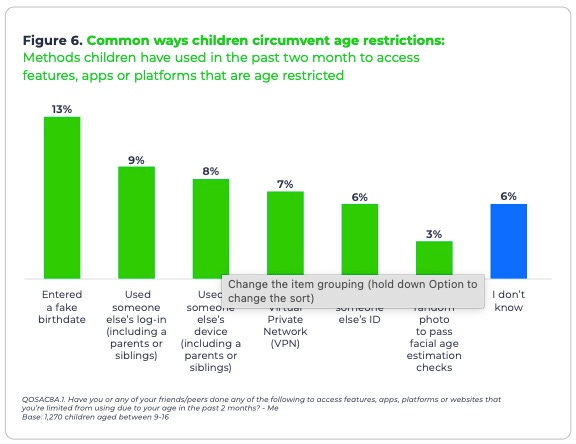
Children consider age verification measures to be simple: presenting an ID (88%), age estimation based on facial appearance (89%), and a third-party app (88%). However, nearly half of children (46%) believe it is easy to bypass age verification, and 32% claim to have done so. They do this by using a false date of birth (13%), the face of another person - sometimes even a character from a movie or video game (9%) - or help from a parent (26%), as well as VPNs in fewer cases. But there are also more creative solutions. For example, the mother of a 12-year-old described catching her son using an eyebrow pencil to draw a mustache on his face to look older. In any case, only 17% of children find bypassing age verification difficult.
Children also provided examples of how age verification works in practice. One 12-year-old girl explained that if, while watching a TikTok live stream, the AI detects that she is not 18, she gets blocked - but only for 10 minutes, after which she can return. Regarding Roblox, a 12-year-old boy described how the platform identified him as 15 based on his face, allowing him to chat with older users even though he shouldn’t. A 14-year-old explained that the more restrictions there are, the more people want to bypass them. A 13-year-old, however, explained that even adults can easily use someone else’s face to trick the system into classifying them as a child. This is also confirmed by recent reports indicating that Roblox accounts belonging to minors are being sold online.
Even those young people who follow the rules describe negative consequences. For example, one 15-year-old explained that all websites offering help with issues such as eating disorders and suicidal thoughts are now censored. A 12-year-old added that while they used to be able to talk to anyone, there are now age-based restrictions, so they can only communicate with their own age group. This means social interaction is completely cut off if their friends fall into a different age group.
In addition to many parents helping their children bypass age restrictions or turning a blind eye to their “mistakes,” many parents have also noticed the negative aspects of the rules. For example, according to the father of a 14-year-old, children now know much better than their parents how to bypass parental controls. The mother of a 13-year-old confirmed that children are smart and experienced and know how to bend the rules. The mother of a 12-year-old explained that she can set any limits and restrictions for her child, but the parents of their friends might not care, so the child will still see all the content.
In addition, both children and parents expressed serious concerns about the transmission of biometric data to monitoring platforms. Some parents argued that children cannot tell the difference between a real website and a fake one. “If all websites have facial recognition and they visit a site that isn’t legitimate, their faces and documents could be used for illegal activities,” one added.
UK Flights May Be Cancelled Weeks in Advance
British government has proposed allowing airlines to cancel flights weeks in
advance if they face fuel shortages. The government says the aim is to help
airlines plan ahead and avoid last-minute cancellations, reports the BBC.
In addition, airlines could be allowed to reroute passengers from their booked flight to a similar one to save fuel. For example, if Lufthansa operates 10 daily flights between London Heathrow and Frankfurt, it could cancel two of the ten flights and move morning passengers to afternoon ones at its discretion, especially since business travel is lighter in summer.
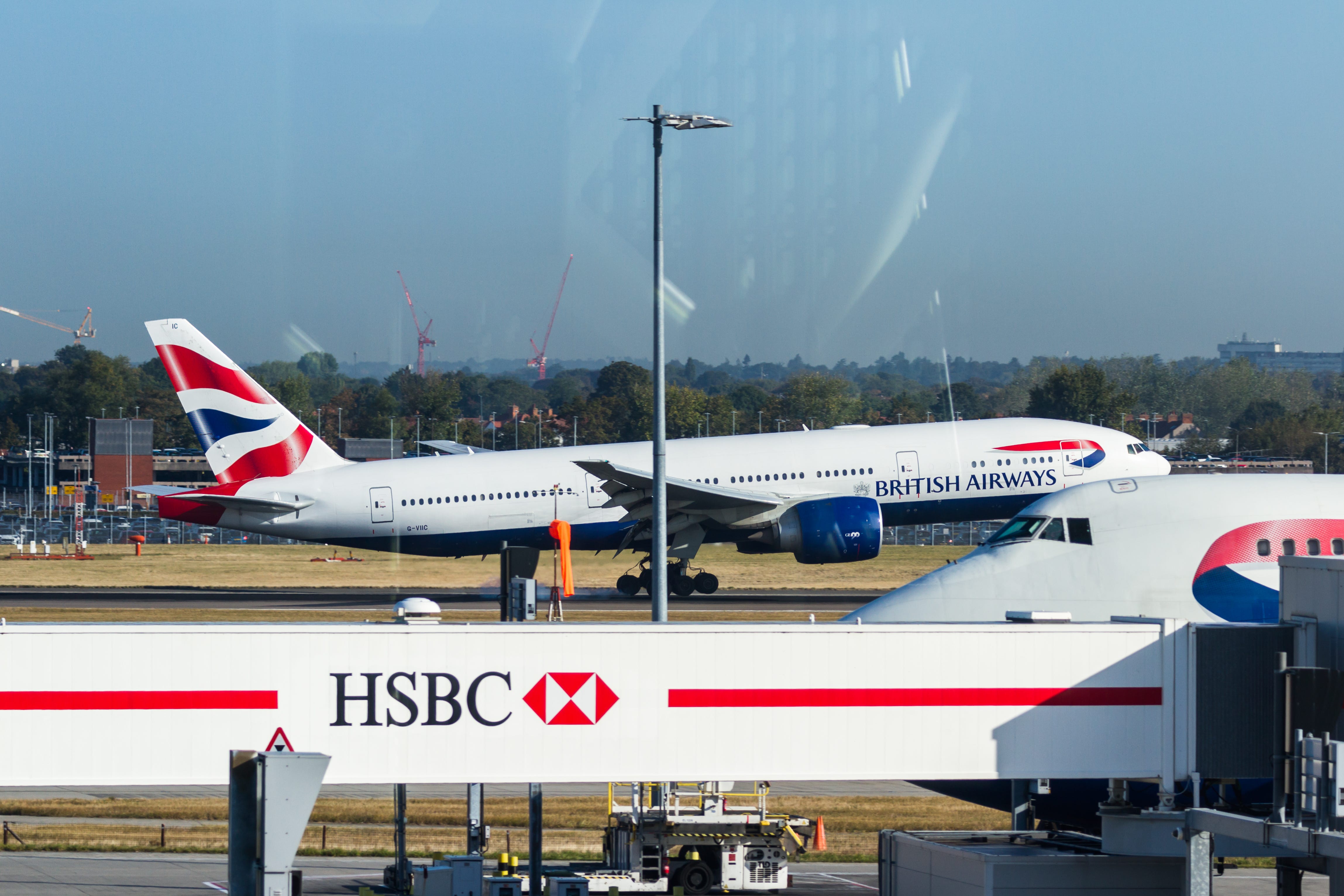
Under normal circumstances, airlines are reluctant to make such changes because it risks their valuable airport slot quotas. Popular slots can be worth tens of millions of pounds. Slots are usually carried over to the next year only if an airline uses at least 80% of them; otherwise, they may go to competitors. The UK government has proposed that cancelled flights under this scheme will not affect slot retention. Transport Minister Heidi Alexander confirmed there are currently no disruptions in UK jet fuel supplies, although the situation is evolving rapidly. She added that current information suggests most summer travellers will face conditions similar to those of last summer.
Airlines also report no current fuel supply problems. However, experts warn that disruptions linked to the conflict in Iran and the Strait of Hormuz could cause shortages within weeks. The International Energy Agency has cautioned that without alternative supplies, a fuel shortage could hit Europe as early as June. At the same time, European low-cost carriers like Transavia, Ryanair, and Volotea have already begun cancelling some May and June flights, citing sharply higher kerosene prices rather than outright unavailability. While governments and airports report strategic stocks that should protect peak summer travel - particularly at major hubs - travellers can still expect higher ticket prices and possible schedule reductions.