


Over the past few days, the following topics attracted our attention:
The European Parliament supports a fact-checkers’ network
Merz Supports the Abolition of Internet Anonymity
UK Primary School Makes 7-Year-Olds Wear the Hijab
The European Parliament supports a fact-checkers’ network
The European Parliament’s plenary session on Tuesday approved the European Democracy Shield report. This own-initiative report recommends a clear legal basis, mandate and dedicated funding for the European Centre for Democratic Resilience, which began operating earlier this year. According to Parliament, the report offers tools to combat Kremlin propaganda and foreign interference, writes EU Perspectives.
The report, drafted by MEP Tomas Tobé (EPP/SWE) and now approved by Parliament, also recommends tougher penalties for platforms and greater oversight of social media. Parliament calls for the Centre for Democratic Resilience to detect foreign information manipulation and interference (FIMI) and disinformation campaigns, analyse them and help counter such threats. Among other tasks, the centre should produce concrete threat assessments and early warnings, and coordinate technical support during active manipulation campaigns, especially elections. It is also tasked with integrating the early warning system, the FIMI intelligence database and the disinformation task force.

Parliament also urges the European Commission to enforce existing rules much more strictly, including the Digital Services Act (DSA), the Digital Markets Act (DMA), rules on political advertising, the Artificial Intelligence Act and the European Media Freedom Act. The Commission should investigate major online platforms and search engines without delay and impose strict measures in cases of repeated infringements. Parliament further highlights social media recommendation systems and concerns that these may amplify polarising content. It recommends that the Commission introduce measures, even temporary ones, to limit such engagement algorithms. Large online platforms (VLOPs) should mitigate risks by distinguishing between synthetic and authentic content and giving greater weight to verified sources.
Parliament also wants platforms’ advertising and other revenues to be more transparent, with fees made public. The messaging app Telegram is addressed separately. Parliament calls on the Commission to complete its assessment and investigate the app’s role in election interference, disinformation and criminal activity, as well as any possible links to Russian intelligence. For X, Meta and TikTok, Parliament wants the Commission to investigate bot and fake accounts more swiftly, as well as X’s recommendation systems and Meta’s misleading adverts.
Parliament has not overlooked accusations of censorship raised under the guise of a “democracy shield”. It demands that “The Commission should actively counter false narratives alleging that EU digital laws undermine free speech. Such claims divert attention from genuine free speech violations in countries such as Russia, China and Iran. Freedom of expression protects humans, not machines, algorithms, bots or AI,” state the Parliament’s key recommendations. The Parliament emphasises that a free, trustworthy and independent media is a central pillar of European democracy and that there is an urgent need to combat falsehoods and disinformation. It therefore supports the creation of a European network of fact-checkers.
The report was first approved by the European Parliament’s Special Committee on the Protection of European Democracy (EUDS) on 23 June.
Merz Supports the Abolition of Internet Anonymity
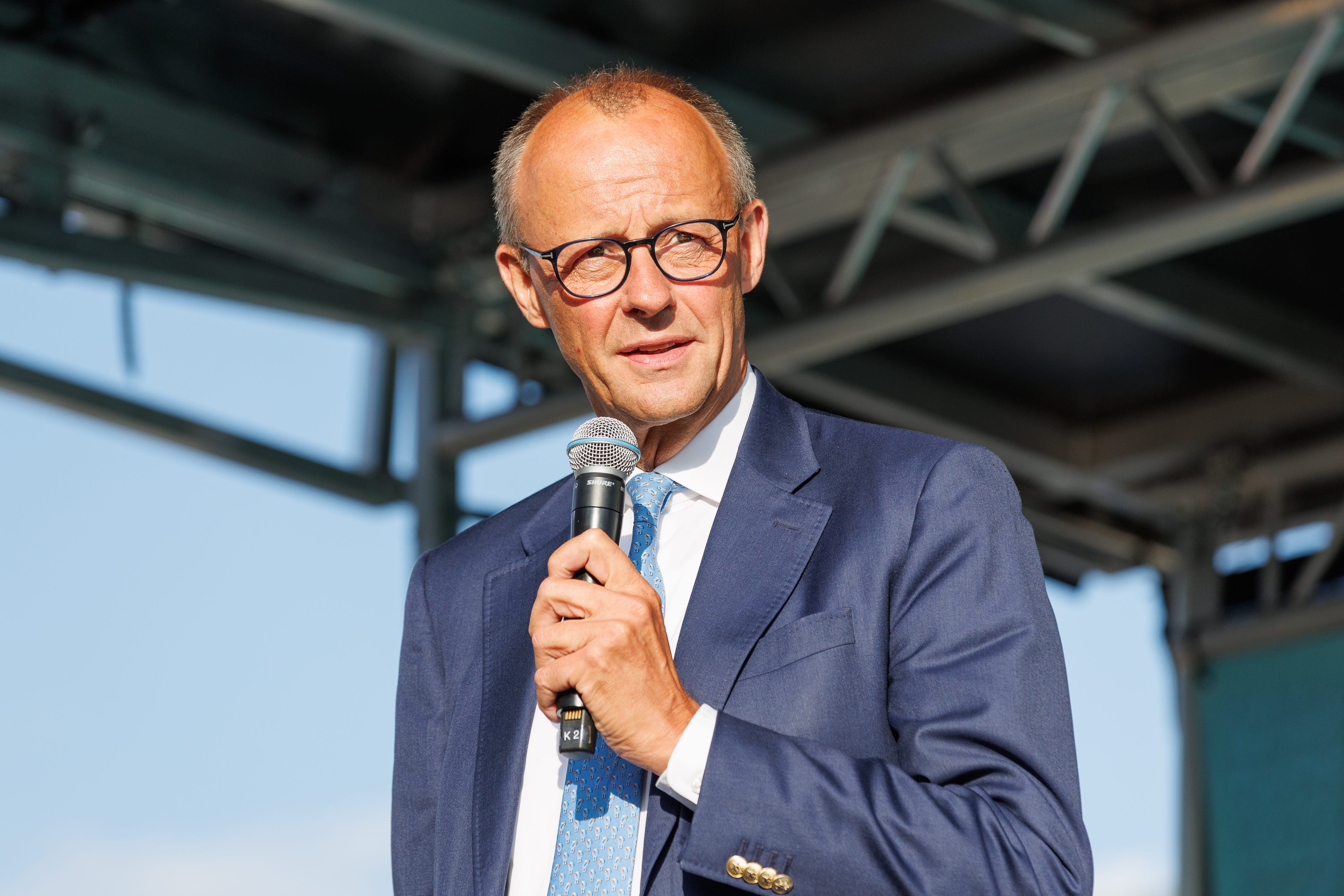
German Chancellor and CDU leader Friedrich Merz again backed ending online anonymity in a recent speech. For him, freedom of speech is not a value, and the names of all posters should be known, reports Reclaim The Net.
He hosted the winners of the “Jugend forscht” youth science competition and took their questions. One participant asked how a real-name requirement would affect whistleblowers, investigative journalists and the occasional need for anonymity. Merz did not answer directly. Instead he spoke of the difficulty in identifying who stands behind an online message and who should be held responsible for an “inappropriate” post. He also mentioned bot-generated messages.
“Please, don’t come to me with freedom of speech. This no longer has anything to do with freedom of speech,” Merz said. He added, that “at best”, freedom of speech is a libertarian understanding of politics originating from certain regions of the US – one he does not share. A liberal society, he argued, must protect its citizens “from disinformation, denigration and discrimination.” He has often wondered whether digital rules should differ from those of the analogue world, because, for example, in the “old world,” a newspaper that published incorrect information could be held to account. This ensured a certain degree of hygien. Now, however, people can use pseudonyms, abbreviations or made-up names, making it extremely hard to identify them and hold them responsible.
He believes personal rights and democracy need protection and acknowledged that there are sometimes valid reasons for anonymous expression, but did not elaborate. Although he announced no new policy measures, this is not the first time he has supported ending anonymity. In February he said: “I want to see real names on the internet. I want to know who is speaking.” At the time, the Chancellor explained that, since politicians use their real names in online discussions, everyone else should do the same.
Critics note that the German Criminal Code already allows punishment for insults, malicious rumour and defamation. However, the Chancellor has not said who decides what counts as an insult, a rumour or false information. In any case, Merz himself has been a keen complainer about posts, and his party refers thousands of social-media posts to prosecutors. Police have carried out raids over insults and alleged hate speech, including at children’s homes. It now appears that the aim is to ensure that the authors of these ‘horrific’ posts are identified immediately.
UK Primary School Makes 7-Year-Olds Wear the Hijab
The Barnet Hill Academy for children aged 3–11 in North London requires girls from Year 3 (age 7) onwards to wear a white hijab as part of school uniform. The Equality and Human Rights Commission (EHRC) is investigating the state-funded school over claims it breaches equality law, discriminates on religion and gender, and violates human rights, reports GB News.
The dispute began after the school became state-funded in September and amended its uniform policy to state the hijab is not compulsory for non-Muslim pupils. However, in a complaint to the Commission, MPs argued that this ‘school uniform’ requirement could depend on how the school classifies a child’s faith, and that no equivalent uniform requirement has been imposed on boys. They also raised concerns for Muslim girls who may not wish to wear a headscarf and for non-religious parents.

The EHRC now tasked with investigating whether the policy breaches equality and human-rights obligations, and in what circumstances the school requires Muslim pupils to wear the hijab.
Laura Trott, Shadow Secretary of State for Education, said both the school and Barnet Borough Council (which approved its funding) should be investigated. “It is outrageous that a state-funded school is forcing girls, some as young as seven, to wear hijabs,” she said, questioning whether families had a real choice. The National Secular Society argues religious clothing should not be imposed on children and that the rule could infringe freedom of religion and belief.
The school and Barnet Council maintain the policy complies with the school’s religious status and legal duties. A council spokesperson stressed that non-Muslim pupils are not required to wear a headscarf, as the policy now states. The school has previously said its Islamic dress code supports its aim of guiding children towards Islamic values and norms.