


Over the past week, the following topics attracted our attention:
EU Parliament: A Man Is a Woman If He Says So!
Russia Tightens Grip: Telegram Restricted, WhatsApp Blocked
Internet Freedom Under Threat: EU Considers Restrictions on VPN Services
Macron: Spain’s Blackout Caused by Intermittent Renewables
NHS Tells Staff: Don’t Discourage Cousin Marriages
EU Parliament: A Man Is a Woman If He Says So!
On Thursday, the European Parliament made an overwhelming majority vote in favour of a document on women’s equality, which stipulates that it is extremely important to fully recognize trans women, i.e. men who identify as women, as women.
The European Parliament document provides guidelines for the EU delegation participating in the UN Commission on the Status of Women (CSW) in New York in March, coordinated by UN Women. The European Parliament hence recommends the Council “to emphasise the importance of the full recognition of trans women as women, noting that their inclusion is essential for the effectiveness of any gender-equality and anti-violence policies; call for recognition of and equal access for trans women to protection and support services.” Thus, the European Parliament has approved that men who present themselves as women must be able to access services, support, assistance, and other treatment generally intended for women.
The European Parliament voted on these positions for the CSW, asking the Council of the European Union, i.e. all EU member states, to take a firm position at the UN: biological gender should not be considered a protected characteristic under the EU law, but instead gender identity and men’s own opinion of themselves as being female should be given precedence.
According to Athena Forum, an organization that advocates for women’s rights, the CSW is an important annual event where all UN member states gather to “vigorously promote women’s rights”. Although the conclusions of the CSW are not legally binding, they reflect global agreements and jointly negotiated commitments in the field of women’s equality. Athena Forum emphasises that the EU’s role in this UN forum is important, as the EU still has significant financial and political influence in the world. The EU’s opinion, which is presented by the delegation at the CSW, is agreed upon in advance among the EU member states and it represents a political consensus. Athena Forum considers the significant expansion of rights contained in the current document a political declaration whereby the EU commits itself to erasing women from legislation, policy, and practice. Athena Forum also notes that this is yet another confirmation of the fact that European institutions have been the undisputed playground of trans activists for more than a decade.


The declaration was drafted by the European Parliament’s Committee on Women’s Rights and Gender Equality (FEMM), which is supposed to be the guardian of the EU law in the field of gender discrimination and gender equality.
Russia Tightens Grip: Telegram Restricted, WhatsApp Blocked
Russia’s media regulator Roskomnadzor has imposed additional restrictions on the messaging app Telegram and blocked WhatsApp in an attempt to steer people toward using a state-backed messaging app that allows for better monitoring and censorship, reports The Moscow Times.
Since January, users across Russia have reported increasingly serious difficulties with Telegram, particularly with voice messages, videos, and images. This week, Russia’s media regulator Roskomnadzor announced that it was tightening restrictions on Telegram and, on Wednesday, blocked the Meta-owned messaging app WhatsApp, removing it from the country’s official web services registry.
Roskomnadzor began restricting Telegram and WhatsApp in August last year. At the time, the agency justified the move as a “fight against criminals who have moved to foreign messaging apps that refuse to ensure the security of Russians.” The authorities continue to accuse Telegram of failing to implement measures against criminal and terrorist groups and of not protecting users’ personal data. According to Kremlin spokesman Dmitry Peskov, applications must comply with the law: Russian users’ data must be stored within the country’s borders; measures must be taken to prevent platforms from being used for purposes that Moscow considers criminal or “terrorist.”
Roskomnadzor also announced that Telegram must comply with additional restrictions, as previous violations had not been corrected. Subsequently, on Wednesday, a Russian court fined the messaging app approximately 11 million rubles (119,500 euros) for refusing to remove content deemed extremist by the authorities. Telegram could face a total fine of up to 64 million rubles (695,000 euros) in eight court cases, with bailiffs seeking to collect another 9 million rubles in unpaid fines.
According to Telegram founder Pavel Durov, Russian authorities are restricting access to the app to force Russians to use Max, a messaging app supported by the government that critics say was created for surveillance and political censorship. “Restricting citizens’ freedom is never the right answer. Telegram stands for freedom of speech and privacy, no matter the pressure,” Durov wrote.

WhatsApp announced in a post that the Russian government is attempting to completely block the messaging app in an effort to direct users to a state-sponsored surveillance app. “Trying to isolate over 100 million users from private and secure communication is a backwards step and can only lead to less safety for people in Russia,” Whatsapp wrote, promising to do everything it can to keep users connected.

Telegram and WhatsApp are the two most widely used messaging apps in Russia, with the former having more than 90 million users and the latter around 100 million.
Internet Freedom Under Threat: EU Considers Restrictions on VPN Services
The European Parliamentary Research Service (EPRS) published a briefing in January 2026 on the use of virtual private networks (VPNs) in Europe. It notes that VPN use rises sharply when countries impose internet restrictions, such as age controls, as citizens try to circumvent them by using VPNs. However, according to the European Parliament, the issue is a matter of a broader political context where “the protection of children online is a priority”.
The EPRS highlights current age-assurance recommendations in the Digital Services Act (DSA), which regulates social media platforms and other large websites. However, the EU is reviewing its cybersecurity and privacy legislation, potentially leading to stricter controls on VPN services. For example, the amended Cybersecurity Act is likely to establish child-safety criteria, which may include measures to prevent the “misuse” of VPNs to circumvent “legal protections.”

The document explains that VPNs hide IP addresses and route traffic through remote servers to “protect web communications from eavesdropping and surveillance.” They enable access to banned content, support freedom of information and digital inclusion, since censorship is harder to enforce with VPNs. In short, VPNs serve civil liberties – not extreme behaviour – and democratic societies have long treated them as legitimate protective tools.
Yet the EPRS concludes that the main current purpose of VPNs is to bypass geographical restrictions. Examples include Australia‘s social media ban for young people (with age verification required) and the United Kingdom’s Online Safety Act, enforced last year, which requires internet service providers to block children from harmful or age-inappropriate content. After the law took effect, VPN downloads in the UK surged by 1,800%, and half of the top ten app downloads in British stores have since been VPN services.
Many countries argue that this loophole must be closed by requiring age verification for VPN services, restricting them to adult use. Officials thus view VPNs as tools obstructing law enforcement. EU member states have also called for a digital age of majority and signed the Jutland Declaration in October 2025, which aims to protect minors online and endorses a digital age threshold. In November 2025, the European Parliament also supported age verification and recommended a European digital adult age to be 16.
However, VPN providers counter that they refuse to share user information for age verification and that their service is not intended for children. Privacy advocates warn that age verification for VPNs would threaten anonymity and data protection, with extremely negative consequences for civil liberties. It would affect journalists, activists, whistleblowers, and ordinary citizens who use VPNs to avoid surveillance, profiling, or to communicate securely.
On the other side, child-safety advocates insist that regulation is necessary due to widespread use of VPNs by minors. Though the minimum age for many online platforms is already 13, younger children still access them. A British study shows that over half of children aged 3–12 (55%) use at least one social media platform, and some 8-year-olds have viewed pornography online. A Danish study found that 94% of Danish children have a social media account before the age of 13. The issue stems from the technical difficulty of verifying users’ actual age, making circumvention easy. Still, since VPN services are often purchased by parents, children will likely continue accessing parent-ordered services in the future.
Macron: Spain’s Blackout Caused by Intermittent Renewables
French President Emmanuel Macron stated this week that the massive power outage that hit Spain last year was caused by overreliance on intermittent renewable energy sources. According to Macron, Spain’s electricity production is too dependent on solar power, and he described it as problematic that the country has pursued a near-100% renewable energy model that its domestic grid cannot adequately support, writes The Daily Mail.
Macron added that the outage was unrelated to electricity interconnections, stating: “No system, at least with current technology, can withstand such dependence on renewable energy sources.” He emphasized the need for a stable and balanced mix of energy sources to avoid excessive shocks to the system. “But it’s not just about the electricity grid. We need stronger networks,” he added.
As widely reported, Spain and Portugal experienced a massive power outage in April 2025, which left millions without electricity and was linked to at least five deaths.
After the incident, Spain’s socialist government in Madrid offered no immediate explanation and urged the public to wait for the results of the investigation. Spanish Prime Minister Pedro Sánchez quickly and repeatedly dismissed claims that the country was overly dependent on renewable energy sources. However, a subsequent report from the Spanish government and grid operator confirmed that the outage stemmed from excessive reliance on intermittent electricity production (dependency on solar and wind), and it was that which led to grid overload at a time when sufficient controllable generation capacity wasn’t available.
According to Red Eléctrica, Spain produced almost 57% of its electricity last year from so-called renewable sources such as wind, hydro, and solar power, and only about 20% came from nuclear power plants. In 2019, Prime Minister Sánchez’s government approved a plan to close all remaining nuclear reactors in the country between 2027 and 2035. Spain’s goal is to produce 81% of its electricity from renewable energy sources by 2030.
NHS Tells Staff: Don’t Discourage Cousin Marriages
British officials have instructed NHS staff to avoid blanket discouragement of marriages between first cousins. This is despite the increased risk of birth defects in children of consanguineous unions, as reported by GB News.
A government-funded NHS monitoring board has told healthcare workers that it is “unacceptable” to discourage close relative (consanguineous) marriages. According to the National Child Mortality Database (NCMD), children born to first cousins have a roughly doubled risk of being born with a genetic or congenital disorder, while at the same time the guidance considers it “slightly higher” overall. The guidance states: “The risk level is not significantly increased, as 90% of children born to consanguineous families do not suffer from genetic diseases.” Separate NHS guidance materials have even referenced potential cultural/family benefits (such as stronger family support and economic advantages), only to face significant criticism and prompt an investigation (with some of the content later removed).
In addition, the Labour government recently announced that NHS England will pilot enhanced genetic services and support for “couples at increased genetic risk due to close relative marriage.” Health Minister Dr Zubir Ahmed announced that NHS England will fund additional capacity in several specialties in the Genetic Risk Equity Project, such as midwives, genomics associates, and neonatal nurses at pilot sites.
According to experts and studies, children born to first-cousin couples are approximately twice as likely to have a genetic or congenital disorder compared to children born to unrelated parents. Some estimates approximate it up to three times higher for certain recessive conditions, particularly in communities with repeated consanguinity over generations.
Although it is illegal for close first-degree relatives (such as siblings) to marry in the UK, marriages between first cousins are legal, permitted, and particularly common in some communities, such as the Pakistanis, for example. They are also common in other parts of the world, despite occasional attempts to ban the practice.
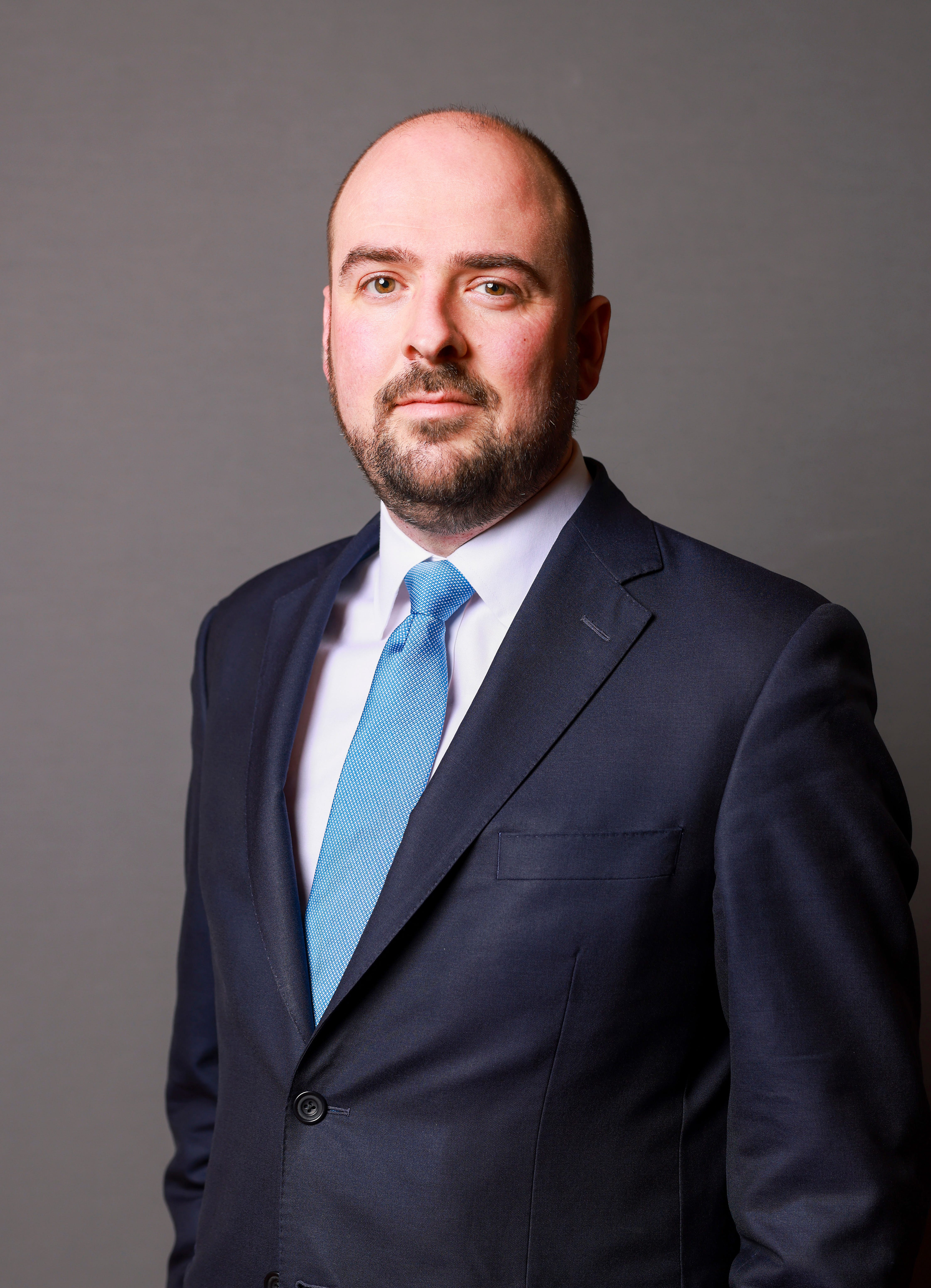
According to Conservative MP Richard Holden, the national health system should not tolerate harmful and oppressive cultural practices and considers the new guidance to be detrimental to general public health. Holden emphasises that marriages between close relatives pose a much greater genetic risk for the children, and it also undermines individual freedom and social cohesion. “Pretending otherwise helps no one, least of all the children born with avoidable conditions and those trapped in heavy-handed patriarchal power structures they can’t leave for fear of total ostracism,” Holden said.
The EU position ("It's for the children") on VPNs is clearly self-defeating. A VPN requires a Credit Card to pay for a subscription, immediately establishing age. Try again Eurotards!!