


Over the past few days, the following topics attracted our attention:
The EEAS Withdrew its Support for the Disinformation Conference
Russia to Spend Billions Blocking the Internet
Afghan Women Arrested Over Dress Code and Solo Travel
The EEAS Withdrew its Support for the Disinformation Conference
The European External Action Service (EEAS) withdrew its support for the disinformation conference organised by EU DisinfoLab. According to the Service, this was because the conference programme was not in line with EU positions. However, according to media reports, the move followed pressure from the US, as the conference portrayed the US as a FIMI actor, writes Euronews.
The disinformation conference #Disinfo2026 was held in Vilnius, Lithuania, on 7–8 October. It is organised by the EU DisinfoLab, and its aim is to combat disinformation.
A few days before the conference began, the EEAS announced that it would not support the event and asked for its logo to be removed from the materials. Canada and Lithuania did the same. Christian Wigand, a spokesperson for the EU’s foreign affairs, explained: “We have decided to have the EEAS logo removed from the material associated with the conference in view of the content of the programme. The organisers chose to frame some of the discussions in a way which does not align with the positions held by the EU.” The EEAS declined to specify exactly how the conference was not in line with EU positions.
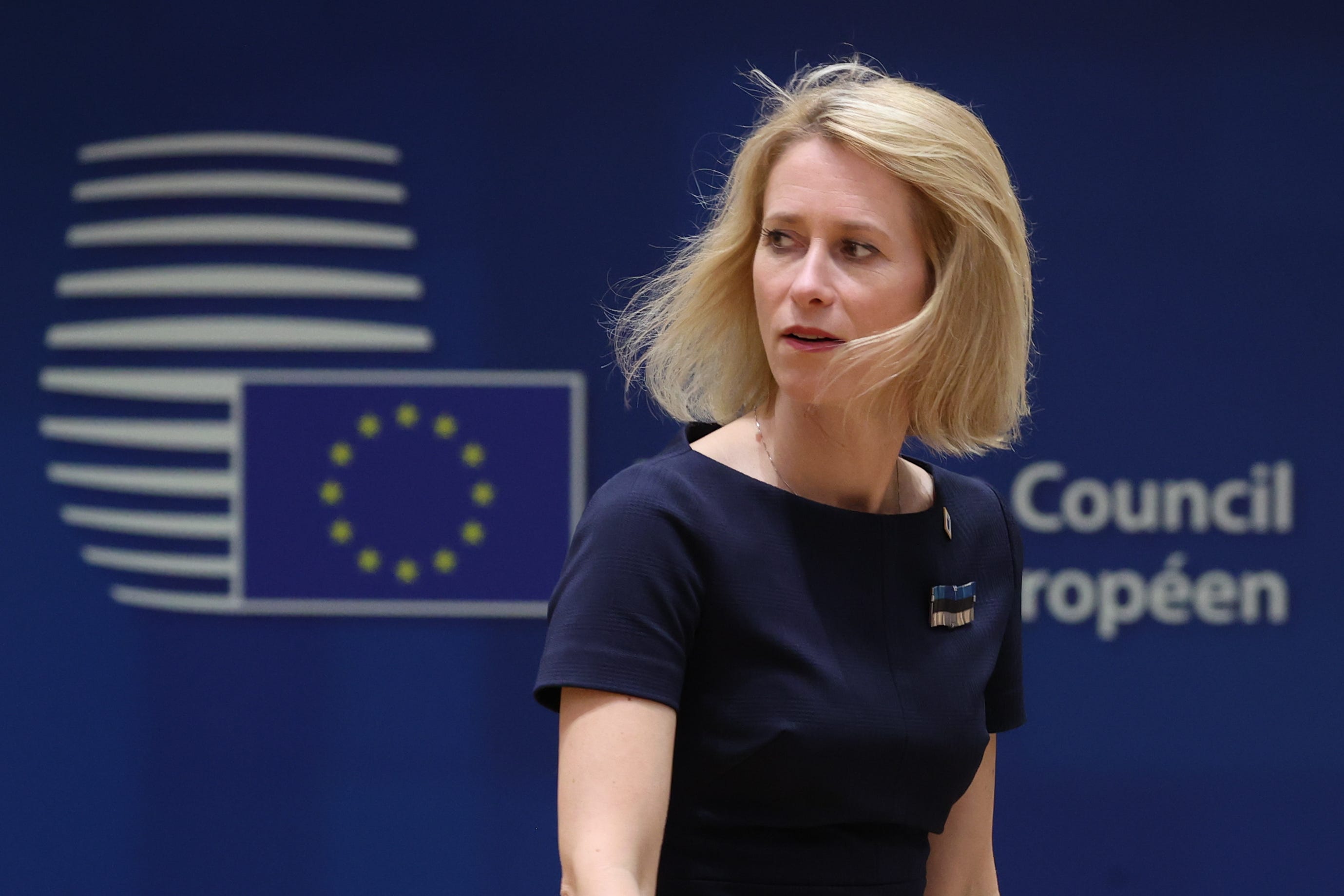
Media reports, however, link the decision to pressure from Washington, as the conference framed the US as a foreign information manipulator (FIMI). Specifically, the programme included a panel entitled “USA as a FIMI threat: acknowledge, adapt, push back”, featuring two researchers and former CIA officer Alex Finley. The discussion was described as addressing “one of the most uncomfortable questions in the counter-disinformation field today: how did the United States become a FIMI threat for Europe?” Speakers explored how to build resilience without Washington and what solidarity looks like in a fractured transatlantic environment.
Many Members of the European Parliament and non-profit organisations are now outraged and believe the decision undermines the EU’s protection of civil society. They argue that it runs counter to the Union’s efforts to shield civil society from disinformation and to the European Democracy Shield, which aims to protect citizens and journalists from government pressure and foreign interference.
Civil society organisations see the decision as evidence that the EEAS is not genuinely committed to fighting disinformation and that the EU treats the issue as a commodity. MEP Alexandra Geese (Germany/Greens/EFA) said: “Pressuring European governments to pull out of the disinformation conference in order to conceal its role in spreading disinformation is not diplomacy. It is foreign interference, and Europe should call it that.” MEP Nathalie Loiseau (France/Renew) stressed that there is no such thing as “good” or “bad” interference, and that the EEAS should combat FIMI regardless of the country involved. Kim van Sparrentak (Netherlands/Greens/EFA) emphasised: “The Trump administration publicly states that it wants to help the far right rise to power in Europe. If the Commission does not even dare to acknowledge US interference, because it fears Trump, we are lost.”
Those who support the EEAS decision, however, believe that Brussels should not pick a fight with Washington, especially not over a conference organised by non-governmental organisations. What is needed far more is transatlantic unity to confront the West’s true enemies. MEP Tomas Tobé (Sweden/EPP) finds it regrettable that the US should feel the EU regards it as a source of FIMI. “When it comes to FIMI, the EU should remain firmly focused on the threat posed by Russia and other hostile actors. Full stop.”
Russia to Spend Billions Blocking the Internet
Russia is preparing new restrictions to end the use of tools that circumvent internet blocks. Plans include surcharges for international traffic to which any VPN connection is subject. The plan also involves placing corporate internal networks under the supervision of the Federal Security Service (FSB). Nearly 60 billion roubles (approximately 630 million euros) have been allocated in the budget for the next three years, reports Meduza.
In recent years, the Kremlin has imposed a series of internet restrictions designed to limit what people can see or cut off access to the free internet. The first was November 2017 provision added to the Law on Information, Information Technology and Information Protection. It prohibited VPN services from circumventing Russian blocks. The provision did not explicitly ban VPNs, but providers must filter traffic from Russian users and block access to banned sites. If a service provider failed to comply with the provision, Roskomnadzor would order the blocking of its VPN service. However, exemptions applied to the authorities and certain companies that required unrestricted access to ‘support their operations for technical purposes’.
A further restriction came in 2018, when web service providers were banned from explaining how to circumvent blocks. This followed a 2016 proposal by the Copyright Protection Association for administrative fines for promoting VPNs. Roskomnadzor supported the idea with its proposal to fine only internet service providers, as inspections had revealed instances where telecommunications operators had provided instructions on their websites on how to bypass blocks. In the end, however, no such fine was imposed, but from November 2017, operators were required to comply with the rules governing the publication of information on access restrictions.
In 2019, after a failed attempt to block Telegram, the Kremlin created the Centre for Supervision and Administration of Public Communications Networks. It reports to Roskomnadzor and uses equipment to filter traffic and block access. This formed part of the “Sovereign Internet Act”, which took effect in November 2019 and enabled centralised control of the Russian internet. Telecommunications operators had to install technical security measures (TSPU systems). These allowed Roskomnadzor to filter traffic and block websites it deemed inappropriate. The systems were later used against VPNs. In 2023, Roskomnadzor’s head, Andrei Lipov confirmed that all Russian communications nodes were fully covered.
In 2021, widespread blocking of VPN services began. Lipov threatened to block all VPNs that flouted Russian law. By the end of the year the agency had announced restrictions services including VyprVPN, Opera VPN, Hola! VPN, ExpressVPN, KeepSolid VPN Unlimited, NordVPN, Speedify VPN, IPVanish VPN, Betternet, Lantern, X-VPN, Cloudflare WARP, Tachyon VPN and PrivateTunnel. A July 2023 provision allowed authorities to add sites sharing information on accessing banned sites to the register of banned websites. In September 2024, a provision was added to the Code of Administrative Offences allowing fines for refusing to cooperate with Roskomnadzor or failing to block banned sites: 80,000 roubles (approximately 840 euros) for individuals and 500,000 roubles (approximately 5,250 euros) for legal entities (rising to 200,000 roubles (approximately 2,100 euros) and 1 million roubles (approximately 10,500 euros) for repeats).
In September 2025, VPN use was added to the list of aggravating circumstances in the Criminal Code. Courts can impose harsher punishment and deny mitigating circumstances if an offender used a VPN while committing a crime. In September 2025, a provision was also added to the Advertising Act banning advertisements for systems that enable access to banned websites, with matching fines in the Code of Administrative Offences.
Russia’s crackdown on VPNs has continued. In spring 2026, the Ministry of Digital Development compelled large Russian companies operating numerous websites and services to detect VPNs on users’ devices. These companies must block such users and share data on VPN connections with Roskomnadzor. In summer 2026 the authorities sought to disrupt VPN services offered by Russian web hosting providers by amending the Law on Information, Information Technology and Information Protection.
At the same time, the 2017 exemption remains in force, allowing companies to use VPNs “for technical purposes necessary to support their operations”. Companies must of course specify which employees will use a VPN, but a new draft bill requires companies to notify Roskomnadzor of VPN use. The government and FSB would approve the rules governing such services, including employee access. The same bill creates a new Roskomnadzor register of individuals and companies offering VPN services via Russian servers. If circumvention is detected, they would be barred from contracts with any Russian service provider for a year. Roskomnadzor and hosting providers would exchange this information.
Citizens are likely to be most affected by the Ministry of Digital Development’s plan to introduce surcharges for international internet traffic. Initially the plan targeted users exceeding 15 gigabytes of international data, which would hit VPN users connecting to foreign servers. As of early October 2026 the government is discussing a 50-gigabyte monthly quota for international traffic, with the surcharge applying initially only to 5G networks.
To fund this, the draft budget allocates the Radio Frequency Centre 19,870,441,200 roubles (approximately 208.6 million euros) for 2027; 19,844,821,700 roubles (approximately 208.4 million euros) for 2028; and 19,870,474,200 roubles (approximately 208.6 million euros) for 2029 — a total of nearly 60 billion roubles (approximately 630 million euros) over three years.
Afghan Women Arrested Over Dress Code and Solo Travel
The Taliban authorities in Afghanistan have arrested or detained dozens of women in recent months, accusing them of violating dress codes or travelling in public unaccompanied by a man, according to the UN.
Between July and September this year, the Taliban detained at least 52 women and one girl in Herat and Kabul, while others have been threatened with arrest. The main reasons were that the women were not wearing a chador (a cloak-like garment covering the entire body), their hair was visible, they wore a coloured scarf or make-up, or they were in a public place without a mahram (male escort).
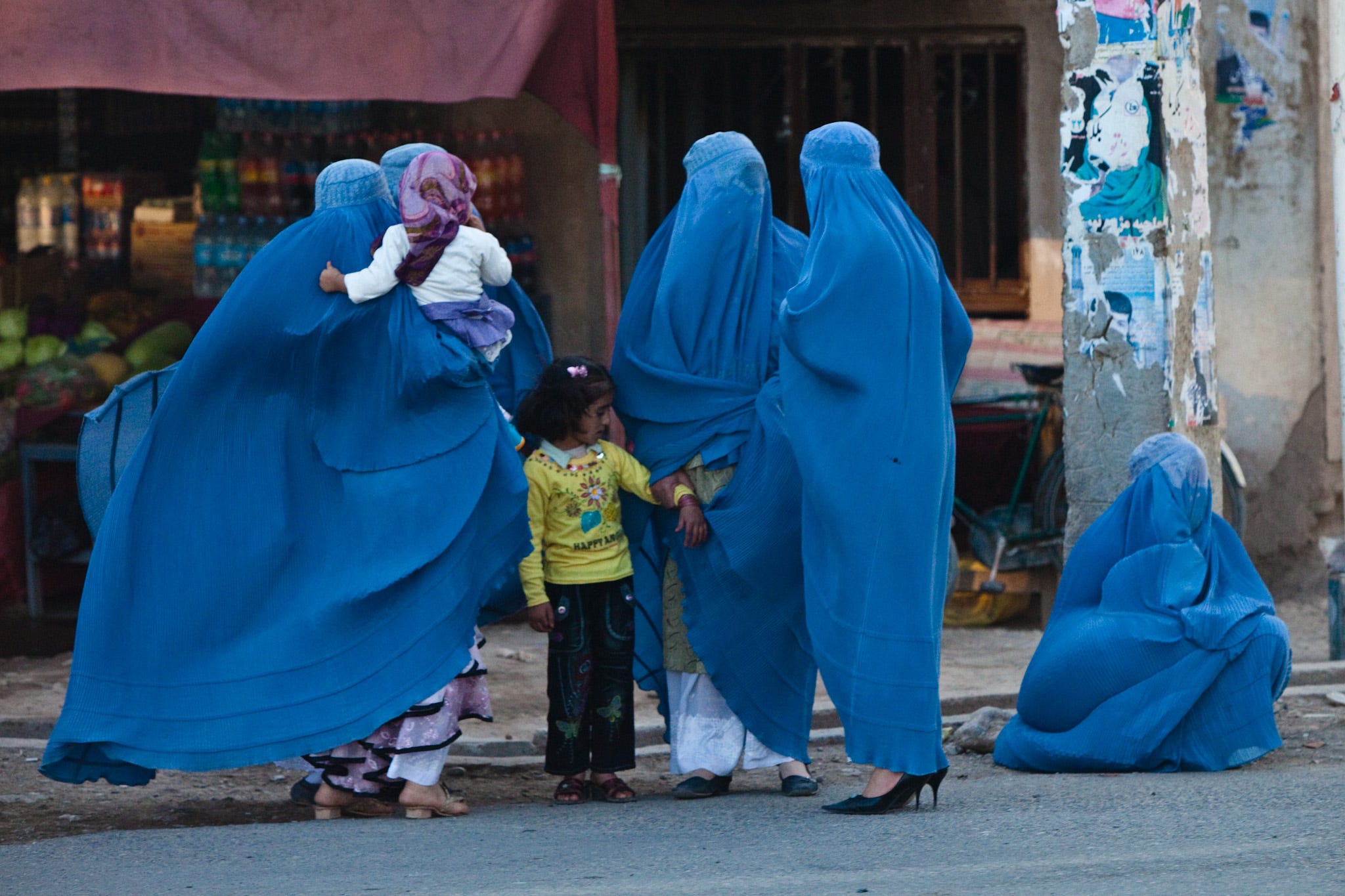
According to the United Nations Assistance Mission in Afghanistan (UNAMA), the women were mostly released after several hours in custody. In any case, UNAMA is concerned about the arrest, detention and threats of arrest of women. These actions violate women’s and girls’ rights to freedom of movement, freedom of expression and autonomy, and the mere act of arrest exposes women to the risk of severe social stigmatisation later on.
Since seizing power in 2021, the Afghan authorities have systematically rolled back women’s rights. Girls are banned from education beyond primary school, and women are barred from most work and public life. The extremely strict dress code, which requires women to be covered from head to toe – including the face – is enforced by the Ministry for the Promotion of Virtue and Prevention of Vice.