


Over the past few days, the following topics attracted our attention:
CIA Official: Fauci Influenced COVID-19 Origins Investigation
Cars Are Spying on Drivers
Sweden Fights Crime: Tracking Devices for Children
CIA Official: Fauci Influenced Coronavirus Origins Investigation
On Wednesday, CIA officer James Erdman III testified before a U.S. Senate committee, stating that Dr. Anthony Fauci influenced intelligence analyses regarding the origin of the coronavirus. The goal was to downplay conclusions that the virus likely escaped from a lab in Wuhan, reports the New York Post.
James Erdman III, a Special Operations Officer who has worked for the CIA since 2013, analysed the investigations conducted by intelligence agencies into the origins of the coronavirus. Erdman stated that Fauci, then director of the U.S. National Institute of Allergy and Infectious Diseases (NIAID), intervened in the work of intelligence agencies on two occasions – February 3, 2020, and June 4, 2021 – with the aim of promoting the “natural origin narrative.” The CIA official noted that while the NIAID director publicly denied having expertise on the coronavirus, he nevertheless sought to steer the investigation behind the scenes.
Erdman also stated that Fauci provided the intelligence community (IC) with a list of vetted specialists, health officials, and scientists. The list included several scientists who participated in a February 2020 conference that resulted in the infamous scientific article “The Proximal Origin of SARS-CoV-2,” which asserted that “SARS-CoV-2 is not a laboratory construct or a purposefully manipulated virus.”
Thus, according to Erdman, Dr. Fauci’s role in concealing the origin of the coronavirus was deliberate. He added: “The CIA and DNI analytic managers responsible for examining the origin of COVID made decisions inconsistent with the conclusions of subject matter experts and analytical tradecraft, consistently favoring the theory of zoonosis or natural origin.” Moreover, as recently as 2023, the CIA refused to assess whether the pandemic began with a lab leak or was transmitted from animal to human, and concluded that the origin of the coronavirus may never be precisely determined.
James Erdman III testified before the Senate after receiving a subpoena from the Homeland Security Committee. His employer, of course, did not want him to testify. After the hearing, a CIA spokesperson Liz Lyons criticized Senator Rand Paul – who is largely behind the current proceedings – for engaging in “political theater”. Especially, considering that the CIA had already acknowledged last year that a lab leak was the most likely source of the coronavirus. In any case, CIA spokesperson Lyons argued that the Senate committee was acting in bad faith and had summoned the official to testify without notifying the CIA. Thus, in the CIA’s view, witness Erdman was not there for the sake of truth, but solely because of Rand Paul’s subpoena.
Senator Rand Paul wrote on social media platform X that Erdman’s testimony confirms claims that officials deliberately misled Americans regarding the origins of the coronavirus. However, taxpayer funds were used to finance dangerous gain-of-function research at the Wuhan lab, which Fauci consistently denied. Erdman’s testimony demonstrates the extent to which efforts were made to suppress and conceal dissenting views within intelligence agencies and keep the public in the dark. In conclusion, Rand Paul believes that President Biden’s preemptive pardon of Fauci may not be lawful. This should now be clarified in court, and he vowed to continue the fight.

Cars Are Spying on Drivers
Today’s cars are technologically complex, with numerous cameras and sensors in their interiors that connect to the internet and collect far more data on passengers than one might expect. However, this data has become a lucrative commodity for both car manufacturers and third-party apps, writes the BBC.
Car manufacturers’ privacy policies state that they may collect location data, destinations, information about passengers, seatbelt usage, speed, braking frequency, and even what is playing on the radio. Some may even collect details such as a driver’s weight, age, race, and facial expressions. Insurance companies, for example, are eager to purchase this information to help determine an individual’s insurance premium. Yet, in most cases, it is unclear with whom the data is shared. Only a few car manufacturers have admitted that the data is for sale, but even they face no obligation to disclose the buyer.
Consulting firm McKinsey found that about 50% of the cars on the road in 2021 were connected to the internet. McKinsey predicts that by 2030, around 95% of new vehicles sold will be connected. Mozilla, the creator of the Firefox browser, analysed the privacy policies of 25 car brands in 2023 and concluded that cars are “the worst product category we’ve ever evaluated for privacy.” According to the report, automakers reserve the right to collect data including the driver’s name, age, race, weight, financial information, facial expressions, and more. Mozilla also found that 19 of the 25 automakers may sell this data. For example, Kia USA’s privacy policy states that the company may collect data on the car owner’s health, marital status, and other assets, as well as information on products purchased and consumption patterns. According to a Kia spokesperson, the company has never actually collected data on a driver’s health or sexual orientation. These items are reportedly included only because they are listed in California’s “sensitive data” provisions.
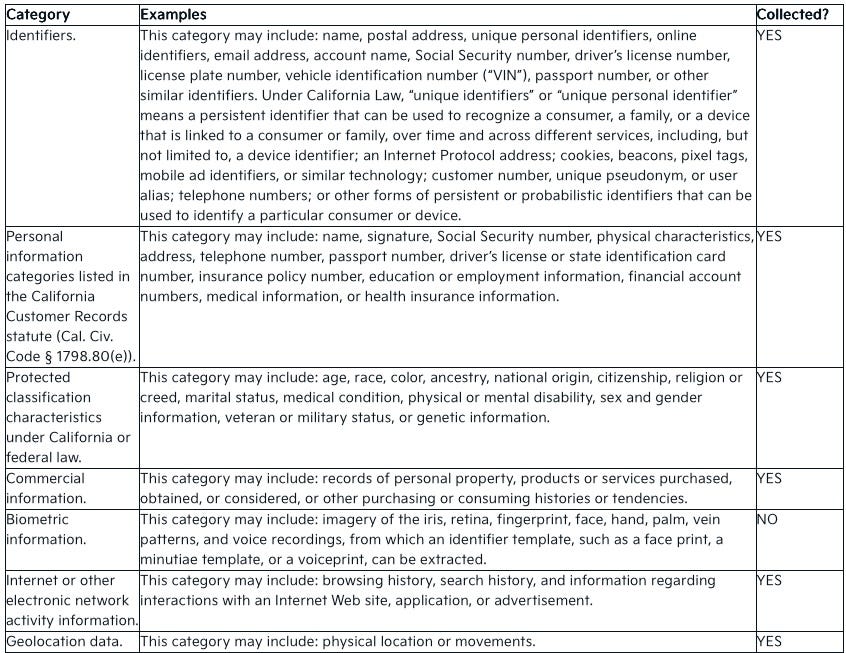
So far, there are only a few isolated cases where any measures have been undertaken in regard to such data collection. For example, General Motors has been accused of selling location data without proper permission and has faced significant penalties and restrictions. General Motors is now banned from selling certain vehicle data for five years. However, authorities do not seem particularly eager to broadly restrict data collection by cars. On the contrary, the U.S., for example, is prepared to use federal law to increase the amount of data a car can collect. American automakers may soon be required to install infrared biometric cameras and other systems that scan the driver’s body language, track their eyes, or monitor behaviours to determine whether the driver is intoxicated or too tired. According to critics, this data creates an entirely new database – a repository of people’s health and habits.
Car owners, however, are mostly unaware that cars are collecting such data. According to Darrell West, a senior fellow at the Brookings Institution’s Center for Technology Innovation, people would be shocked if they knew the sheer volume of data their car collects and transmits. “This basically means that your life can be reconstructed almost second by second,” West added.
Sweden Fights Crime: Tracking Devices for Children
The Swedish government has announced a plan to fit at-risk children aged 13 and above with tracking wristbands to protect them from recruitment into criminal gangs. Social services will have the authority to decide whether this method will be used and whether a particular child is at risk. Officials estimate that approximately 50–100
children would be monitored this way to ensure compliance with curfews, according to Reclaim The Net.
According to Social Services Minister Camilla Waltersson Grönvall, the electronic wristband is designed to look like a watch or regular bracelet. It would therefore not be as conspicuous or stigmatizing as ankle monitors worn by convicted criminals. However, its function would be quite similar: it tracks the bearer’s movements and transmits information to the authorities. The Minister stated: “If children are at risk of falling into the hands of serious criminals, we must have more tools to protect them.” She added that electronic monitoring could be used in serious situations and is necessary for the protection of children.
According to the minister, there are currently about 173 children under the age of 15 who are suspected of involvement in murder or its planning. She also noted 52 evidentiary proceedings involving children this year, in which courts determine guilt if the child is below the age of criminal responsibility. However, no punishment will follow.

Critics view the electronic wristband as a device that monitors the child and their location, even though the child has not faced any conviction. The decision rests solely on a social worker’s assessment of a future risk, and the child does not need to have committed any offense. There only needs to be a probability of risk – in other words, monitoring based on conjecture. Critics argue that Sweden’s existing and planned laws collectively form a surveillance infrastructure focused on children. This treats the youngest members of society more as subjects of surveillance than as citizens in need of support. Children’s rights organizations, the Swedish National Council for Crime Prevention, and UNICEF have stated that such surveillance infringes on children’s civil liberties.
On the other hand, Sweden is grappling with serious crime, where gangs recruit minors precisely because the legal consequences are less severe. Last year, the Swedish police reported at least 1,700 minors and young people among criminal gang members, many recruited while in youth shelters.
Thus, the police have been granted – or are set to be granted – various additional rights to monitor children. Since last October, the Swedish police have had the right to monitor the electronic communications of children under 15, even without suspicion of a specific crime. Furthermore, as of July 1, the age of criminal responsibility for serious crimes will be lowered from 15 to 13. The government is also planning to grant the authorities the right to eavesdrop on a child’s phone calls, read their messages, and track their location in real time.
I wonder how much info SiriusXM sells. Our 2016 cars (GM and Kia) came with one. Anybody know how to completely disable it?