


Over the past few days, the following topics attracted our attention:
Germany Plans To Ban Property Deals Based on Politics
Australia’s Police State: No Right To Remain Silent
Russia Labels Communist Crimes Archive “Extremist”
Germany Plans to Block Property Deals Based on Politics
The German government has proposed granting local authorities the right to block real estate transactions, including the purchase of residential property, if a potential buyer is suspected of “unconstitutional” activities. However, the term is worded rather vaguely in the laws and could allow the state to target dissidents and politically “undesirable persons” even if they have not broken any laws, according to Remix News.
The bill is being led by Verena Hubertz, the Social Democratic Party (SPD) Construction Minister, and according to the explanatory memorandum, the aim is to “strengthen the orientation toward the common good,” “prevent social injustices,” and halt “the spatial impact of organized crime as well as right-wing, left-wing, or religiously motivated extremist activities.” Unconstitutional activity is characterized as an active approach to achieving one’s goals, but it is not necessarily combative, aggressive, or illegal. At the same time, it must objectively be capable of exerting political influence at some point in time.


Thus, a local government may take action if it finds that a buyer supports such activities and if, in the local government’s view, the purchase endangers the “socially stable population structure” or the “region’s suitability for meeting the social and cultural needs of the population.”
Moreover, the potential buyer does not need to have a valid criminal conviction nor to have broken the law. As a result, these new powers could provide grounds to prohibit real estate transactions solely on the basis of political views. Given the German authorities’ past behaviour, the focus is likely to be on those on the right.
The draft bill notes that right-wing and left-wing groups often purchase real estate, with left-wing groups even seizing properties to create politically motivated housing projects. At the same time, the draft focuses more on right-wing examples, where right-wing dominance is said not to be coincidental but a deliberate strategy. “Handouts on prevention against right-wing extremism always refer to the involvement and activation of the local population. However, at a certain point, a counterweight of civil society initiatives can no longer be achieved, which can further promote segregation of the resident population,” write the draft’s supporters.
The draft of the bill asks local governments to rely on information from security agencies, and to this end, the law governing the Federal Office for the Protection of the Constitution (BfV) will also be amended. The BfV is an influential intelligence agency in Germany that has, for example, monitored members of the Alternative for Germany (AfD) party (see also here, here). With this legislative change, the BfV will be authorized to share personal data with local governments to vet potential buyers.
Critics warn that the law could be used much more broadly than its stated objectives claim. For example, the criminal police have investigated individuals for offenses such as “the use of symbols of unconstitutional and terrorist organizations.” However, such charges have often been levelled against those who have criticized the government (see here, here, here, here, here, here).
Australia’s Police State: No Right To Remain Silent
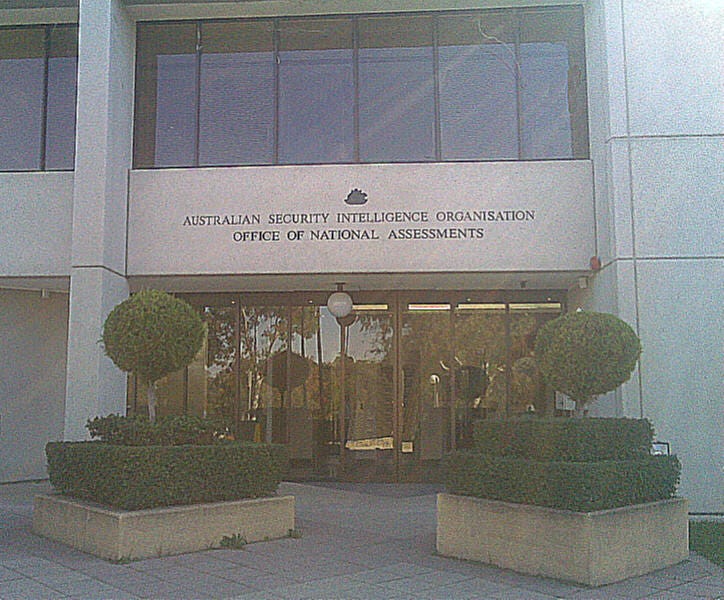
Australia plans to amend its laws so that ASIO’s compulsory questioning powers become permanent and no longer require the filing of charges. However, citizens will no longer have the right to remain silent and the right to a lawyer will be limited. In other words, the plan is to expand the powers of the country’s main intelligence agency and significantly curtail citizens’ rights, writes Sydney Criminal Lawyers.
The Australian House of Representatives has passed and sent to the Senate Australian Security Intelligence Organisation Amendment Bill (No. 2) 2025 (ASIO Bill), which seeks to perpetuate the temporary provisions established in 2003 and renewed several times since that time. These provisions form a part of more than 100 national security and counter-terrorism laws.
Among these is, for example, the ASIO Director-General’s authority to summon individuals who are not suspected of any offence and who are as young as 14, to be interrogated regarding espionage, politically motivated violence (including terrorism), and foreign interference in order to gather information about threats to national security. The questioning may last up to a total of 24 hours. It is worth noting that the current temporary regulations allow both minors and adults to be questioned for a total of 24 hours as well, but the maximum consecutive questioning time permitted for adults is 8 hours and for minors only up to 2 hours.
The authorities are also seeking, through the current amendments, to expand the scope of compulsory questioning, for it to include sabotage, incitement to communal violence, and attacks against the Australian Defence Force. On top of it, there is also a completely new provision: “The protection of Australia’s territorial and border integrity from serious threats.”
Furthermore, the mandatory questioning procedure grants the head of ASIO the authority to request an interrogation order from the Australian Attorney-General for adults or minors – including those as young as 14 – even if they are not suspected of any crime. Australian police may, at the same time, detain the person, if necessary. A detained person is compelled to answer any questions and produce required documents or items. Failure to do so can result in up to 5 years’ imprisonment, meaning the person being questioned has no right to refuse what is asked of him or her.

ASIO regulations also stipulate that an adult may contact a lawyer at any time during the proceedings, and a minor must have a representative, such as a lawyer, parent, or guardian. However, if an adult must appear for questioning immediately, the Department of Home Affairs will appoint a temporary lawyer for him. Furthermore, ASIO has the right to refuse a specific lawyer requested by the individual if the state considers the lawyer a potential threat to national security. But it doesn’t stop there – the individual’s lawyer may also be removed from the proceedings during questioning if they are deemed disruptive.
According to the government, the new measures are based on the 2025 Threat Assessment by ASIO Director-General Mike Burgess. It assumes that Australia is likely to face multiple threats over the next five years, as the national security environment becomes “more dynamic, more diverse, and more challenging.”
Many lawyers and civil rights advocates, however, describe the new ASIO powers as “police state” measures. They argue that innocent people can be forced to speak, their rights are significantly restricted, and the powers can be easily abused. According to the critics, these strict rules may silence dissenting opinions and wrongly affect ordinary citizens. Although the temporary powers have reportedly been used only rarely so far, they are nevertheless highly problematic in a democratic country.
Russia Labels Communist Crimes Archive “Extremist”
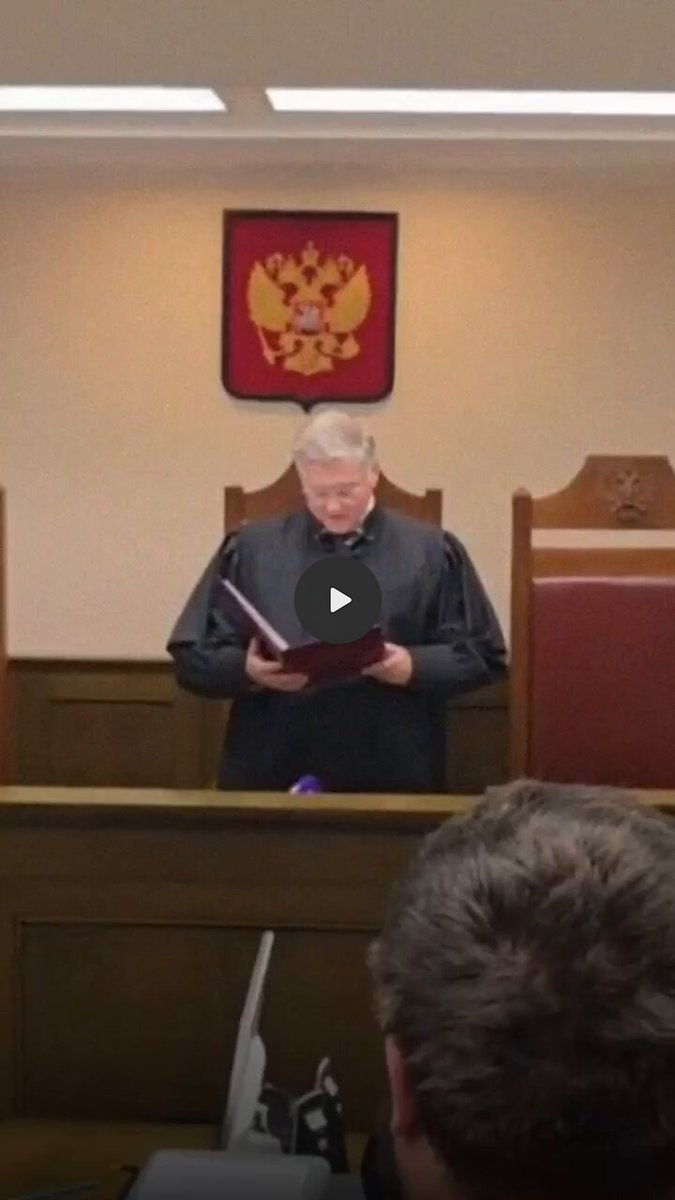
This Thursday, Russia’s Supreme Court declared the human rights center Memorial an extremist group, making the center’s activities and its employees subject to criminal prosecution and effectively bringing the organization’s work to an end. The center was founded in the late 1980s and documented political repression during the Soviet era while assisting modern-day political prisoners. In 2022, the center was awarded the Nobel Peace Prize, reports The Moscow Times.
The Supreme Court referred to the center as “the Memorial international public movement,” justifying the decision by claiming that the center’s activities are “significantly anti-Russian” and aimed at “undermining historical, cultural, spiritual, and moral values,” thereby damaging “the foundations of the Russian state.”
The authorities now have the right to shut down all remaining projects or departments associated with Memorial. Furthermore, they may file criminal charges against any Russian citizen who cooperates with Memorial’s refugee network, shares its content, or provides financial support to the organization.
The Memorial Human Rights Center was founded in 1987 to document political repression in the Soviet Union and provide legal aid to political prisoners. In 2022, the center was awarded the Nobel Peace Prize as one of Russia’s oldest civil rights organizations. Even then, the Russian authorities had begun to crack down on the center, claiming it had repeatedly violated the “foreign agents” law. Following the Nobel Peace Prize, a Moscow court ordered the confiscation of Memorial’s headquarters and demanded them to be converted into state revenue.
In any case, the center’s activities were increasingly at odds with the current regime under President Vladimir Putin, who has sought to improve the Soviet Union’s image. The authorities have now delivered the final blow.
Memorial announced that in order to protect its staff and volunteers from the repressive state apparatus, it is ceasing all direct operations in Russia. The center added that the Supreme Court’s ruling is unlawful and represents the final stage in the state’s attempt to completely crush independent civil society.

The EU Delegation in Russia called the Supreme Court’s ruling politically motivated. The Delegation noted that Memorial has been a bastion of historical memory and the defense of human rights for decades. “This step cannot erase its legacy,” the Delegation affirmed, adding that the Russian state itself had previously recognized and supported the center’s activities.

New ASIO powers are irrational because innocent people tent to falsely incriminate themselves when forced to make statements that are in response to leading questions.
Anyonene can be made to seem guilty even if they are not.
Interesting that the German government is doing something similar to the British government which apparently prevents local councils from prioritising local people.
A young woman with a baby boy was refused housing by the council and offered to put her in a hotel in a major city leaving her vulnerable. She was saved by a local ex-drug dealer who provided her with a home.