


Over the past few days, the following topics attracted our attention:
Guilty of Hate Speech for Citing Immigration Crime Stats
Russia Bolsters Surveillance with State Messaging App Max
UK: Work Should Be Banned During Heat Waves
Guilty of Hate Speech for Citing Immigration Crime Stats
In Belgium, former Member of Parliament Dries Van Langenhove was convicted of hate speech after a 2024 lecture in which he presented facts on the consequences of mass immigration, including statistics on crime, housing shortages, and other social problems, reports The Noticer.
In the lecture, the right-wing activist discussed immigration issues, such as the “great replacement theory” and multiculturalism. Van Langenhove described how high levels of immigration contribute to crime and housing shortages. He also highlighted other social problems, including declining academic standards in schools, overcrowded prisons, and an overburdened social security system. He argued that inequality stems more from group differences than from structural racism. “People are not equal, animals are not equal, plants are not equal, there is nothing in nature that is equal,” he argued.
Because of this lecture, the Correctional Court of First Instance in Leuven found Van Langenhove guilty of hate speech. He was also convicted of inciting violence on the basis of nationality, race, skin color, origin, or affiliation, and of spreading ideas of racial supremacy or racial hatred. The judges noted that while freedom of speech is protected to a certain extent in Europe, Van Langenhove’s lecture crossed into criminal territory. In their view, it is not necessary for others to commit a punishable offense; it is sufficient that they are enticed to adopt an intolerant attitude toward a particular group. The court found that he intentionally incited hatred and criticized him for using remarks intended to absolve himself of responsibility. His overall message was deemed to shift blame for social problems onto certain groups and promote group hierarchy.
Van Langenhove commented on the verdict on X, noting that the judges seemed disappointed they could not impose a prison sentence. He asserted that all allegations against him were based on statistics and science. However, the judge stated: “Even if all of the statements made by Van Langenhove are based on scientific evidence and statistics, it makes no difference to the criminal intent. Van Langenhove is not charged with spreading false information. He is charged with presenting facts in a way that incites hatred against persons on the grounds of one or more of the protected criteria in the Anti-Racism Law.” But in Van Langenhove’s view, neither the prosecutor nor the judge presented evidence of how or against whom he had incited hatred. The main argument was that he had created a “hostile atmosphere of us versus them” toward immigrants. However, according to Van Langenhove, this is not true, as he does not view immigrants as enemies but rather blames those who organized and permitted mass immigration.


Previously, Dries Van Langenhove received a one-year prison sentence (largely suspended) for “offensive” memes posted by others in a private group chat. This led to a 10-year ban on running for parliament after appeals. He was also fined 4,000 euros in a separate equality complaint related to a lecture at a Catholic university.
Russia Bolsters Surveillance with State Messaging App Max
Russia’s state-sanctioned messaging app Max has been viewed as a surveillance tool from day one and is considered unreliable, even dangerous. Now, IT specialists have discovered several new features that enhance surveillance. At the same time, users can be forced to update the app, with each update bringing new surveillance tools and security vulnerabilities, writes Meduza.
A user of the IT site Habr published an analysis of the Android app Max by reverse engineering its APK file. The author confirmed that the app contains built-in tracking mechanisms and other user-unfriendly features. For example, Max collects and sends information about apps downloaded to the device to VK servers and checks for the presence of a VPN. Furthermore, a server command can block the device’s use until the VPN is turned off. In addition, Max monitors the user’s address book and changes to contacts, sending this information to VK servers.

The author also discovered several previously unknown features. For example, the app allows disabling messaging service encryption with a single command. Another feature is a forced update, where the app displays a notification: “You cannot write or call in this version” along with an update button. The button takes the user to download.max.ru, meaning the update comes directly from the app’s server, not through the Google Play Store. This makes Max resistant to blocking: if Russia restricts Google’s services or if Google does so in Russia, the new version would still reach users.
It also turned out that it is possible to disable TLS security checks in Max via a server command. In that case, the app no longer verifies whether the connection to the server is secure, leaving the user vulnerable to attacks. Anyone who controls the network - such as Roskomnadzor via Russia’s internet traffic filtering system (TSPU) or a mobile operator - could potentially read messages, files, and even passwords.
In addition, the author discovered that the version of Max he examined included a neural network for real-time speech recognition. It was capable of identifying the speaker by voice, detecting specific keywords, and generating transcripts. When the first reports emerged, VK explained that Max’s speech technology uses machine learning to analyze connections and adjust parameters. In the version released in May, the neural network feature for speech recognition has been removed, but the technical capability to add it back apparently remains.

Russian authorities have done everything possible to push users toward Max and away from Telegram and other apps. Telegram is largely blocked in Russia, though not directly banned, and can be used with VPN workarounds. It is therefore not surprising that Max is gradually displacing Telegram. However, this is rarely due to voluntary preference. Users are often forced to adopt Max through pressure from authorities and employers, as well as requirements from government services, education, finance, healthcare, and even transportation.
UK: Work Should Be Banned During Heat Waves
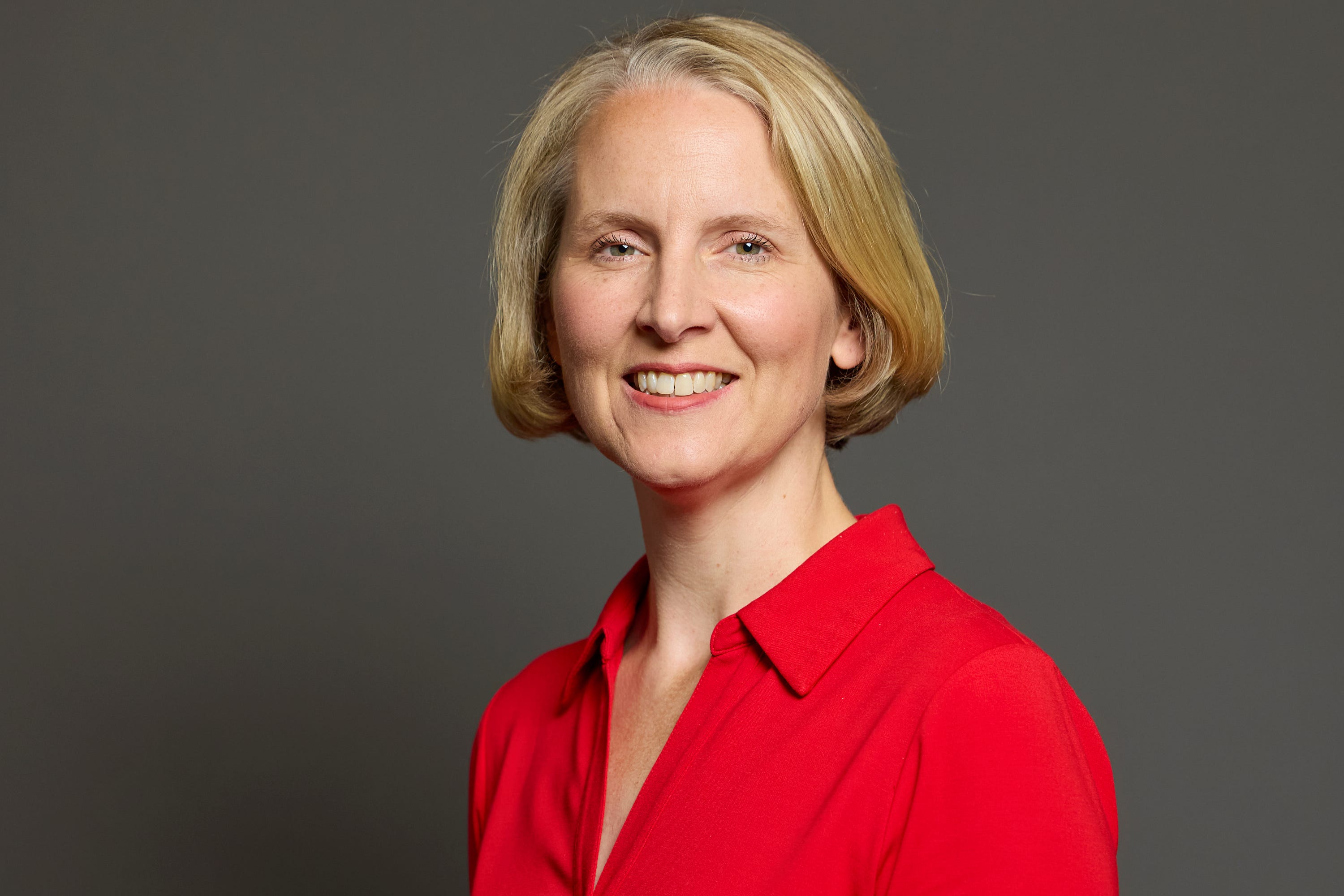
The UK’s influential Climate Change Committee (CCC) is recommending measures that would allow people to stop working during heat waves. According to Environment Secretary Emma Reynolds, the government is carefully considering the proposal, which would require companies to allow employees to take time off during extreme heat, according to The Telegraph.
The Climate Change Committee issued this recommendation on temperature limits in a new report advising ministers on how to cope with climate change. Among other things, it includes measures to protect people from increasing heat, floods, and droughts. While air conditioning in public buildings is recommended, one of the main proposals is a maximum working temperature
According to the CCC, a maximum working temperature would help reduce health risks to employees caused by high temperatures and encourage employers to invest more in cooling systems. “Businesses are largely responsible for investing in their own adaptations but must ensure that workplaces and working practices are safe for employees, including for those working outside,” the report states. As examples, it highlights Spain, where the maximum permitted indoor temperature is 27 °C for sedentary work and 25 °C for light physical work.
The CCC also warned that by 2050, significantly warmer summers are predicted, with temperatures in southern England potentially consistently exceeding 40 °C and occasionally reaching as high as 45 °C. At the same time, heat waves in the UK will become more frequent and last longer.
In addition, the Health and Safety Executive (HSE) is working on heatwave contingency plans, but the agency is not expected to set a maximum temperature by law. However, the agency plans to update the Code of Practice on Working Conditions, first approved in 1992, and has stated that the safe minimum temperature should be 13 °C for heavy physical work and 16 °C for light physical work.
However, it is the unions that have fought hardest for a maximum working temperature. One concluded that even the current recommendations of the CCC regarding maximum temperatures are insufficient and that people working outdoors should also be included. According to another union, the maximum working temperature should be 25 °C, as “scorching heat” can be life-threatening.
At the same time, several other “key” organizations have also actively put climate change back on the agenda. For example, the WHO European Commission on Climate and Health asked the WHO to declare a climate health emergency. The UN General Assembly, however, endorsed an international court ruling stating that climate action is a legal obligation for nations, not a political choice. None of them, however, seem to be taking into account a recently published article in which even the so-called mainstream of climate science has largely abandoned the most extreme climate scenario, according to which the world was supposed to warm by 4–5 °C by 2100, which in turn was supposed to lead to catastrophe. Now, however, based on current trends, scientists have concluded that such a sudden and extreme climate change is not on the horizon, and thus a climate catastrophe of that scale will not occur. Many scientists have been explaining this more realistic view for years, adding that the role of CO2 and the use of fossil fuels as causes of climate change is either marginal or insignificant.
The Belgiums have always been an irrelevance and a waste of space and this proves it beyond doubt.