


Over the past few days, the following topics attracted our attention:
UK Hospital Imposes Language Ban on Staff
Hackers Obtain Millions of Personal Records from French Government Portal
Japan Weighs Content-Focused Social Media Age Verification
Hackers Obtain Millions of Personal Records from French Government Portal
According to the French government, the National Agency for Secure Documents (l’Agence nationale des titres sécurisés, ANTS) discovered on March 15 that the portal ants.gouv.fr had been hacked. This is a portal where citizens can perform official transactions, including those related to identity documents (passports, ID cards), driver’s licenses, and vehicles. According to authorities, the security incident affects 11.7 million accounts, while the hackers claim to be selling approximately 19 million records.
According to the agency, the data breach includes usernames, titles, last names, first names, email addresses, dates of birth, account identifiers, and, for some accounts, postal addresses and phone numbers. Biometric data, for example, has reportedly not been compromised. Authorities are advising citizens to change their account passwords and remain vigilant regarding suspicious or unusual messages that appear to have been sent by ANTS. The incident has also been reported to the French Data Protection Authority (CNIL) and the public prosecutor’s office.
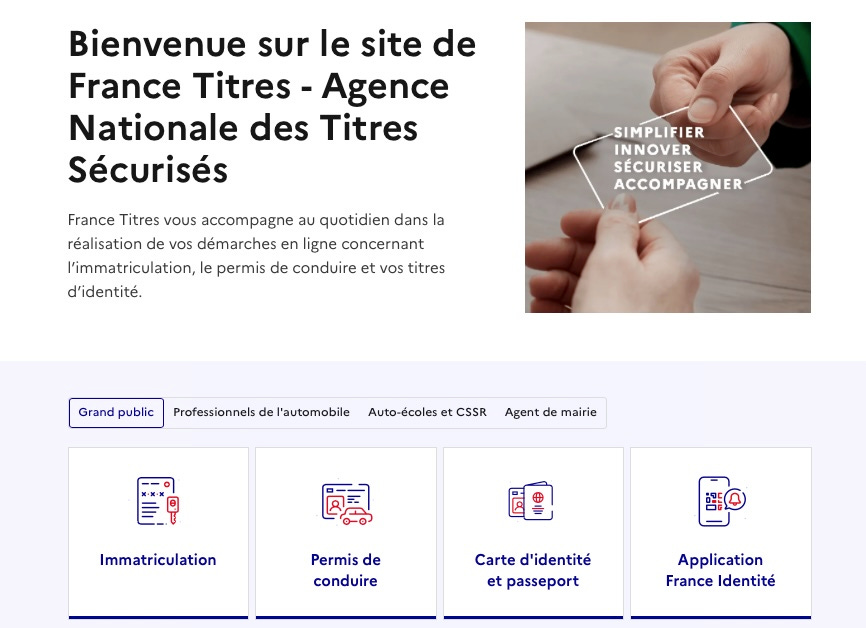
According to Cybernews, a hacker group operating under the aliases breach3d and ExtaseHunters recently posted an announcement on dark web forums claiming to have successfully breached the agency’s digital infrastructure. The hackers claim that their dataset contains 18–19 million records, which significantly exceeds the figure released by the government and covers nearly a third of the country’s population. The sellers confirm that the data is authentic and that this is a new breach, not a previously compiled collection.
A post by the hacker breach3d on April 16 states: “Today, we are announcing a major data compromise of the ANTS (Agence Nationale des Titres Securises). The French government agency responsible for secure identification and legal titles. Despite their mandates on ‘security,’ their infrastructure proved insufficient. As a result, we are listing a database containing 18,000,000 records for sale.” The hackers state quite bluntly that the French government is not exactly a model of excellence in the field of digital security: “It seems the French government should stick to culinary arts, their digital defenses are as flaky as their croissants.”
Incidentally, the first reports emerged last September claiming that approximately 12–13 million user records were being offered. Government agencies have not confirmed this data breach, but the dataset has reportedly been circulating on dark web forums ever since. If this leak is confirmed, it must be acknowledged that the French government has either completely failed at their task or did not notice the security issues.
At the same time, these attacks are by no means the first or the largest in France. For example, in 2024, healthcare payment service providers Viamedis and Almerys reported a data breach affecting approximately 33 million people. This February, the bank account registry was hacked, and in January, the immigration office was breached. However, hackers obtained personal data from ANTS, including passport, ID card, driver’s license, residence permit, and vehicle registration data, which may be far more valuable to criminals. Consequently, affected citizens are at risk of attacks stemming from social engineering and user profiling.
UK Hospital Imposes Language Ban on Staff
A teaching hospital trust in Lancashire, UK, has instructed medical staff to stop using common English expressions such as “it’s raining cats and dogs” and “the early bird catches the worm.” The hospital trust is promoting diversity and inclusion in this way and believes that the language restrictions are necessary because certain expressions may offend foreigners, according to GB News.
Although the guidelines compiled by the trust were first published last year, they are updated every three years. According to the guidelines, it is extremely important for healthcare workers to use inclusive and respectful language, thereby helping to create a healthier society. Common English expressions such as “it’s raining cats and dogs” and “the early bird catches the worm” have now been added to the list of banned phrases. In addition, the guidelines recommend avoiding the word “chairman” and using “chairperson” instead. It is also considered inappropriate to address a group as “guys”; instead, neutral alternatives such as “colleagues,” “team,” or “members” should be used. Employees are also instructed to use the pronoun “they” when gender is unclear, rather than the default masculine or feminine pronouns “he” or “she.” (See also UN Language Guidelines.)

According to the hospital trust, these words and phrases are not “culturally sensitive,” may not translate easily into other languages, and could require additional explanations for colleagues and patients of other nationalities.
Critics have dismissed the guidelines as an April Fool’s joke but are concerned that language policing is becoming increasingly widespread, including within the healthcare system. Toby Young, head of the Free Speech Union, warned that such guidelines could trigger a witch hunt against employees who have used perfectly ordinary expressions. Meanwhile, critics argue that language policymakers keep adding new guidelines and banning more and more words and phrases. According to Young, the concept of “cultural insensitivity” is extremely broad and too easily applied. “If you’re not fluent in ‘woke-ish’ – which is a constantly changing modern dialect – you will eventually be cancelled,” Young added.
It is worth noting that the hospital trust is facing significant financial difficulties and had recorded a deficit of 42.1 million pounds (approx. 48 million euros) as of November 2024. At the same time, the trust spent £100,723 (approx. €115,000) on salaries for 2.3 employees in the equality and diversity sector during the 2024–2025 fiscal year. The highest-paying position is in the diversity sector, with an annual salary of 48,526 pounds (approx. 56,000 euros). By comparison, a hospital nurse’s salary is only 31,049 pounds (approx. 36,000 euros) per year.
Japan Weighs Content-Focused Social Media Age Verification
Japanese politicians are considering their own version of social media age verification, focusing on content filtering. In other words, they are considering default, age-based content sorting to combat social media addiction. In addition, Japan is exploring a system that would measure the risks of each platform, according to Biometric Update.
More specifically, Japan’s Ministry of Internal Affairs and Communications wants age-based filtering to be enabled by default on social media. According to the ministry, operators verify a customer’s identity at the time of purchase, and, under current law, social media companies are already required to filter out content unsuitable for minors. However, measures taken by platforms have varied widely so far, and parents can easily disable such filters. As a result, authorities doubt the effectiveness of the current system.
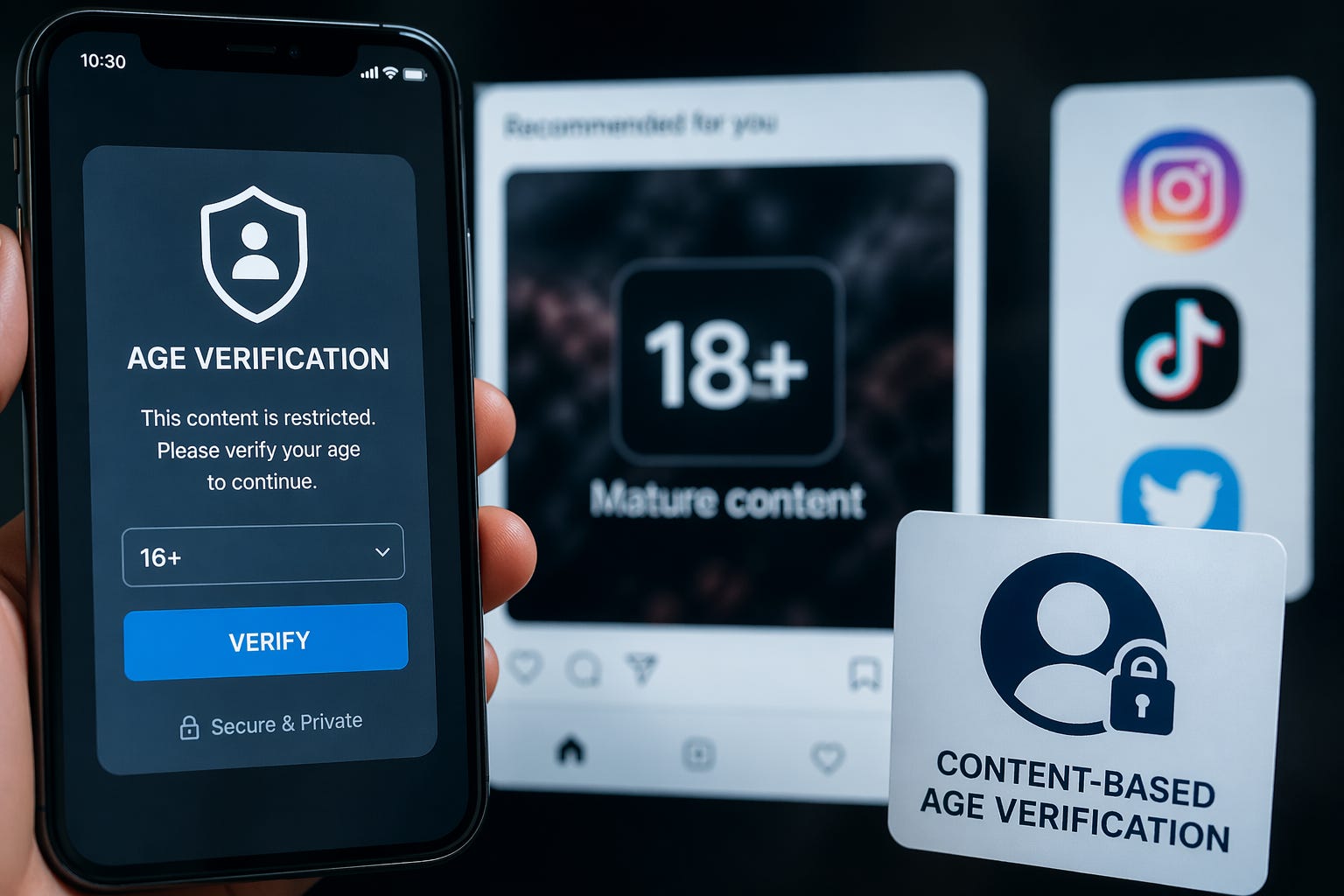
The government has not yet announced age ranges for content control or specific technical solutions. Currently, the Japanese government is awaiting a final report on potential solutions, after which it plans to introduce more specific legislative changes or guidelines.
The government has also announced that it is developing a new assessment system to determine the risks of social media platforms, such as overuse or exposure to harmful content. The system would focus on features such as content filters, ad display restrictions, and other time limits.
Among Asian countries, Indonesia has banned social media for those under 16, affecting approximately 70 million minors, with the government citing the ban as a measure to “restore children’s sovereignty over their future”. Malaysia is also drafting social media rules to prevent those under 16 from accessing social media. Malaysia’s plan may include identity verification and MyDigital ID, which critics say could result in one of the world’s strictest controls.
Coincidence or one event resulted in the other? Same day separate articles and 2 different websites. French system is hacked, the other switching government systems from Microsoft Window team to Linux.
Free speech is a non-negotiable human right and attempts to hinder it in any way should be met with the full force of government.
A government which does not protect free speech should be replaced or abolished by a full force of the population.