


Over the past few days, the following topics attracted our attention:
Half of Britons Feel That Freedom of Speech Has Declined
Portugal’s Largest Solar Power Station Has Gone Into Insolvency
Pavel Durov Criticises French Free-Speech Charges
Half of Britons Feel That Freedom of Speech Has Declined
According to a survey commissioned by the civil liberties organisation Liberty and carried out by Deltapoll, involving more than 2,000 respondents, 51 per cent of Britons say their confidence in the Government’s ability to protect their right to express views (even when those views disagree with the Government) has worsened over the last two years. Only 10 per cent felt that this confidence had improved, reports GB News.
Of those surveyed, 42 per cent said the ability to express controversial political views without facing legal consequences had deteriorated. Only 9 per cent felt this ability had improved, whilst 39 per cent felt the situation had stayed the same. Almost four in ten people, or 39 per cent, felt that the ability to speak freely on important issues had deteriorated, as had their understanding of what is permitted and what is prohibited under UK law.
Liberty attributes this outcome to government measures. These include entry bans on eleven individuals due to speak at the ‘Unite the Kingdom’ rally, as well as on left-leaning political commentators Cenk Uygur and Hasan Piker. Liberty also points to the arrest of around 3,000 people showing support for “Palestine Action” under counter-terrorism legislation.
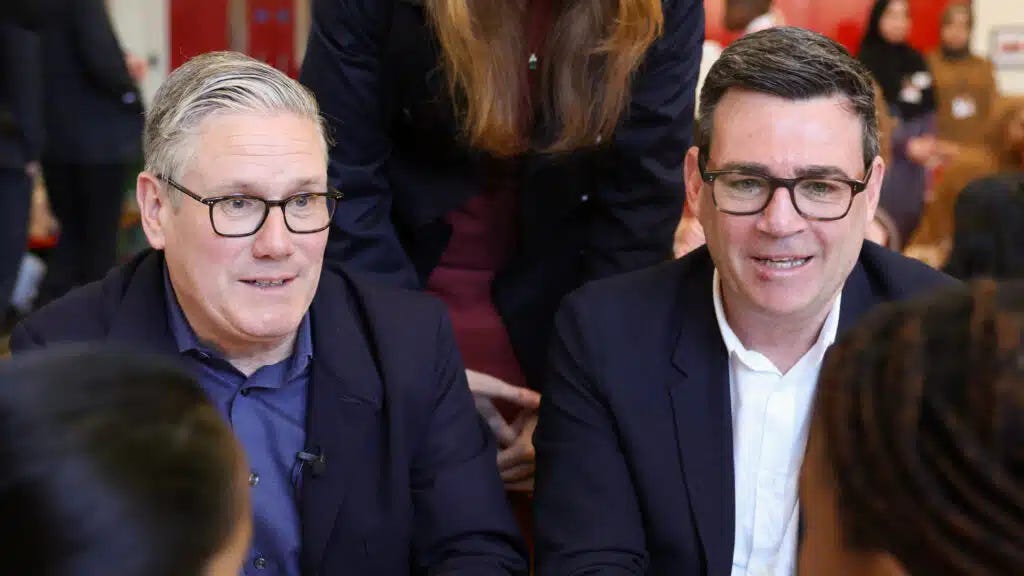
Liberty’s director, Akiko Hart, said that the UK’s previous Prime Minister, Keir Starmer, failed to demonstrate leadership or consistency on freedom of speech. This, in turn, has fuelled claims of a two-tier approach by the police. Hart explained: “Free speech is a fundamental right that benefits us all, and a healthy democracy depends on people feeling confident that they can express themselves freely and disagree with one another.” She added that, as the country is home to many different cultures and opinions, disagreements are inevitable, and opinions which may upset or offend some people are unavoidable. “This makes it all the more important for the new Prime Minister to adopt a non-partisan approach to free speech and move away from greater restrictions,” Hart stated. Liberty concludes that the UK’s new Prime Minister, Andy Burnham, should take these findings as a warning and also protect the public’s right to express offensive or insulting views, rather than focusing only on protecting people from hate speech.
According to a spokesperson for the Home Office, freedom of speech and the right to protest are fundamental rights that the government protects. “But there is a clear difference between expressing a view and engaging in unlawful behaviour such as inciting hatred or violence, which it is right that we address,” the spokesperson clarified.
Portugal’s Largest Solar Power Station Has Gone Into Insolvency
The company operating Portugal’s largest solar power station, a 220-megawatt facility in Alcoutim, has run into financial difficulties. The Algarve project, which cost 175 million euros, failed to generate sufficient revenue. The plant has been plagued by fires, falling sales prices and a legal dispute with a Chinese contractor, reports The Resident.
The solar power station’s owner, the Portuguese company Solara4 - whose parent company is Welink Energy Portugal 2 UK Limited, registered in the UK - has declared insolvency and plans to sell the station to new investors. According to a report by the consultancy firm BDO, the insolvency was caused by a combination of factors: the solar power station generated far less energy than expected, it was hit by technical faults and fires, and wholesale electricity prices fell. The latter was influenced by the rapid expansion of solar energy production on the Iberian Peninsula, which, during periods of oversupply, has driven selling prices down to zero in some cases and occasionally even into negative territory. Consequently, the Alcoutim power station’s revenues have been significantly lower than initially forecast.
At the same time, the power station has experienced several fires over the past year, which have damaged equipment, disrupted production and increased maintenance costs. Some incidents were linked to equipment faults, such as problems with inverters, which rendered part of the power station inoperable for a long period. In May, it was also reported that 10 per cent of the plant was out of operation because dry vegetation was awaiting clearance.
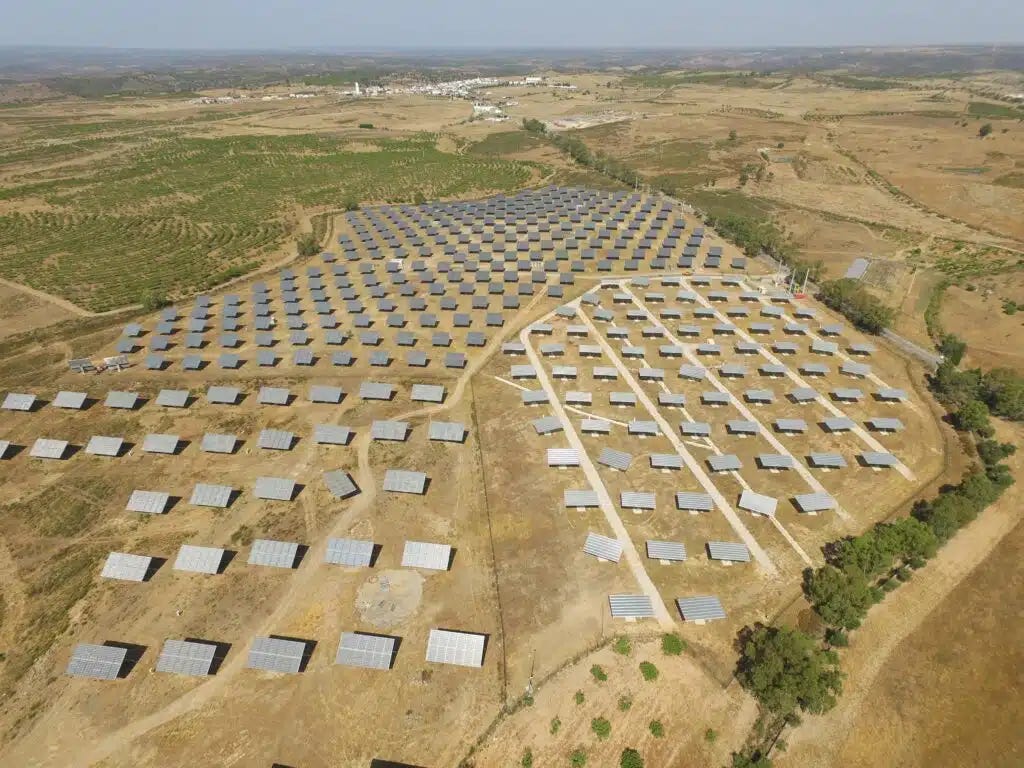
In addition, the Alcoutim solar power station was caught up in a €143 million dispute with CTIEC, a subsidiary of the Chinese state-owned enterprise China National Building Material Group Corporation. The power station signed a construction contract with CTIEC in 2017, and although some work remained unfinished, the station’s parent company, Welink, decided to terminate the contract with it in 2023. According to Welink, the Chinese company had itself withdrawn from the project. CTIEC subsequently initiated legal proceedings, demanding payment of debts from the solar farm. Hugo Paz, Welink’s director for the Iberian Peninsula, said that the contractor had not fulfilled all its obligations, but acknowledged that technical problems, low prices and declining revenues had made debt restructuring unavoidable.
According to Welink, the solar power station cannot remain economically viable as an independent business. The company has therefore sought to improve the situation and proposed combining solar power generation with wind power and battery storage. This would have provided both additional revenue and enabled the sale of electricity at more favourable market prices. An extension was therefore planned, comprising 25 wind turbines with a total capacity of 165 MW and approximately 50 MW of additional solar power generation capacity, together with a potential 100 MW battery farm. However, this hybrid project faced serious opposition from environmentalists. According to the Environmental Agency, the wind turbines would have threatened the nesting sites of nearby eagles and other protected bird species. Solara4 amended the project, proposing alternatives with 23–25 wind turbines situated further away from the eagles’ nests, but the Environmental Agency has not yet responded to this.
Management of the power station has now been transferred from the Irish company Welink Investments to the renewable energy firm Exus. In collaboration with the consultancy firm Enertis, the plan is to identify the necessary investments to improve production.
Pavel Durov Criticises French Free-Speech Charges
Criminal proceedings against Telegram founder Pavel Durov remain ongoing in France. They began in 2024 with his arrest. Durov is accused of “complicity in crimes committed by others.” On X, the Telegram owner wrote: “In an unprecedented move, the French authorities have accused the head of a major platform of crimes committed by its users.” He sharply criticises the charges and argues that the real aim is to force Telegram to abandon its principles, according to Reclaim The Net.
French authorities claim the company’s ‘crime’ is that it does not moderate content. In other words, France objects to Telegram’s refusal to censor content or hand over user data. The most serious charge is that Durov runs a platform enabling organised groups to carry out illegal transactions. If found guilty, this alone could mean ten years in jail and a fine of 500,000 euros.
Durov stated that the proceedings against him and his company have lasted two years and that the investigation “makes less sense with each passing year.” The charges, he says, show authorities trying to shift blame for their own failures onto Telegram and force it to become a tool for “illegal censorship or surveillance.” He wrote: “Over the last two years, we have seen a pattern emerge in multiple countries: Telegram is quietly asked to grant political favours — such as illegal censorship or surveillance. When we refuse, local media and ‘non-governmental’ organisations launch orchestrated campaigns portraying Telegram as a cesspool of crime, from child pornography to terrorism.”

According to him, Telegram’s moderation is no worse than that of other major platforms. But these campaigns create the impression that Telegram must be restricted, while officials claim concern for crime and children’s welfare. However, this applies only to platforms that refuse secret political demands. Those that comply, by contrast, face little scrutiny.
Durov therefore regards France’s accusations as an unfair and politically motivated punishment for the platform’s refusal to submit to the authorities.
So now the Save The Etc. people can promote the "Save The Solar Power savior! No matter the cost!