


Over the past few days, the following topics attracted our attention:
Thousands of Illegal Immigrants Stormed the Spanish Exclave of Ceuta
Russia Issued Arrest Warrant for Telegram Founder Durov Over Terrorism Charges
The UK Government Recommends E-Books in Pursuit of Net Zero
Thousands of Illegal Immigrants Stormed the Spanish Exclave of Ceuta
Tens of thousands of illegal immigrants from Morocco stormed the Spanish autonomous exclave of Ceuta. According to Spanish authorities, approximately 49,000–50,000 people crossed the border between Morocco and Ceuta in just one day, reports France24.

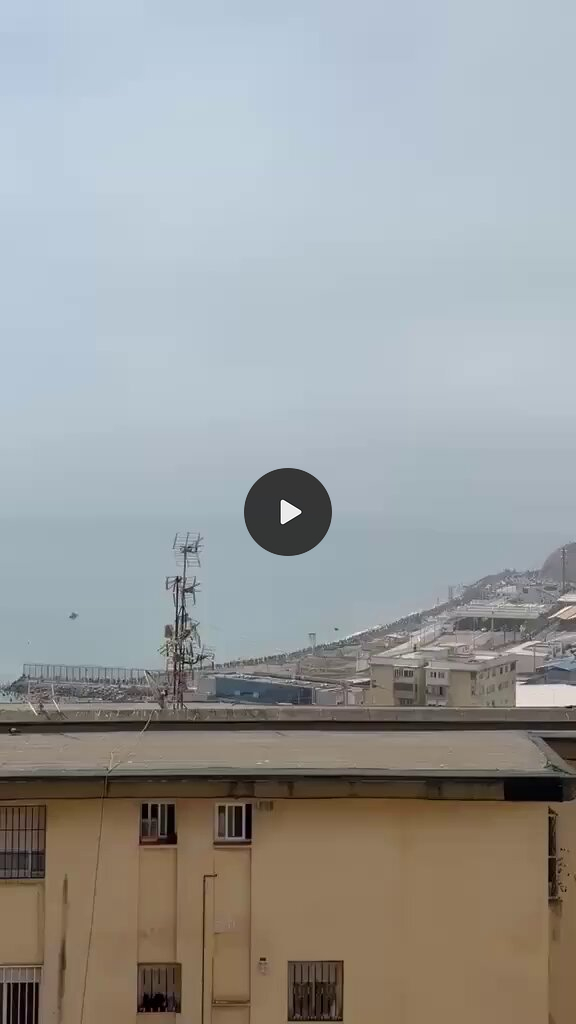
Ceuta region was hit by a massive wave of illegal immigration from Morocco. In just 24 hours, approximately 50,000 people entered Ceuta. Many scaled the breakwater fence at Tarajal beach, while others swam around it. Local police and Civil Guard showed little inclination to intervene in the migrant surge, as the uncontrolled crowd was too much for the local authorities to handle. Only a few officials tried to direct the arrivals to the local reception centre. The Spanish government sent the military to Ceuta to assist the local authorities.
According to the President of Ceuta, Juan Jesús Vivas, there was nowhere to accommodate the arrivals and the reception centres were already full. Reception centres for those claiming to be minors were operating at 2,400 per cent of their capacity. The rest were spending their days and nights on the streets and in parks, and were reportedly also breaking into local homes.
According to Rachid Sbihi, head of the association representing Ceuta’s border guards, the situation was one of serious chaos and a humanitarian crisis. On Friday he stated: “People are still coming in. The reinforcements that have arrived are only helping the injured and carrying out other humanitarian tasks.” Sbihi said the situation had caused the autonomous city to grind to a complete halt. Trade had stopped entirely, bars, restaurants and shops were closed, and locals had to stay at home.
José Manuel Albares, Minister of Foreign Affairs, European Union and Cooperation, announced on Friday that the situation in Ceuta has started to ease, as many of those who arrived illegally have begun returning to Morocco. Spanish Guardia Civila annonuced they have started installing

Spanish Guardia Civila announced that they have started installing containment barriers on the Tarajal pier in Ceuta. The 500-metre pneumatic barrier is being installed because many people attempted to arrive by swimming, following a Spanish Supreme Court ruling that the state cannot use fast-track procedures to return migrants who arrive by water.
Italian Prime Minister Giorgia Meloni wrote on Thursday that the incident clearly illustrates the threat that illegal immigration poses to Europe’s borders and on Friday, Meloni wrote: “The Government has decided to temporarily suspend the free movement regime provided for by Schengen in maritime and air connections with Spain, reintroducing border controls.” She also stated that 22 EU states have drafted a joint pledge calling “for joint action to strengthen external borders, combat irregular immigration, fight human traffickers, make returns more effective, and eliminate any factor that could incentivize new illegal entries.”


However, European Commission President Ursula von der Leyen stated on Friday that “the images from Ceuta are unacceptable” and that the EU cannot allow anyone to enter the Union without abiding by its rules. She added that dangerous crossings must stop immediately, smuggling networks must be dismantled, and returns must be swift in accordance with the rules. On Saturday, von der Leyen announced that “the good news is that the vast majority of those who arrived illegally have returned to Morocco” and that no one had reached mainland Spain.

The Spanish exclave of Ceuta, Spain’s North African autonomous city with a population of around 84,000, is located at the northern tip of Africa and is one of only two regions in the European Union to share a land border with Africa. Ceuta has long been affected by migration from Morocco. In 2021, for example, more than 10,000 migrants reached Ceuta from Morocco in the space of two days.
Russia Issued Arrest Warrant for Telegram Founder Durov Over Terrorism Charges
Moscow has issued an international arrest warrant for Pavel Durov, the Russian-born founder of Telegram. Authorities accuse him of “complicity in terrorism”, claiming he failed to remove channels, chats and bots that Ukraine allegedly used to “recruit people to carry out deadly sabotage operations in Russia”, according to France24.
According to Russia’s Federal Security Service (FSB), Telegram’s founder and CEO is wanted internationally and faces charges of “complicity in terrorism”. If found guilty, he could face up to life imprisonment in Russia.
The FSB specifically accuses Durov of failing to remove channels, chats and bots that “Ukrainian intelligence agencies, terrorist and extremist organisations use to organise and carry out acts of sabotage and terrorism, mass murder and cyber fraud in Russia”. It claims this has caused “many human casualties”. The FSB also says Ukraine used Telegram bots to lure and recruit Russians for such acts, and that 46 bot users aged 12 to 22 have been detained since last year on charges including attacks on law enforcement officers, arson and other acts.
Telegram remains one of the main communication platforms in Russia. Authorities have tried repeatedly to block it and push citizens toward the state-backed app Max, while also seeking user data from the service.
Pavel Durov commented that the charge stems from his refusal to allow authorities to monitor and censor Telegram. He noted that under Russian law he is “banned from “publishing information on the Internet” 😌”, adding that “Russian officials are clearly confused about who can ban whom from the Internet 😉”. He also shared a hint about who is considered a terrorist in Russia and who is viewed as a partner.


The UK Government Recommends E-Books in Pursuit of Net Zero
Advisers to the UK government are recommending that readers switch from printed books to e-books, such as Amazon’s Kindle, to help the country achieve net-zero emissions, according to The Telegraph.
According to a study commissioned by former Energy Secretary Ed Miliband, printed books consume too much energy during production, packaging, storage and distribution. The study found that a printed book can consume up to 5.2 kilowatt-hours (kWh) of energy, whereas an e-book requires just 0.003 kWh. For example, printing and producing the seven Harry Potter books would consume a total of 50,000–60,000 kWh of energy.
The report also emphasised that the b of a printed book may be even higher because lighting is required for reading, whereas e-readers have built-in lighting. The study therefore concluded that downloading and reading a single 90,000-word e-book on an e-reader consumes 1,500 times less energy than producing the same book in printed form.
The study therefore concluded that digital books could help the UK move towards net-zero emissions, as e-books require relatively little electricity. It also suggested that book lovers could contribute to the climate transition by choosing e-books over printed books.
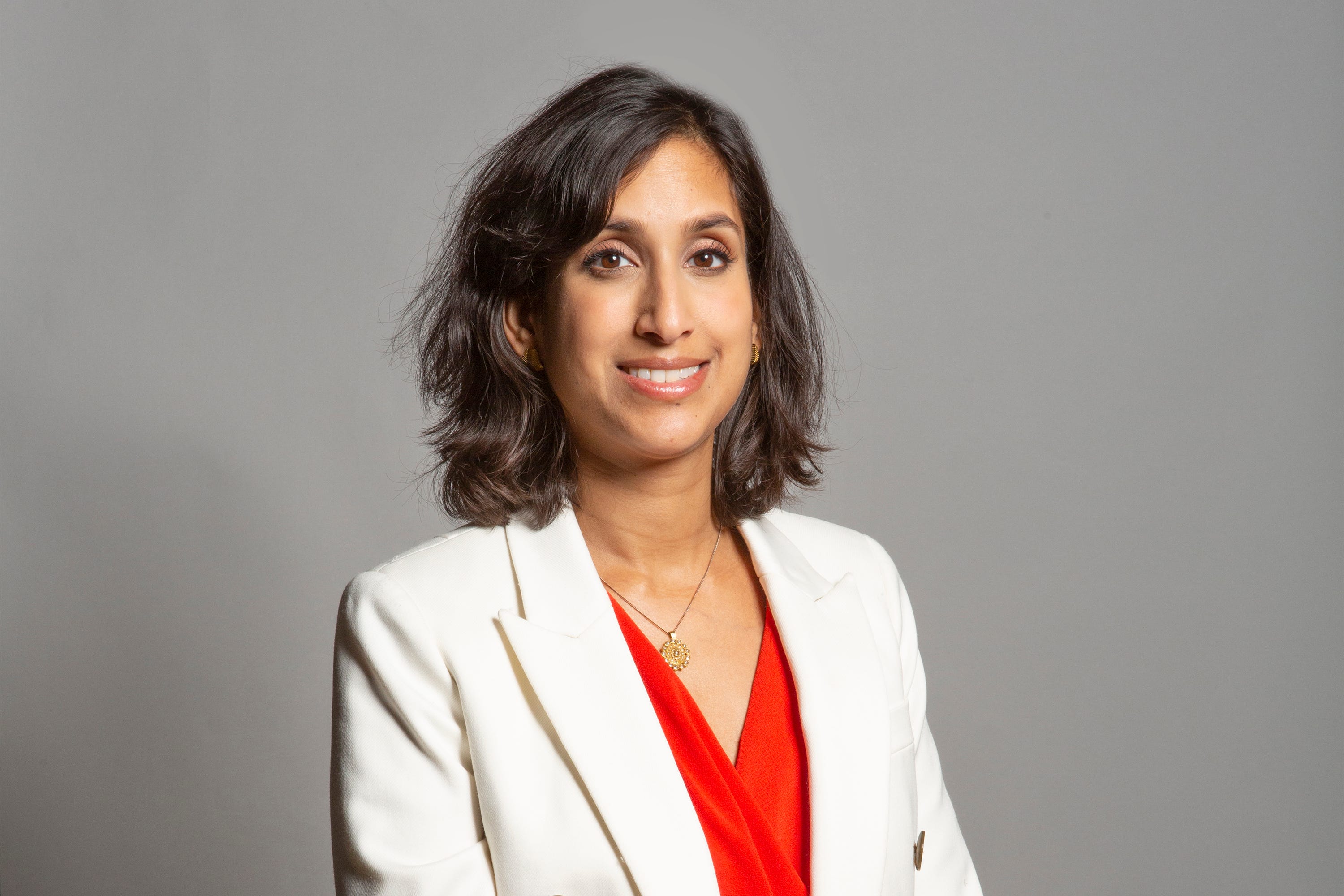
According to Claire Coutinho, the Shadow Secretary of State for Energy Security and Net Zero, the government is wasting taxpayers’ money by commissioning such propaganda. Instead, she argued, the government should focus on its proper responsibilities and investigate how, for example, the Clean Power 2030 plan affects household energy bills. Reform UK spokesperson Richard Tice added that printed books are also extremely important in education and that “we must not sacrifice our children on the altar of net-zero.”
According to Ofcom, Britons are keen readers, with more than half (52 per cent) of the population reading a printed book at least once a month. By contrast, only 28 per cent of adults said they read e-books. Audiobooks were the preferred alternative format, and their use has doubled in just a few years.
Paradoxically, the same study also revealed that an email generated by artificial intelligence may consume less energy than one written by a human. AI is also thought to significantly reduce emissions when used for translation, as it can perform the task faster than a human.
Let’s face it: it will cost jobs. Even in 1984 Orwell at least had BB (Big Brother, not to be confused with…) allocating a lot of jobs to the editorial altering of history. Everything got rewritten all the time to change the historical narrative. All those jobs will go!!!
PS I hate digital screens. Prefer books and hard copy. So do my eyes.
PPS the cost of producing AI has not yet been calculated correctly. When the true costs of mining the precious metals from round the world, transporting them to centres, factoring in all the transport costs/energy costs/pollution costs of producing the hardware, software, and other-ware of AI and all the devices needed for it and the infrastructure they use - all those not-well accounted for costs… when those true costs are properly stated, then we can start a discussion.
If all books are digital it would be easy to change or delete books that the current regime doesn’t like. Much easier than searching for and burning books.