


Over the past few days, the following topics attracted our attention:
Most UK Jobs Go to Non-Brits
France and Germany Support Relaxed EU Car Emissions Rules
AI Identifies an Exact Location Based on a Single Photo, Including Hotels and Airbnbs
Most New UK Jobs Went to Non-Brits
The Centre for Social Justice (CSJ) study State of Dependency examined the growth in social expenditure and found that the number of jobs registered in the payroll system increased by approximately 3.7 million between 2014 and 2025. Of these, only 734,000 went to British citizens and 408,000 to EU citizens, while around 2.5 million went to non-EU citizens. The highest number of jobs has gone to non-EU citizens since 2020, when the so-called ‘Boriswave’began. During this period approximately four million immigrants were granted visas to work or study in the UK, and the number of non-EU workers increased by 2.1 million, according to The Telegraph.
At the same time, the Britons out-of-work benefit caseload rose by around 2.3 million, and spending on benefits for people of working age rose by £50 billion between 2019 and 2019/20. In England, Wales and Scotland, around 6.7 million people - roughly one in six working-age adults - are currently receiving at least one form of out-of-work benefit. Since 2019, the number of working-age benefit recipients who are not required to look for work has risen by nearly 1.7 million.
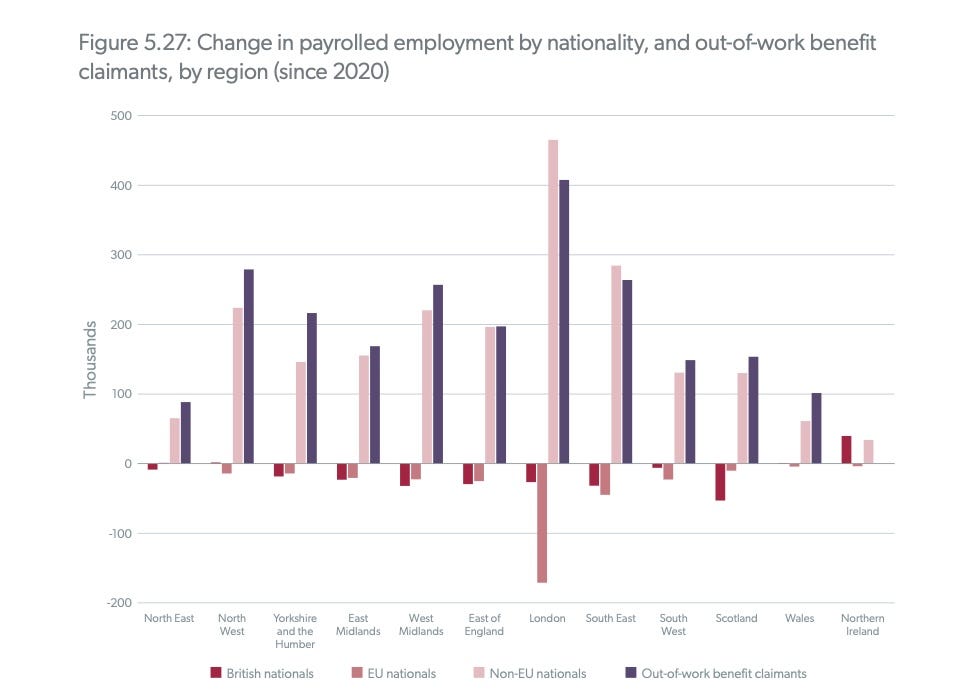
Almost twenty years before this study, Iain Duncan Smith’s series Breakdown Britain was published, laying the foundations for Universal Credit, which was intended to act as a bridge from benefits to the labour market. Now the CSJ states in its new report that governments since then have relied on low-skilled immigrants to fill jobs. At the same time, the social security system has ‘written off’ millions of Britons. The report states that the state has taken in a huge number of foreign workers, while domestic taxpayers have had to bear the ever-increasing costs of domestic worklessness.
Since the COVID pandemic, this trend has accelerated further, and the number of British citizens in paid employment has fallen in nine of the UK’s 12 regions between January 2020 and December 2025. Employment among non-EU workers, however, has increased across the board. For example, the largest fall in employment among British citizens was recorded in Scotland: a decrease of 53,000. In the West Midlands it fell by 32,000; in the South-East by 31,700; in the East by 29,400; and in London by 26,500. By contrast, employment among non-EU citizens increased by 465,200 jobs in London, by 284,500 in the South-East of England, by 223,900 in the North-West of England and by 220,300 in the West Midlands.
Since 2020, the largest numbers of non-EU nationals have been employed in social care, the accommodation and food services sector, and retail. These are sectors that have traditionally provided opportunities for people who are just starting out or who have been out of the labour market for some time. Employment of non-EU citizens rose by 29 per cent in health and social care, 16 per cent in administrative and support services, 12 per cent in accommodation and food services, and 10 per cent in wholesale and retail trade.
According to the report, the authorities have for years taken into account the immediate growth in the number of workers and tax revenue resulting from higher immigration, but have overlooked the long-term costs that arise when immigrants become entitled to social benefits and as they age. Consequently, greater budgetary leeway has been prioritised through so-called ‘human quantitative easing’ (or population relief). This is the case even when, in reality, there is no improvement in GDP per capita; on the contrary, it often increases costs after the period covered by the forecast.
France and Germany Support Relaxed EU Car Emissions Rules
Paris and Berlin have long disagreed over how to revive Europe’s struggling car industry. They have now reached a provisional agreement to support more lenient EU emissions rules and to include the UK in the ‘Made in Europe’ scheme, reports France24.
Germany wanted less stringent CO₂ requirements for manufacturers and the broadest possible definition of ‘made in Europe’ to include key non-EU partners. France insisted on maintaining climate targets and limiting the label to EU Member States. Under the draft deal, Berlin secured more lenient emissions targets while Paris won a narrower definition of the label. France has given its approval, but Germany has yet to do so.
The European Commission had previously proposed softening the 2035 ban on new petrol and diesel vehicles, requiring manufacturers to cut emissions from new cars by 90 per cent instead of 100 per cent. The remaining 10 per cent would have had to be offset with emissions credits, for example by using low-carbon steel.
The Franco-German agreement removes this offset obligation. Cars running on renewable fuels would count as zero-emission vehicles. The Commission’s proposed ‘super-credits’ for small, affordable electric cars would also apply to all vehicles, regardless of size.

The ‘Made in Europe’ label would mainly cover the 27 EU Member States, though the UK and Norway could join under certain conditions. This is narrower than the Commission’s March proposal.
UK Prime Minister Andy Burnham’s office has welcomed the plan, saying it would be good news for the British car industry, its jobs and investment.
AI Identifies an Exact Location Based on a Single Photo, Including Hotels and Airbnbs
Graylark’s AI research platform can reportedly identify a person’s exact location from a single photo, even one taken in a hotel room or rented flat. Graylark sells its AI-powered investigative platform mainly to law enforcement, businesses and governments, according to Reclaim The Net.
CEO Daniel Heinen announced this on X: “AI can now find where a criminal is staying from a single photo taken inside an Airbnb. No GPS. No address. Just the room.” With Raven it has launched Short-Term Rental ID and HotelID. To identify a location from an indoor photo, Raven scans millions of short-term rental and hotel listings worldwide that show interiors or video clips. It matches visual details against listings and location data, without needing GPS. The company says room layout, fixtures and interior elements link different views of the same space and produce leads. These still need verification before any action is taken.

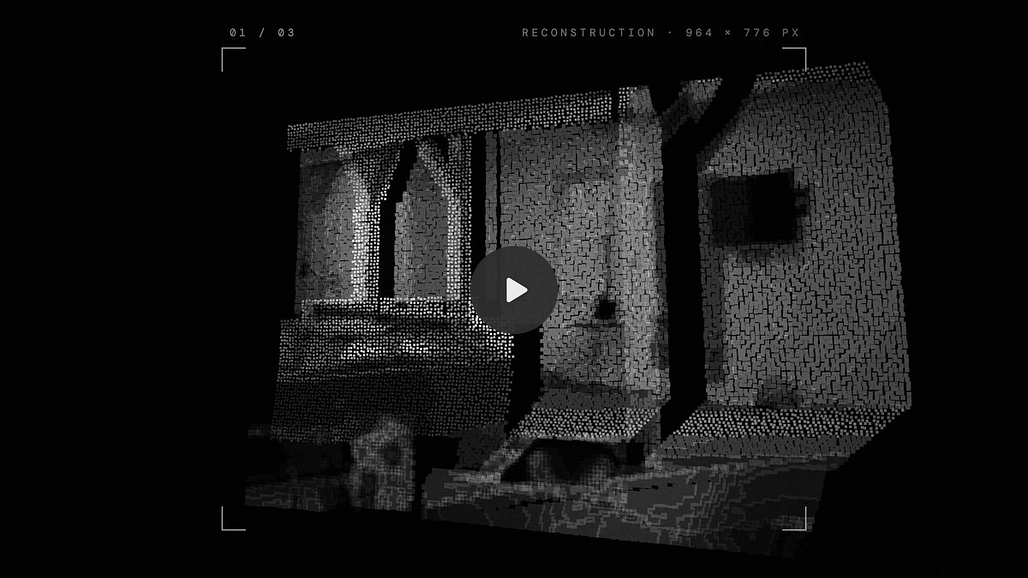
A demo on the company’s website shows the tool identifying locations from photos of a car on the street, a coffee cup on a balcony or a shower-room wall. It can also check whether a photo is AI-generated or identify a car’s make in an aerial shot. Graylark claims it can identify a location within seconds from one image; one demo states that eight minutes after a photo is uploaded, police can arrive and make an arrest. Under the privacy policy, images for quick searches are retained for 7 days then deleted; photos tied to an investigation are kept until the case is closed, plus a further 30 days.
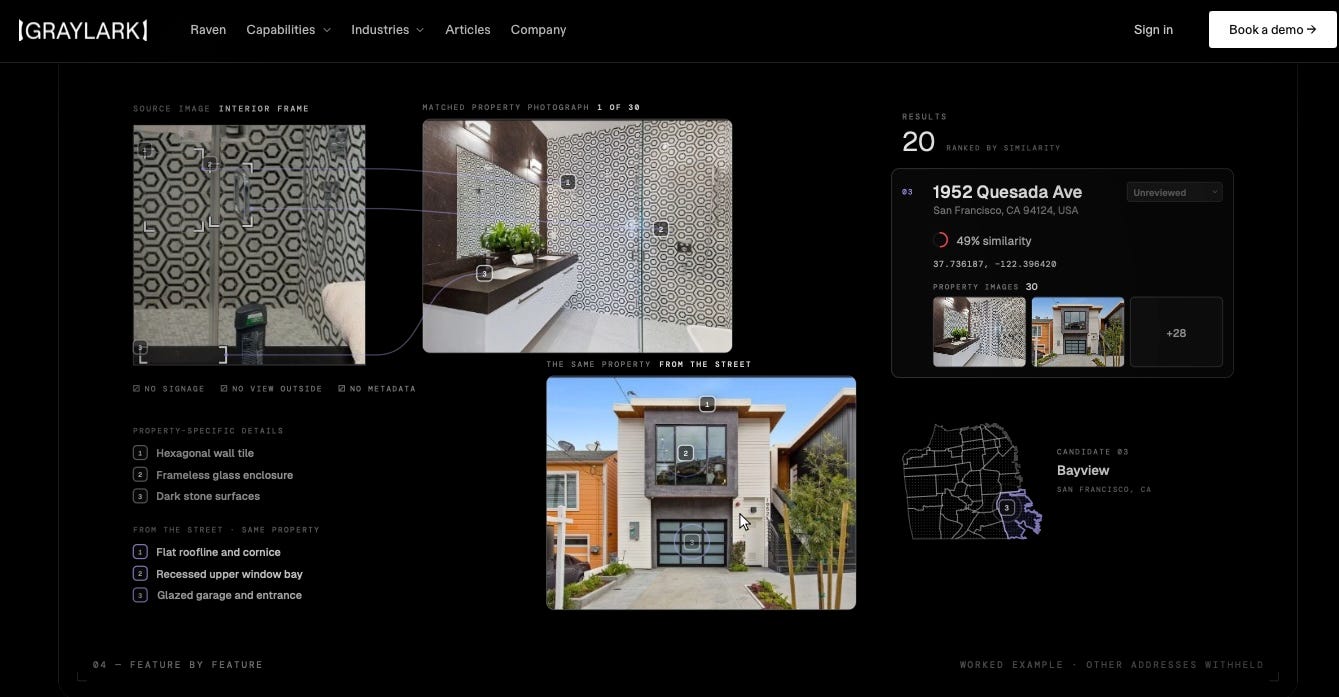
Heinen says the tool is meant to help locate victims and investigate serious crimes, but he does not disclose Raven’s architecture, datasets, sources or partners. In August this year Graylark announced it had raised $10.7 million, led by General Catalyst, with investors including Alexandr Wang and Recorded Future.
Raven’s roots lie in the earlier geolocation tool GeoSpy, which the company says reached one million cumulative users in its first three months. In January last year reports emerged that members of the public were using GeoSpy to track specific individuals, particularly women. Heinen rejected those requests, but closed GeoSpy to public access.
Until now, a hotel room or flat was one of the last places where a photo alone could not reveal the exact location. With Raven that is no longer true. Photos posted online can become sources for pinpointing a precise place, even when no location data was attached.
Critics note that the tool can help police catch criminals when used properly. What makes it concerning is that it relies on undisclosed data and algorithms, and that access is not limited solely to law enforcement.