


Over the past few days, the following topics attracted our attention:
EU Parliament’s ESN Party Faces Ban
Germany: Platforms Must Make “Reliable” News More Visible
EU Requires New Cars to Monitor Driver Behavior
EU Parliament’s ESN Party Faces Ban
According to the Authority for European Political Parties and Foundations, evidence has been found that casts doubt on whether the Europe of Sovereign Nations (ESN) party adheres to the values of the European Union. If a decision is made, the ESN party could lose its funding and its right to operate as a political party, writes Politico.
The Authority’s director, Pascal Schonard, wrote in a voluminous 300-page document that the ESN party’s compliance with EU values is questionable. The Authority’s task is to ensure that political parties and foundations do not violate EU rules. The rules require that political parties adhere to the Union’s fundamental values, which, under Article 2 of the Treaty on European Union, are human dignity, freedom, democracy, equality, the rule of law, and respect for human rights, including the rights of minorities.
Schonard claims that ESN members violate these values and that the Authority has evidence in the form of court rulings, screenshots, and social media posts. These are said to demonstrate ESN party members’ anti-immigration stance, anti-Semitism, and criticism of the LGBT community. There are also said to be calls for organized repatriation, and homosexuality is reportedly portrayed as pedophilia.

The authority also accuses national parties belonging to the ESN of wrongdoing. For example, Bulgaria’s Revival is alleged to collaborate with Russian President Vladimir Putin’s United Russia party and to have organized violent protests in Sofia in February 2025, including an attack on a European Commission delegation. The Alternative for Germany party has not gone unnoticed either; in its case, the Authority highlights the German intelligence service’s May 2025 decision to classify the party as a far-right extremist organization. It also notes the ruling by the Cologne Administrative Court, which blocked the intelligence service’s classification but confirmed that the party’s program is “contrary to human dignity and freedom of religion.”
According to a statement on the ESN party’s website, the party learned of the charges from the media and is awaiting a detailed document from the Authority to understand the specific content of the charges. Once one of the institutions (Parliament, the Council, or the Commission) requests the Authority to launch the formal verification procedure, ESN has the right to propose mitigating measures. Before a final decision is made on whether to ban the party, a committee of independent eminent persons - whose members are appointed by the European Parliament, the Council, and the Commission (two members from each) - must also provide an assessment.
The ESN party, which has 27 members from the European Parliament, is a separate legal entity from the ESN group. Groups are parliamentary groups, while parties are broader alliances of national parties funded by the EU budget. However, the current accusation does not threaten the ESN group with any penalties; but if the ESN party were banned, its members would lose political support and coordination. Both the ESN party and the ESN group were founded in 2024 by the German right-wing party Alternative for Germany (AfD). In addition to the AfD, the ESN party includes Bulgaria’s Revival, France’s Reconquest, the Polish Confederation, the Czech SPD, Hungary’s Our Homeland Movement, the Netherlands’ Forum for Democracy, and the Slovak Republic Movement. In 2026, the party applied for more than 2 million euros in operational funding.
Germany: Platforms Must Make “Reliable” News More Visible
A document leaked to German media outlines a plan to require social media platforms such as X, Facebook, and TikTok to make channels approved by a government and deemed “reliable” more visible in their news feeds. “Reliability” would be determined by individuals appointed by the politicians currently in power, according to Reclaim The Net.
Germany’s media organizations have received the “public value” designation since 2025. Media outlets with this designation, such as ARD and ZDF, already appear at the top of app stores and smart TV app lists. The “public value” designations are awarded by the Licensing and Supervisory Commission (ZAK), which includes heads of media authorities from the 14 federal states, appointed by state governments. Politicians in power thus indirectly decide who gets the designation and designated media outlets must display a “public value” label.
But a new proposal titled “Paper on the Further Development of Public Value” aims to extend this system to social media news feeds. The document warns that algorithms can be dominated by disinformation, polarizing, or attention-grabbing content. To promote “reliable” material, it proposes legally requiring platforms to adjust their algorithms so that “public value”-tagged stories are prioritized. It even suggests a quota for approved content in news feeds.

According to Thorsten Schmiege, head of Germany’s Landesmedienanstalten and president of the Bavarian Media Authority, the states plan to present the first draft of the Digital Media State Treaty as early as this summer. If enacted, “reliable” information and “public value” content would appear prominently in users’ news feeds across major platforms. At the same time, media authorities could more easily penalize outlets for “inappropriate” content, as seen in past cases. For example, the Berlin-Brandenburg Media Authority fined the right-wing outlet Nius over a refugee article, and independent journalist Alexander Wallasch was ordered to delete three articles and review past publications. Critics fear the law would force editorial teams to constantly consider regulatory approval when publishing.
EU Requires New Cars to Monitor Driver Behavior
The European Union’s GSR2 safety regulation continues to require new mandatory driver assistance systems and safety technologies in new cars. The latest is the Advanced Driver Distraction Warning (ADDW), which uses an infrared camera mounted on the steering column, dashboard, or near the interior mirror to continuously monitor the driver’s gaze and head position. According to sources such as Autonext, this system must be installed in all newly registered cars starting in July 2026. However, this is no longer just a background assistance system. It constantly checks to ensure the driver’s gaze remains focused on the road ahead. If the system detects that the driver is looking away for too long, it triggers a warning - either an audible alert, a visual alert on the dashboard, or both.
Gocar.be tested one such system in an Xpeng P7+. The conclusion was not very flattering. While the main issue was not the system itself, it became intrusive very quickly. According to the test, even a glance at the screen, out the side window, or a quick peek at the backseat was enough to trigger a warning. The repeated beeps turned into a major distraction rather than the calm safety measure promised.
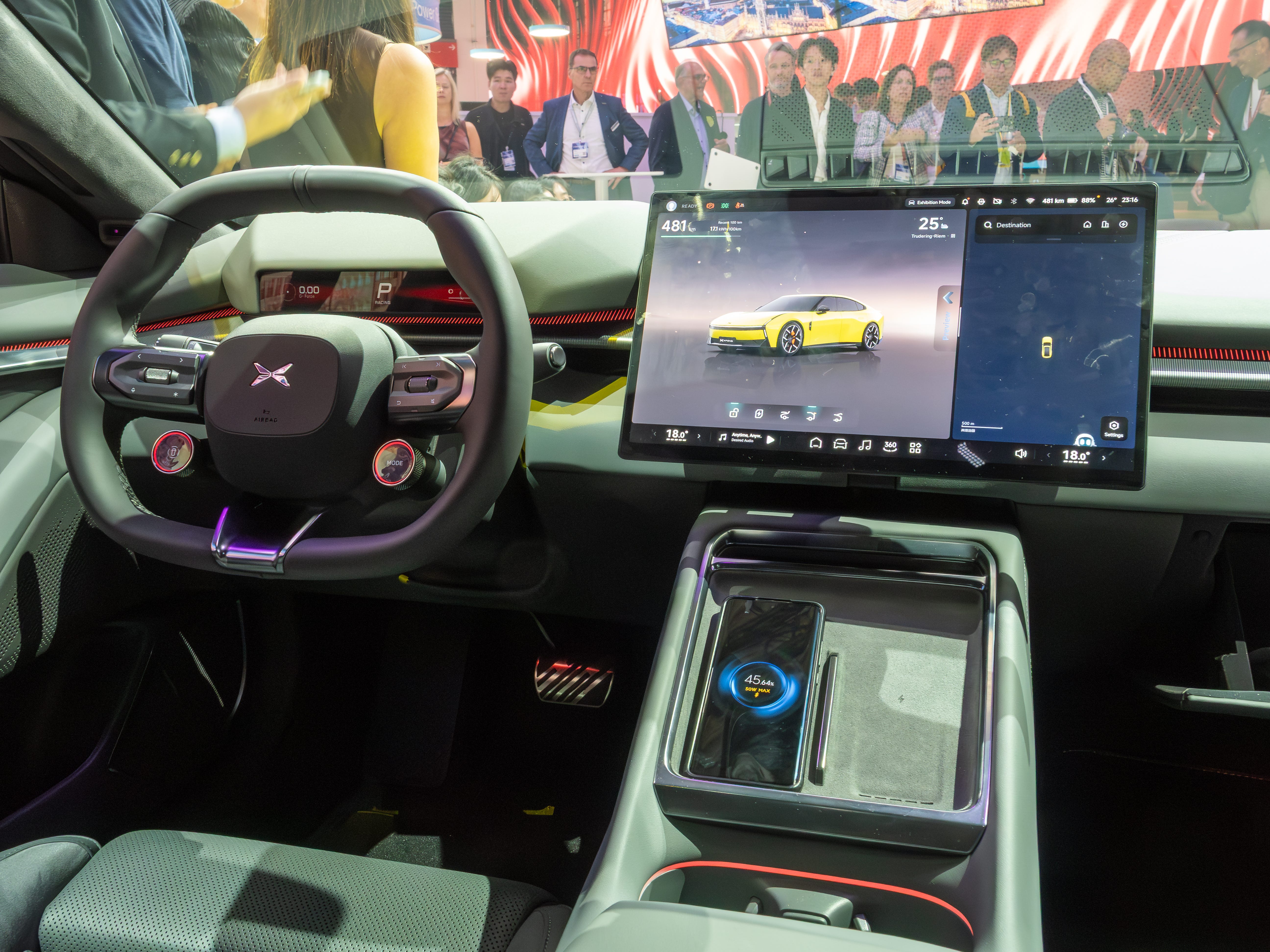
Each automaker can configure ADDW differently. Some versions are quite understanding, while others are extremely aggressive to meet EU rules. In everyday use, this difference matters most. Automotive experts believe the best systems can detect genuine distraction, act decisively when needed, and remain completely unnoticeable the rest of the time. Poor systems, however, function as yet another beeping machine configured to be extremely aggressive and sensitive - a digital babysitter that penalizes every glance away from the road and that drivers try to disable one way or another. Moreover, it may not be easy or even possible to turn the system off: in the Gocar.be test, Xpeng’s so-called “turned-off” attention monitoring reactivated when it detected problematic behavior.
Automotive experts also highlight privacy concerns. The system’s data should only be processed within the vehicle; it is not supposed to be stored or transmitted elsewhere. However, given car manufacturers’ history with data collection, there are reasons to doubt this assurance.
In addition to ADDW, other new requirements apply to all newly registered cars in Europe from July 2026. These include adaptive emergency brake lights, an alcohol interlock preparation (or system in some cases), and an event data recorder (“black box”). The goal is noble — to make traffic safer and reduce accidents. However, decision-makers apparently fail to see the danger in pushing a driver to the limit with constant ADDW beeping sounds.
Ironically, the value of democracy naturally conflicts with the value of respect for minorities. So the EU can have its cake and eat it to- it can ban a democratic movement and it can ban a minority view too. It can pick and choose because it is committed to double think.
Also ironic is the fact banning a political party violates the value of freedom.
Fascism II is coming.