


Over the past few days, the following topics attracted our attention:
Signal Vows to Exit Countries Undermining Privacy
Irish MEP: Adults Need Protection From Social Media Too
Saudi Arabia Sentences Sri Lankan to Death Over Facebook Comment
Signal Vows to Exit Countries Undermining Privacy
Meredith Whittaker, president of Signal – a messaging app that protects user privacy – said in a recent interview that an increasing number of governments are seeking access to encrypted messages. The pretext is often the need to protect children and women, but according to Whittaker, strong encryption protects everyone, reports the BBC.
Whittaker has previously stated that if any country demanded a backdoor or otherwise infringed on users’ privacy – including by weakening encryption – she would withdraw the app from that country. She has now reaffirmed this stance: “Yes! My God, I have a backbone. It doesn’t change based on my mood. It doesn’t change based on consultants.” Her words are backed by actions – Signal is fully or partially blocked in Russia, China and Iran.
Encrypted messaging apps have been criticised by cyber-security organisations because they can be used to direct children towards platforms where they are coerced into creating sexual material. Signal’s president explained: “Tech companies are responsible for the design choices they make, and they cannot ignore the risks those choices can create for children.” However, any restrictions or bans imposed under the pretext of protecting children or women could easily be circumvented, especially by children themselves. Therefore, a ban on social media and message monitoring should rather be described as an “unprecedented regime of communication and information control.”
On the other hand, there are also many supporters of encrypted messaging apps. For example, Chayn, a charity tackling gender-based violence, with roots in South Asia and a global focus, states that during periods of state surveillance and cyber-attacks, Signal is a means of survival. “With any platform, it can be used by bad actors too, and we have to acknowledge that truth as well,” said Chayn’s founder.
That said, much depends on the users themselves. In Canada, for instance, police officers shared racist and misogynistic messages in a Signal group, which were then made public when one group member forwarded them to the media. A lawyer representing one of the participants explained that the men considered Signal to be as private and secure as their own homes. Whittaker draws a parallel with a kitchen at home: if they’d been having a conversation in the kitchen and one of the participants had betrayed the others, would people then be asking what to do about the kitchen? Whittaker is convinced that encryption must work for everyone, or it won’t work for anyone. “This is the principle of fundamental rights. They apply even to arseholes,” she added.
Whittaker also highlighted a case from the US where a woman was arrested after Meta handed over her private messages, which showed that she had helped her daughter gain access to an abortion in a state where it was a criminal offence. Whittaker used this to emphasise that protected private communication safeguards people from a wide range of harms, including “an abusive spouse, a misogynist law enforcement officer with access to a database, or an authoritarian government that doesn’t think women should be educated”.
Irish MEP: Adults Need Protection From Social Media Too
Lynn Boylan, who represents Ireland in the European Parliament, believes adults also need protection from social media and that Europe must respond to online threats with more than age restrictions. The politician also argues that technology companies should face higher accountability, writes EU Perspectives.
According to MEP Lynn Boylan (The Left), the EU’s KIDS Act is welcome in every respect, but it does not address the broader impact of large technology companies on society. Commenting on problems caused by social media, she said: “I think during COVID we’ve seen how social media companies were beginning to polarise society and generate anger and a lot of hatred. In Ireland, we experience a lot of far-right rhetoric, and I think other European countries have seen similar trends, first against lockdowns and vaccinations but then moving on to anti-migration and racist rhetoric.” She is also concerned about the damage social media companies cause to social cohesion and communities, “because there is an anti-NGO and also anti-politician narrative on these social media platforms.”
In Boylan’s view, social media recommendation systems, digital literacy and artificial intelligence should therefore all be approached regardless of age. She has also realised that the Australian age restriction, which served as a model for social media age limits, has not been effective. “Children and young people are very, very resourceful when it comes to finding ways to get round the system,” she noted, adding that this is precisely what technology companies want – to shift responsibility back onto users and parents. However, a parent’s social status plays a role: educated middle-class parents are far more aware, as “information is more accessible to them than to a single parent who is struggling to do everything.”
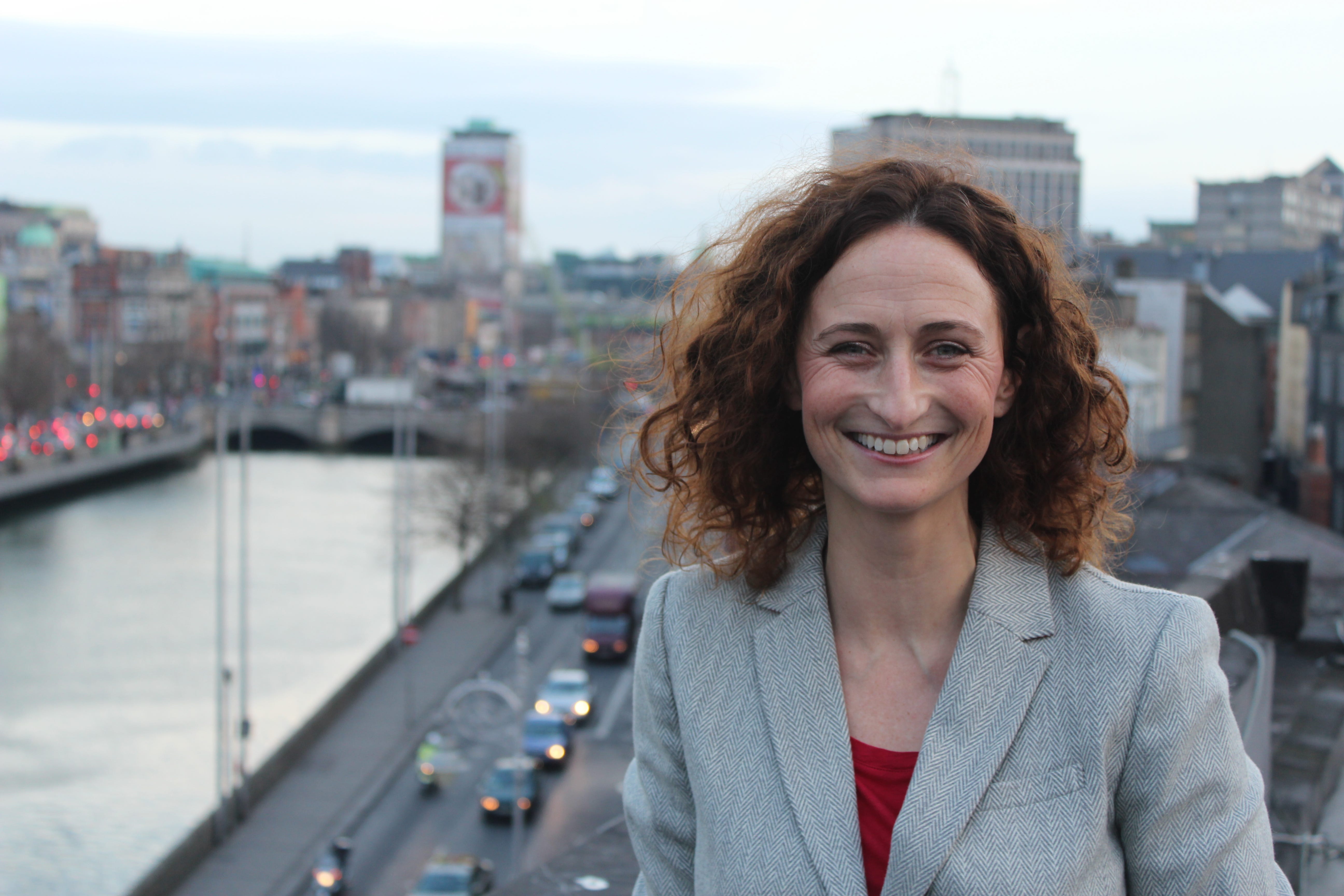
Boylan went on to explain that she is concerned about the privacy of the entire population when platforms must be provided with information to verify that a user is of legal age. Moreover, everyone is susceptible to disinformation, false information, scams and now content generated by artificial intelligence. Therefore, while it is right to protect young people, we must not forget adults either. “We all have friends and relatives who’ve been radicalised through social media, and they’re not okay – and they’re older than 16,” she explained, noting that the targeting methods used for young men differ significantly from those used for young women. In her view, the recommendation system should be switched off for everyone, so that each person can find and decide for themselves what they are looking for and what they see.
Boylan also criticised the Irish government’s technology policy, as the tax scheme there attracted technology companies to set up shop in the country. However, the data centre policy – originally intended only for cloud services – had already encouraged them to stay. According to Boylan, Ireland now has more data centres per capita than anywhere else in the world, and these account for 23 per cent of the country’s total electricity demand. The government meets with lobby groups without the meetings being minuted or recorded, and has no intention of abandoning its technology-friendly policies. For this reason, Boylan believes the Irish government should not participate in discussions on technology issues during its presidency.
On artificial intelligence, Boylan referred to a recent report by the NGO Spun Out, according to which young people seek advice from chatbots, and these conversations can very quickly lead to thoughts of suicide. Moreover, the AI even offers advice on how to kill oneself. Equally significant are instances where people ask AI for advice on matters such as health. According to Boylan, for every fourth enquiry about abortion, the AI directed the enquirer towards anti-abortion information and dubious counselling services. Therefore, she believes that we must not allow the field of AI to get out of hand in the same way that social media has.
Ireland holds the Presidency of the Council of the European Union from 1 July to 31 December this year. During this period, the country will lead the Council, which negotiates and adopts legislation together with the European Parliament, coordinates Member States’ policies, develops the EU’s foreign and security policy, adopts the EU budget together with the European Parliament, and concludes agreements between the EU and its international partners.
Saudi Arabia Sentences Sri Lankan to Death Over Facebook Comment
Saudi Arabia sentenced Anojan Sivarasa (24), a migrant worker from Sri Lanka, to death for a Facebook comment that he wrote, deleted and later apologised for, according to Reclaim The Net.
He was arrested on 1 July and, by 27 July, received the maximum five-year term under the Anti-Cybercrime Law plus a fine of 3 million Saudi riyals (about 714 000 euros). Prosecutors appealed and demanded the case be handled under Sharia law rather than the Cybercrime Act. On 17 September the Court of Appeal found him guilty of “blasphemy” and imposed the death penalty as a hadd punishment - a fixed, mandatory sentence under Sharia.
The case began in late June when a video circulated showing a young Muslim man kicking a dog that had followed Hindu pilgrims in Sri Lanka. The footage sparked heated debate and allegations that someone had insulted a Hindu deity. Anojan then posted a comment judged offensive to the Prophet Muhammad. He deleted it and issued a video apology, but a screenshot had already been sent to his employer and the Saudi authorities. His brother, Hamsidan Sivarasa, said the person who reported him lived in Sri Lanka; the Saudis knew nothing of the wider context.
The family appealed for clemency and repatriation. Sri Lankan President Anura Kumara Dissanayake pledged help and sent a team of lawyers. Buddhist and Hindu religious leaders in Sri Lanka also called for assistance. According to news outlets, diplomatic efforts have been successful and on 13 October 2026, the Saudi Supreme Court set aside the deathsentence. It remains unclear whether the original five-year prison term still applies.


Nevertheless, Amnesty International noted that Anojan was denied a lawyer from his arrest until the first court ruling and had no contact with his family since 28 September. The organisation stressed that no one should be imprisoned, let alone executed, merely for expressing an opinion - even an offensive one. Amnesty called the decision a terrifying example of Saudi Arabia’s readiness to impose the most brutal and irreversible punishment for acts that should not be crimes. It also shows the harsh treatment of those convicted of blasphemy, with no regard for a person’s foreign origin or attempts to make amends.
According to Amnesty, Saudi Arabia is among the world’s leading executioners. As of 5 October, more than 170 people had been executed, including at least 94 foreign nationals from more than 20 countries. In recent years lengthy prison terms have been imposed for social-media posts, though appeal outcomes have varied. Saudi Arabia lacks a written criminal code for many offences, giving judges wide discretion under their interpretation of Sharia. Even where statutes exist, authorities often rely on vague provisions in anti-terrorism and cybercrime laws concerning public order, religious values and morality.
EU politicians are terrified of people who disagree with their horrid failed policies, so they seek to censor and control information systems including ai output and social media.