


Over the past few days, the following topics attracted our attention:
The UK is Setting Up a “Ministry of Truth”
Few Countries Back US Free Speech Push at UN
Italy Outlawes Burqas in Classrooms and Restricts Foreign Pupils
The UK is Setting Up a “Ministry of Truth”
UK Prime Minister Andy Burnham has announced plans to establish a National Centre for Information Defence to combat “disinformation”. Critics argue, however, that it has not been clarified who will decide what constitutes “false” information, nor have measures been put in place to ensure the centre does not become a tool for persecuting dissidents.
The Prime Minister outlined the plan in a speech at the UN General Assembly on 22 September. He said the centre’s remit includes improving social cohesion and preventing distorted and false narratives about the UK. According to him, he has instructed security chiefs to begin work on establishing a semi-governmental body that will detect, attribute and disrupt false’ sources, hostile information attacks and deepfakes, as these harm Britain’s interests, reports GB News.
Notably, the “semi-governmental” centre will initially be overseen by the Prime Minister’s Office and the Cabinet Office. It must cooperate with intelligence agencies, government bodies, the police and social media platforms.
Burnham elaborated on the need for the centre, explaining that there can be no national security without a strong and cohesive society. “That’s the starting point for everything we hold dear and everything we want to achieve,” he stated, adding that this has come under attack. He accused Russia of an industrial-scale assault by hostile actors. In his view, the Russian authorities have used “every means at their disposal to spread lies and disinformation and prey on people’s fears”, including bots and fake websites. They have falsified newspaper articles and forged the branding of 28 British organisations. “They’ve amplified far-right narratives. And we have evidence that they tried to interfere with the 2019 General Election,” Burnham noted.
Burnham also said that, over the last decade, too much has been permitted for those who wish to spread negative, destructive information about life in Britain that bears no resemblance to reality. This will no longer be tolerated. In the coming decade the plan is to take a different approach, standing up more firmly for our values and the rule of law. There are also plans to help people strengthen their resilience, because in the information war, security begins in every home.
The Free Speech Union (FSU) wrote that the centre’s plan could be “the most censorious thing a modern British government has done”. The FSU pointed out that there are already dozens of bodies and agencies that regulate the online environment and censor content. “Is that not enough? How do we know this new body won’t be weaponised to silence dissent and chill free speech?” asked the FSU, adding that the government itself has been keen to spread falsehoods and disinformation, exaggerating the threats they pose.


The FSU explained that it is important to protect democracy from hostile parties such as Russia. “But safeguards are essential to prevent bodies established for that purpose from expanding their remit to domestic dissent and policing the social media posts of British citizens who criticise government policy,” the organisation stated. It pointed out that, over the last five years, more than 60,000 people have been arrested in the UK for having ‘stepped out of line’ with their words, including in social media posts (see also here, here, here, here). At the same time, the government also wants to select media outlets so that their ‘reliable’ news is highlighted, whilst more critical news portals are sidelined. Instead, the government should clarify the new centre’s precise remit, who decides what information is ‘false’, and what measures will prevent it from becoming a tool for controlling legitimate dissent.
“2026 Britain is turning more into 1984 by the day. We literally now have a Ministry of Truth,” the FSU concluded, with a reference to George Orwell’s legendary work.
Few Countries Back US Free Speech Push at UN
The US circulated a draft declaration intended for support at the UN General Assembly, aimed at promoting the protection of freedom of expression worldwide. The document would have obliged governments “to avoid imposing obligations on service providers that result in the excessive removal of protected speech through legal or regulatory pressure”. Governments would also have agreed not to require online platforms to moderate content falling within certain categories of freedom of expression. The document also condemned new laws and regulations that threaten freedom of expression, reports The Times.
A signing event was reportedly planned on the sidelines of the UN General Assembly, but it was cancelled just a few days before it was due to take place, as it became clear that the US was relatively isolated in its defence of freedom of expression. “A few Eastern European countries signed up, and that was about it,” said one US official, whilst another added that the initiative had been doomed to failure from the outset.
According to Sarah Rogers, the US Under-Secretary of State for Public Diplomacy, the declaration was drafted to improve transparency and build consensus. “The statement is intended as an expression of comity and common values, and also as a source of interpretive guidance for American speech companies complying with overseas laws,” said Rogers. She added that the declaration does not seek to override EU rules, but rather to provide an overview of countries’ values and concerns. However, according to a US State Department spokesperson, there were never any plans to have the document signed at the UN General Assembly, as it is still undergoing diplomatic procedures. The same spokesperson confirmed that the aim is to provide clarity and express shared values, but not to overturn existing regulations or rules.

Allegedly, the US had not wished to amend the original document, nor had it previously submitted it for review through diplomatic channels. For example, according to the UK government, diplomats had seen a draft of the declaration, but the US had never sent them the final version. Consequently, the UK refused to sign the document. EU diplomats also expressed concern that the original wording was at odds with the principles of the EU’s Digital Services Act, which regulates ‘harmful’ online content.
The Free Speech Union (FSU) explained in a post published on X that it is no surprise that the UK and the EU oppose the document, as it conflicts with both their heavily regulated online regimes, including the UK’s Online Safety Act and the EU’s Digital Services Act. The document would have obliged governments to stop moderating certain content and to refrain from introducing new rules that threaten free speech. Clearly, this is not in line with the countries’ actual objectives. “It is deeply disappointing that countries around the world cannot commit to defending one of our most basic rights. The world is in the grip of a free speech crisis,” concluded the FSU.

Italy Outlawes Burqas in Classrooms and Restricts Foreign Pupils
The government of Italian Prime Minister Giorgia Meloni has decided to limit the number of pupils in schools who do not speak Italian fluently. It has also banned face-covering garments, including the burqa and the niqab, reports the BBC.
In the first year of primary, lower secondary and upper secondary school, a 30 per cent cap will apply to children without Italian citizenship whose command of Italian is limited. In primary school this covers foreign nationals not born in Italy or who have not attended Italian nursery school for at least two years. In lower and upper secondary schools it applies to pupils without Italian citizenship who have not successfully completed at least three years in the Italian system. Local education authorities must distribute such pupils more evenly among schools; where this is impossible, an exemption may be granted with extra Italian lessons.
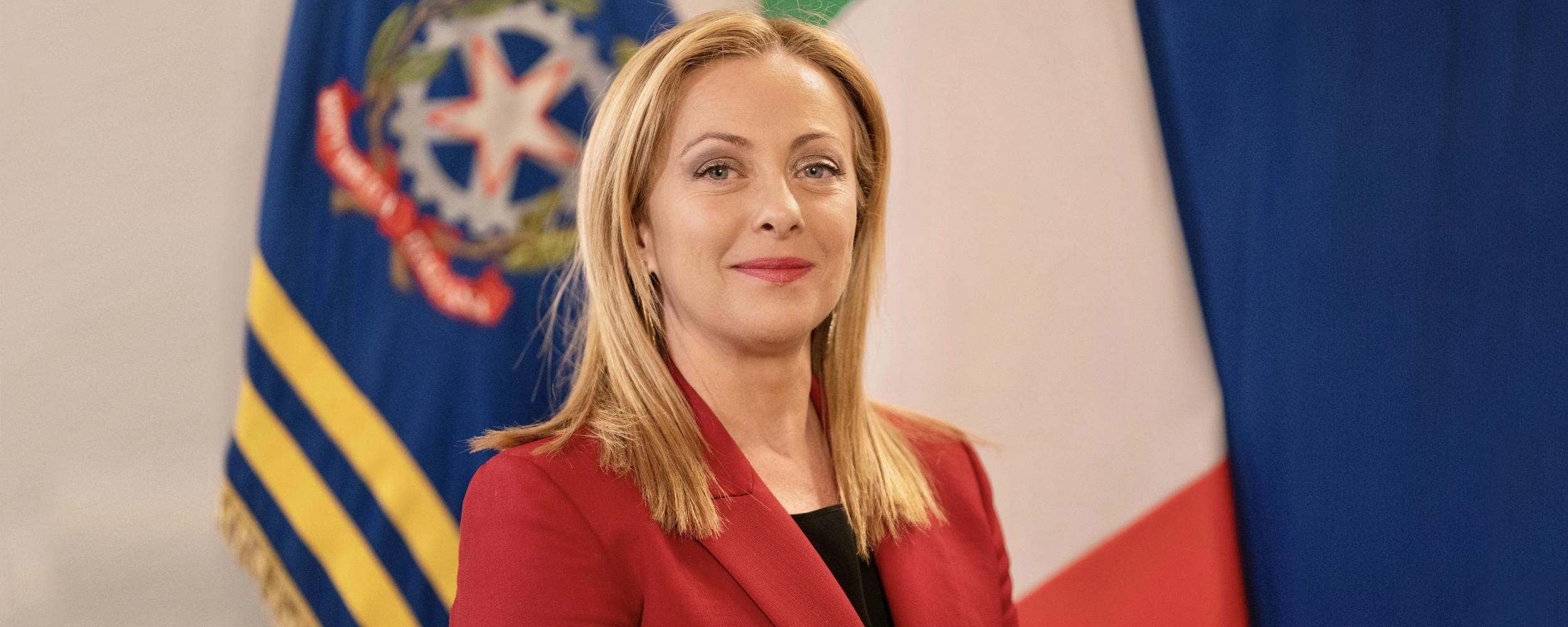
The ban on face coverings applies to items that fully obscure the face. This includes the burqa (eyes hidden behind mesh) and the niqab (eyes visible), while hijabs remain permitted.
Schools must also report to social services cases in which a language barrier on the part of those responsible for a child hinders integration. Free Italian language courses are to be offered to the parents.
According to Meloni, the ban on face coverings is a matter of security. She described the measures as “common-sense tools that do not divide but really help to integrate” and said they will help prevent so-called “ghetto classes”. “You must go to school with your face uncovered,” she added, insisting that no one has the right to demand that girls cover themselves in the name of tradition. Meloni maintains that the rules guarantee equal opportunities for all pupils.
Education Minister Giuseppe Valditara has stressed that the 30 per cent cap is based on limited Italian proficiency among non-citizens. Non-Italian citizens currently account for 11.6 per cent of pupils, according to the research institute Fondazione ISMU. He has also presented the ban on the niqab and burqa as a matter of gender equality.
Opposition parties are now accusing the government of politicising immigration ahead of next year’s general election. They claim the government is following the far-right party National Future and that the plan is pure propaganda that cannot be implemented.
The decree-law takes effect immediately but must be converted into ordinary law by parliament within 60 days.
Mr Burnham said there can be no security without a "strong and cohesive society" which has already been destroyed by government inaction.