


Over the past few days, the following topics attracted our attention:
Trans Activists Demand Removal of Oxford Street Christmas Lights
Greece Has Banned Social Media for Under-15s
‘Environmentally Friendly’ Paper Straws Are More Harmful Than Plastic Straws
Trans Activists Demand Removal of Oxford Street Christmas Lights
Harry Potter-themed Christmas decorations have been installed on Oxford Street in London to promote HBO’s new series, which premieres on 25 December. Now, more than 10,000 people have written to Mayor Sadiq Khan, urging him to end what they call “transphobia” and order the decorations’ removal, because, according to trans activists, the displays make the LGBTQ+ community feel unwelcome due to the Harry Potter author’s, J.K. Rowling, being critical of gender ideology, according to the Daily Mail.
A petition from the Good Law Project argues that no links should be made to Rowling’s work, as she is “gender-critical”. It states: “Sadiq Khan says he’s an ally of the trans community, declaring that trans rights are human rights, and that London will remain a safe, welcoming space for trans people. So why is he allowing one of the most famous anti-trans people in the world to take over Oxford Street?” The group adds that Harry Potter lights on one of London’s busiest streets “will not make trans people feel Christmassy, welcome, or safe.” It claims Rowling has pledged to use proceeds from the new series “to fund the anti-trans rights movement” and calls on the mayor to side with the trans community against


However, the mayor’s office says it is not responsible for the Oxford Street lights. Decisions rest with the New West End Company and local businesses. The New West End Company has confirmed its partnership with HBO Max for the lights and the new Harry Potter shop on the street. It aims to offer fans an exciting way to explore the wizarding world ahead of the series premiere. “The partnership celebrates the joy of the festive season and is intended to create an enchanting experience for visitors to Oxford Street and the West End, which continues to be a place where all are welcome,” the company said, adding there are no plans to remove the decorations.
J.K. Rowling is a vocal critic of gender ideology who defends the rights of women and girls, including their single-sex spaces (see also here, here, here, here, here).. In an article published in October, she argued that trans activism threatens women’s rights as well as freedom of speech and belief.

She has denied being transphobic and stated that she respects everyone’s right to live as they wish. Regarding the revenue from the new series, she has said she will use her money to support women’s legal cases defending sex-based rights, not to fund “anti-trans” activities.
Greece Has Banned Social Media for Under-15s
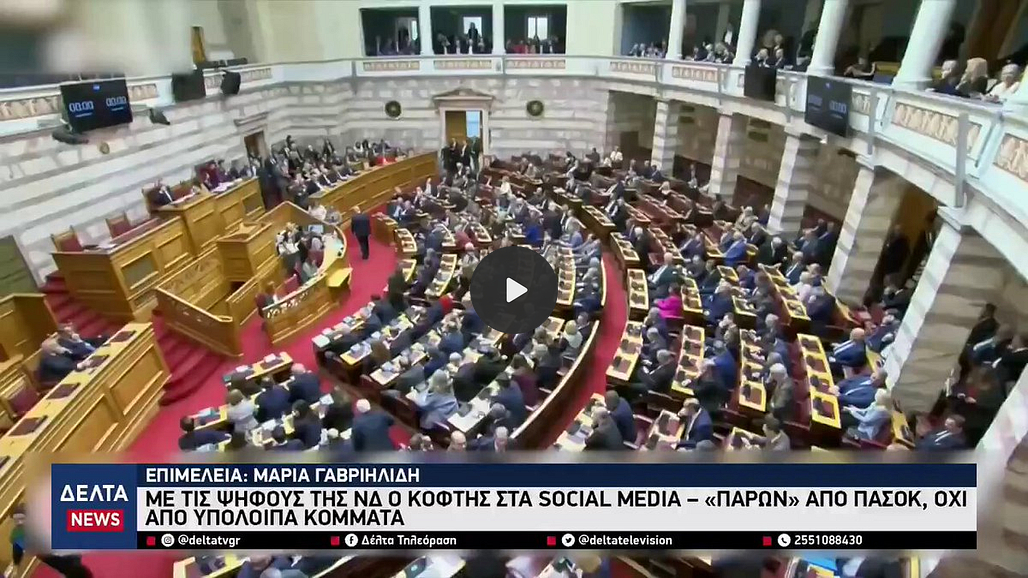
The Greek Parliament has passed a law banning children under 15 from using social media from January 2027. The law does not specify how users’ ages will be verified, set new fines or penalties, or provide exemptions for existing accounts, reports Agentnews.
In May 2026, the Greek government sought Brussels’ approval for a draft bill on the social media ban. The Commission noted that the obligation on platforms to verify and assess users’ ages is comprehensively regulated under the DSA, and that using DSA enforcement measures in national rules “would be contrary to their purpose”. As the Commission threatened infringement proceedings if the draft ignored its objections, Greece amended the original text and removed the obligation on platforms to verify age, along with the enforcement rules.

Consequently, the law does not specify how or when age verification should be carried out. It also does not specify which method platforms must use, although the Gov.gr Wallet or Kids Wallet are cited as examples. According to the explanatory memorandum, service providers may use any age verification system that complies with the EU Digital Services Act.
The law also does not provide specific exceptions, such as parental consent. It contains no provisions regarding existing accounts held by under-15s, or what platforms should do with them. The law has introduced no new fines, yet the General Accounting Office expects an increase in state revenue. It is believed that Greece may apply the penalties set out in the DSA, which can reach up to 6 per cent of a company’s global turnover.
The law will be enforced by the Hellenic Broadcasting Authority (ΕΣΡ) and the Hellenic Data Protection Authority (ΑΠΔΠΧ). A platform established in Greece is accountable to these authorities. For a platform established elsewhere in the EU, a complaint may be lodged in Greece, but the Greek authorities will forward it to the relevant national regulatory authority. The law also specifies that it remains valid until the EU adopts a relevant regulation (the EU Kids Act).
According to the government, the law aims to support parents by limiting the endless scrolling that deprives children of sleep, concentration and time with friends. Greek Prime Minister Kyriakos Mitsotakis explained that social media platforms now have about 2.5 months to develop methods for verifying users’ ages while protecting their privacy. He added that the ban applies to social media, but not to mobile phone use in general or to other apps.
‘Environmentally Friendly’ Paper Straws Are More Harmful Than Plastic Straws
A study commissioned by South Korea’s Ministry of Climate, Energy and Environment assessed the environmental impacts of four types of drinking straws: conventional plastic, paper, biodegradable plastic and bio-based polyethylene (bio-PE). The assessment included potential carcinogenic impacts associated with their production and disposal. It found that the modelled human carcinogenic impact of paper drinking straws was 6.33 times that of conventional plastic straws, while bio-PE straws performed even worse, reports The Korea Herald.
The researchers assessed the impacts of the four types of straws across 16 categories, covering their life cycles from raw material production to disposal. The human carcinogenic impact indicator is based on life-cycle modelling; it does not measure the direct cancer risk to people using the straws.
Paper drinking straws have been widely promoted worldwide as environmentally friendly alternatives to conventional plastic straws and are often marketed as recyclable. However, the South Korean study found that paper straws had 6.33 times the human carcinogenic impact and 2.04 times the acidification impact of conventional plastic straws. Bio-PE straws performed even worse, with 16.18 times the human carcinogenic impact and 5.9 times the acidification impact. Biodegradable plastic straws had 3.34 times the human carcinogenic impact and 1.98 times the acidification impact of conventional plastic straws.
Conventional plastic straws had the lowest impact in 10 of the 16 categories, including climate change, acidification, particulate matter and human toxicity. Paper straws had the highest impact in three categories, while biodegradable plastic straws had the highest impact in two. Bio-PE straws had the highest impact in 10 categories, including ozone depletion, acidification and smog. Bio-PE straws are made from renewable plant-based feedstocks, such as sugar cane. Although bio-PE is chemically identical to conventional polyethylene, it is not biodegradable.

The study also found that drinking straws of all materials are difficult to recycle in practice. Their small size makes them difficult to separate from other waste at sorting facilities, while coatings and adhesives can further hinder recycling. The researchers therefore recommended that shops and other establishments stop providing single-use straws by default, regardless of material, and supply them only when customers specifically request them.
South Korea introduced restrictions on plastic straws in cafés and restaurants in November 2022. However, in November 2023, the government indefinitely extended the enforcement grace period amid complaints about the policy and questions about its effectiveness. Responding to the findings, lawmaker Kim Wi-sang said: “The government must acknowledge the failure of its greenwashing policy, which fixated on ineffective substitute materials, and avoid repeating it.” He argued that policy should instead focus on reducing the overall consumption of single-use products.
Nothing says "everyone has the right to be themselves" like saying "you're not allowed to disagree with me."