


Over the past couple of days, the following topics attracted our attention:
UK Locks up Children over ‘Terrorist’ Memes
COVID-19 Lockdowns Slowed Kids’ Development, Study Finds
Taliban Permits Wife-Beating as Long as No Broken Bones or Visible Wounds
UK Locks Up Children Over ‘Terrorist’ Memes
The UK’s Counter Terrorism Policing, through its Action Counters Terrorism (ACT) platform, has launched a campaign called “What You Share Leaves A Trace,” which mainly targets boys aged 13-17, warning that sharing terrorist content can lead to a criminal record.
One clip created for the campaign features a teenage British boy who fearfully describes how, out of ignorance, he shared terrorist content that he thought was funny, and now he faces the risk of criminal punishment. In another clip, an young man describes how the content he once shared has ruined his future. He has no job, no phone, and is not allowed to travel, concluding: “It’s online, but it’s still real life.”
The ACT explains that penalties imposed under anti-terrorism legislation are generally much more severe than for other crimes. A child found guilty may be sentenced to imprisonment in prison or a young offenders’ institution; community orders, such as monitoring devices and restrictions on movement; confiscation of their devices, including phones, tablets, video games, and computers; and they may also be banned from travelling to certain foreign countries for a long period of time. The ACT also states that a conviction may affect the young person’s chances of attending college or university, gaining qualifications, and their ability to get a job.
The ACT defines terrorism as violence or the threat of violence for political, religious, or ideological purposes. The ACT lists the following as terrorism-related crimes: displaying the signs, symbols, and slogans of terrorist groups; creating or sharing extreme content that glorifies such groups; inciting others to commit terrorist crimes; and threatening violence on the internet for such purposes. The statement reads: “Terrorist content is content that would be illegal under the Terrorism Act if you were to create, share or celebrate it, or use it to threaten other people. It might include images of graphic violent acts being committed for terrorist causes; the signs, symbols or slogans of terrorist groups; or encouraging other people to commit terrorist crimes.”
According to ACT, the current campaign responds to the fact that more and more teenage boys are being arrested and convicted of terrorist crimes in the United Kingdom. For example, in 2024, 39 young people under the age of 17 were arrested in the country for terrorist crimes. However, the crime is often related to viewing and sharing extreme content on social media.
In other words, the British government is now running ads in which frightened children are essentially arrested for memes shared on social media because someone somewhere has labelled the meme as terrorist. Toby Young, a representative of the Free Speech Union, commented on the campaign: “If your child is referred to prevent for sharing or liking something ‘far Right’ on social media—a clip of @rickygervais telling a joke about transwomen, for instance—please do contact @SpeechUnion. We can help.”
COVID-19 Lockdowns Slowed Kids’ Development, Study Finds
In a long-term study led by the University of East Anglia and published in the journal Child Development, researchers concluded that the COVID-19 pandemic negatively affected the cognitive development and self-regulation of children who were aged 4–5 at the time. Their subsequent development has been slower, and this generation may require extra support from teachers, schools, and healthcare services in the coming years, writes The Daily Mail. Researchers suggest these effects could persist for years.
Researchers from the universities of East Anglia, Lancaster, and Durham followed 139 children (71 girls, 68 boys) aged 2.5–6.5 years over several years, with 94 families participating before the pandemic. This provided a baseline of the children’s abilities prior to COVID-19, enabling accurate tracking of lockdown impacts. Using the standardised Minnesota Executive Function Scale, they measured key cognitive skills at regular intervals.

The greatest impact was seen in children who were 4–5 years old during the first COVID-19 lockdowns in 2020 and had started reception (in the UK, compulsory schooling begins at age 5). These children’s cognitive flexibility scores showed slower growth over time compared to those who were still in preschool when the pandemic began. Lead researcher Professor John Spencer said: “Children who were in reception when the country shut down showed much slower growth in key self-regulation and cognitive flexibility skills over the next few years than children who were still in preschool.”
According to the researchers, reception is when children typically learn to communicate, follow routines, cope with classroom pace, and form their first friendships – which build self-confidence. “Without these experiences, reception children had a challenging time developing self–regulation and cognitive flexibility in the years that followed the pandemic,” said Professor Spencer, adding: “Our findings suggest that peer socialisation and the new self–regulatory skills children must master in reception might be particularly critical for the development of executive function skills.”
In addition, children in this group were more likely to contract COVID-19, and frequent illness further worsened the issues. For example, data from Speech and Language UK in 2023 showed that the average child missed 84 days of school due to COVID-19.
However, for children starting school in 2020, classrooms closed abruptly, routines vanished, and social opportunities were severely limited as they studied at home under parental supervision. Now around 10 years old and in their final year of elementary school, these children – as per researchers – highlight a generation likely needing ongoing support from teachers, schools, and health services. For instance, in 2023, eight out of ten teachers reported worsened inattention among students post-pandemic, alongside increased unnecessary chatter, shouting, and inappropriate laughter. Teachers also noted lagged social skills from screen-based learning, exacerbated by constant social media scrolling (such as on TikTok).
Previous studies have shown that the brains of teenage girls may have aged prematurely by up to four years during the coronavirus pandemic. Teenage boys have not been spared either – their brains also showed premature aging, albeit only by a year and a half. We have also reported that following the coronavirus pandemic, an increasing number of children in the UK and elsewhere have been observed to have anxiety disorders and behavioral problems.
Taliban Permits Wife-Beating as Long as No Broken Bones or Visible Wounds
The Taliban regained power in Afghanistan in August 2021, following the hasty withdrawal of international allies after decades of efforts to establish democracy. Although the Taliban initially promised a “changed, more moderate approach,” women’s rights have steadily eroded since then – from access to education and work to bans on women speaking to one another or looking out of windows. Now, Taliban authorities permit men to beat their wives provided the man does not break her bones or leave visible, permanent wounds, according to CNN.
The Taliban issued this decree (with translation available) last month, although what it describes is already widespread in Afghanistan. Still, this is the first time such practices have been codified so clearly. “If a husband beats his wife so severely that it results in a broken bone, or an open wound, or a black and blue bruise appears on her body, and the wife appeals to a judge, then the husband will be considered an offender,” the decree states. “A judge should sentence him to 15 days’ imprisonment.”
Human rights activists call the provision devastating and warn that women’s already limited rights will be further eroded. “The men have the right to rule completely over the women,” said human rights activist Mahbouba Seraj. “His word is the word of law – that’s it.” Since Afghan women cannot leave home without a male escort, the decree prevents them from seeking justice even in serious cases of violence, such as broken bones or open wounds. Additionally, under Afghan Sharia interpretations, another woman’s testimony carries half the weight of a man’s.
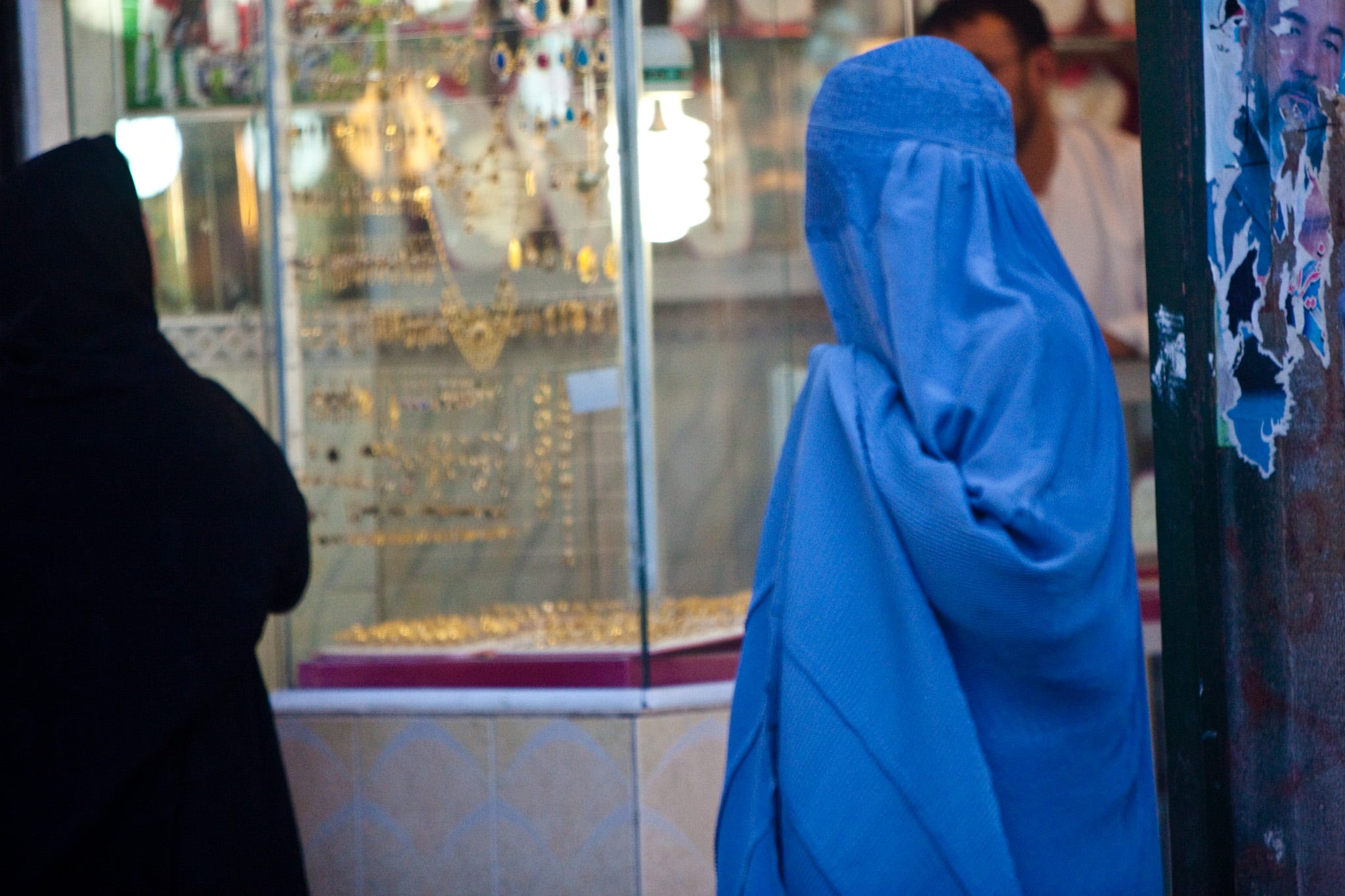
The decree also punishes a woman with three months’ imprisonment if she repeatedly visits her father or relatives without her husband’s consent or refuses to return at his request. Relatives who shelter a woman fleeing domestic violence may face punishment too. This strips women of their last potential defense, as they lack meaningful legal protection anyway. Seraj noted that previously there was at least some fear of courts and judges; now, men enjoy legal cover to punish women physically or otherwise. The UN views the decree as one that legitimizes violence against women and children, describing Afghanistan as a “graveyard for human rights.”
The punishment for beating a woman (15 days in prison) is far lighter than for mistreating animals: forcing a dog or rooster to fight carries five months in prison. Insulting Taliban leader Hibatullah Akhundzada carries 39 lashes and a year in prison, while insulting a high-ranking official brings 20 lashes and six months. The decree also allows fathers to punish children for things like not praying. Yet if a teacher breaks a child’s bones, the consequence is only dismissal. The death penalty applies to many offenses, including spreading un-Islamic teachings, repeated theft, heresy, witchcraft, and homosexuality or other non-vaginal sexual activity.
The Taliban insists all such decisions align with Islamic Sharia law and hold religious legitimacy. Since returning to power, they have issued over 250 decrees and regulations, with at least 157 specifically restricting the rights of women and girls.
I recall when La Pen was ordered by a court to undergo a mental health evaluation because she shared a beheading video. Maybe she also commented on how fake it looked.
This is not terrorism, but an observation that perhaps our own governments are lying to us. Jailing people for this means jailing dissidents for daring to think freely. That's a crime against humanity.
Join the Free Speech Union https://freespeechunion.org