


Over the past few days, the following topics attracted our attention:
British Officials Maintain a List of “Suspicious” Posts
Macron Calls for Strict Online Censorship
UK Arrests Teens and Pensioners for Speech
British Officials Maintain a List of “Suspicious” Posts
The UK authorities monitor and investigate social media posts, adding to a database posts and comments that criticise government policy. For example, several Britons who posted on X and Reddit criticising the state’s counter-terrorism programme, Prevent – overseen by the Standards and Compliance Unit (StaCU) – have been added to the list of “suspicious” posts. Between March 2024 and February 2025, there were 77 posts in the StaCU database, the majority of which criticised the Prevent training programme’s excessive focus on the far right, whilst completely overlooking Islamic extremism, reports Metro.
StaCU is regarded as a relatively obscure organisation. It was established in February 2024 and its remit includes the Prevent programme, which aims to stop people from becoming terrorists. Public can submit complaints about the programme, but it has now emerged that officials from the unit appear to be actively searching the internet for posts critical of Prevent.
Many of the authors of the posts flagged are ordinary Britons who would never suspect that officials are monitoring their social media accounts. Most of the ‘suspicious’ posts consist of claims that Prevent is biased in the way it trains public sector staff to spot early signs of radicalisation. For example, one post has reportedly made it onto the list: “Anyone who’s done the Prevent training knows it only talks about the far right. Islamic extremism isn’t even mentioned. Complete bullshit.” Another post on the list complained that “I sat through Prevent training at work a few weeks ago and the narrative was very much that the far right is the biggest threat. I kid you not!”. Consequently, the majority of posts on the list criticised Prevent for focusing excessively on the far right. However, there were also some that were critical of the government in other ways. For example, one claimed that Prevent “closes down conversations in the classroom” because “Muslim children are seen as a ‘threat’”.
There is at least one post on the list from the Open Rights Group, an organisation campaigning for digital rights. In it, the group criticised the programme for its lack of transparency regarding data management and storage. The Open Rights Group has also argued that Prevent has expanded far beyond its original aim of identifying people who might become radicalised and has increasingly been used to justify widespread surveillance. According to the organisation, it is worrying to see that people are being monitored under Prevent simply because they criticise the programme. “That raises serious questions about freedom of expression and the right to dissent and protest,” stated the Open Rights Group.

The Open Rights Group also noted that there is extremely little information about what happens to the data scraped from social media, how long it is retained, with whom it is shared, and what the authorities ultimately use it for.
According to Rights & Security International, the organisation that campaigned for the list to be made public, people should be able to express their opinions, including criticism, without it being recorded in a government database. The organisation believes that people do not post on social media while thinking that the government might be monitoring and collecting what they publish. Furthermore, the authors of posts included in the list are not informed that their posts have been included, nor is it known what happens to the posts or their authors after the list is finalised. All in all, Rights & Security International finds this highly concerning.
The Free Speech Union also criticised the post register, adding that in just five years, more than 62,000 people have been arrested for what they have said. “Every day, Britain feels more like George Orwell’s 1984,” wrote the Free Speech Union. However, this appears to be only the beginning, as Prime Minister Andy Burnham recently announced the establishment of a National Centre for Information Defence, aimed at combating false information and disinformation originating from abroad – such as from Russia – as well as ‘misleading’ claims concerning the UK. In any case, the recent revelation that some body is keeping a list of “suspicious” posts raises even more questions about freedom of speech, the right to protest and the right to criticise the government. “This is deeply chilling,” stated the Free Speech Union.


However, according to a Home Office spokesperson, people who have criticised the Prevent programme are not being monitored, nor have any actions been directed against any specific community. “Keeping the public safe is our number one priority and we are committed to ensuring that everyone is protected from radicalisation,” the Home Office explained. The spokesperson added that Prevent plays a crucial role in this, having steered nearly 6,000 people away from violent ideologies since 2015.
Macron Calls for Strict Online Censorship
French President Emmanuel Macron continues to push the European Union to rigorously enforce the Digital Services Act – often labelled a ‘censorship law’ – aimed at curbing information deemed inappropriate. He also advocates ending online anonymity. Macron has called for all of this before, but during his state visit to Spain in September, his desire for censorship became apparent once again. At an event at the Complutense University of Madrid, he sharply criticised the American concept of freedom of speech, calling it the antithesis of true free speech. In his words, “there is no freedom if there is no limit on my freedom, which begins with the freedom of others and respect for a common framework.” In short, Macron’s view of freedom is confined to limits set by the state and whatever it currently defines as public order, according to Reclaim The Net.
Macron illustrated his point: “I know this when I walk down the street: my freedom cannot be to hit you, to insult you or to wreck the space we all share. That is the idea some people have of free speech.” Critics argue the comparison is flawed because it equates words with actions.

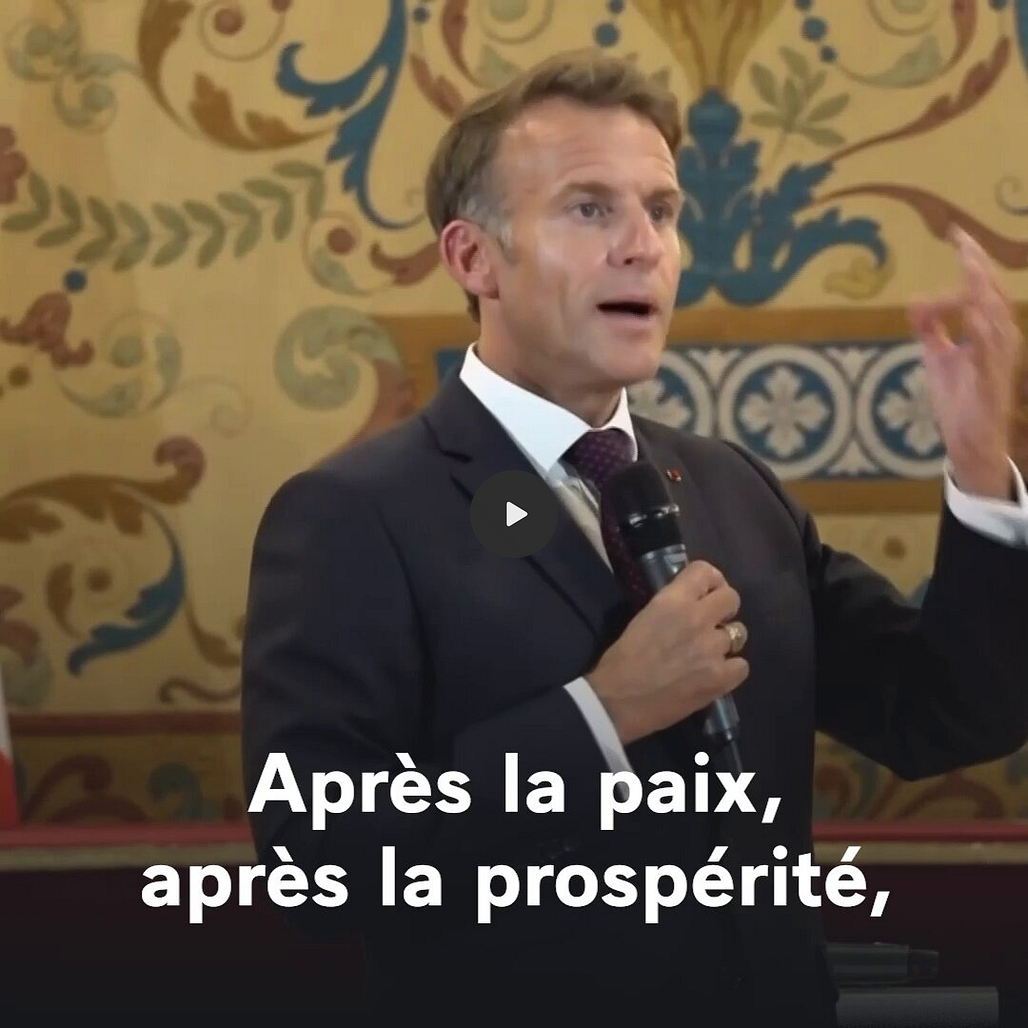
He further insisted there should be no social media accounts not tied to a real person. Macron believes people must be held accountable for the “rubbish” they post, yet he has never clearly stated who decides what counts as rubbish. He stressed that the EU’s Digital Services Act is not being applied fast enough and confirmed he has pressed European Commission President Ursula von der Leyen for stronger action. “We will keep up the pressure. In fact, the pressure means pushing the Commission to act, and/or, in parallel, taking national initiatives to shake things up,” he said. Until those who post content are held to account, it will not be possible to regulate that content. Macron compared social-media users to journalists, noting that a journalist spreading “nonsense” can face legal consequences while online posters often do not. He cited YouTube and similar platforms promoting climate-sceptic videos because they drive engagement and advertising revenue. This, he argued, must end through “trusted third parties and fact-checking structures that make it possible to restore the truth,” with the Digital Services Act enforced far more widely, quickly and forcefully.
Macron also strongly supports age verification and addressed banning children and young people from social media. As you may recall, France’s Constitutional Council ruled that a proposed social-media ban was unconstitutional because it disproportionately restricted freedom of expression and failed to protect privacy. Rather than drop the plan, the President confirmed work on amendments continues. He described regulating social media as a “European-level battle” fought alongside Spain and others. “And now we have won – we have reached a European-level agreement that children under the age of 15 must be protected from social media,” Macron said, praising the European Commission’s recent EU Children’s Act, which include bans for under-13s and staged access thereafter. In his view, such rules amount to a “re-humanisation” of social media, reclaiming control to restore democracy.
On age verification via artificial intelligence, Macron promised – apparently responding to the Constitutional Council’s privacy concerns – that personal data would be better protected than in most everyday platform activities.
UK Arrests Teens and Pensioners for Speech
Over the past five years, the UK has arrested more than 62,000 people for online posts; of these, 18,520 were charged and 12,292 were convicted. Although the government has promised to stop prosecuting such posts, the trend shows no sign of abating. On the contrary, a joke about a politician’s clothes or a meme about immigrants is enough for the police to turn up and arrest a teenager or a pensioner, writes Reclaim The Net.
This is exactly what happened to a 15-year-old boy, who was arrested by four police officers. The boy had posted jokes or criticism on Facebook about the behaviour and dress sense of Simon Bennett, a Conservative councillor. In one post, he compared Bennett’s appearance to that of a “rent boy”. In another, he asked: “Why do some councillors turn up at a scrutiny committee in shorts and a T-shirt, wearing trainers? So unprofessional.” In a third post, the boy had used photo-editing software to add rabbit ears to Bennett’s head, commenting: “Nibble… nibble… crunch… crunch. Can you hear it? That’s the sound of a rabbit devouring the last remaining shreds of the Wolverhampton Conservatives’ credibility.”
Feeling offended, Mr Bennett had reported the teenager to the police, stating that the boy’s posts were quite personal. Mr Bennett therefore believes the arrest was justified: “There were a number of posts that targeted me… It was unpleasant and I was targeted by a child I had no way of dealing with.” According to Bennett, he had also sought advice from the council, whose members likewise considered it best to report the incident to the police, and the police deemed it necessary to arrest the teenager.
As a result, the police arrived at the teenager’s home in the morning, confiscated his mobile phone and laptop, and took him in for questioning. The police reportedly told the boy that he was under arrest for harassment, malicious communication or a hate crime – or a combination of these – and that it was linked to social media. The teenager was later released on bail and banned from attending Wolverhampton City Council meetings.

The Free Speech Union intends to take the police to court for unlawful arrest and unlawful detention. The group has also written to the police, stating that no crime had been committed and that the arrest and investigation constitute a gross violation of the boy’s rights.

Another example of the consequences of posts is former police officer Stephen Gray (65) from County Durham. He was arrested following a tip-off allegedly made by his neighbour, with whom he had been arguing over drainage pipes, and subsequently fined around 1,000 pounds for a satirical post which the judge deemed offensive.
He was charged over two posts. In the first, he had linked the phrase “time for mass deportation” to an allegedly 12-year-old migrant who had asked donors to have him moved from a three-star hotel to one with “a better halal menu, free Wi-Fi and Sky” near a girls’ school. The judge described this post as a political issue that had been debated in Parliament and found in Gray’s favour. In another post, he wrote: “Fun facts about bacon! People who eat bacon have a lower chance of marrying a 9-year-old!” According to Gray, his second post was pure satire and was intended to spark a debate about Muhammad’s marriage to Aisha and child marriages in Muslim countries. The magistrate, however, considered this post to be offensive and therefore fined Gray around 1,000 pounds.
According to Gray, the guilty verdict broadly means that the so-called blasphemy laws are being brought back by another route. He has appealed against the decision, and the appeal hearing is scheduled for November.