


Over the past few days, the following topics attracted our attention:
UK to Ban Social Media for Children in March
Morocco’s Spyware State Silences Activists
Former Leader of Terrorist Organisation Seeks Asylum in Belgium
UK to Ban Social Media for Children in March
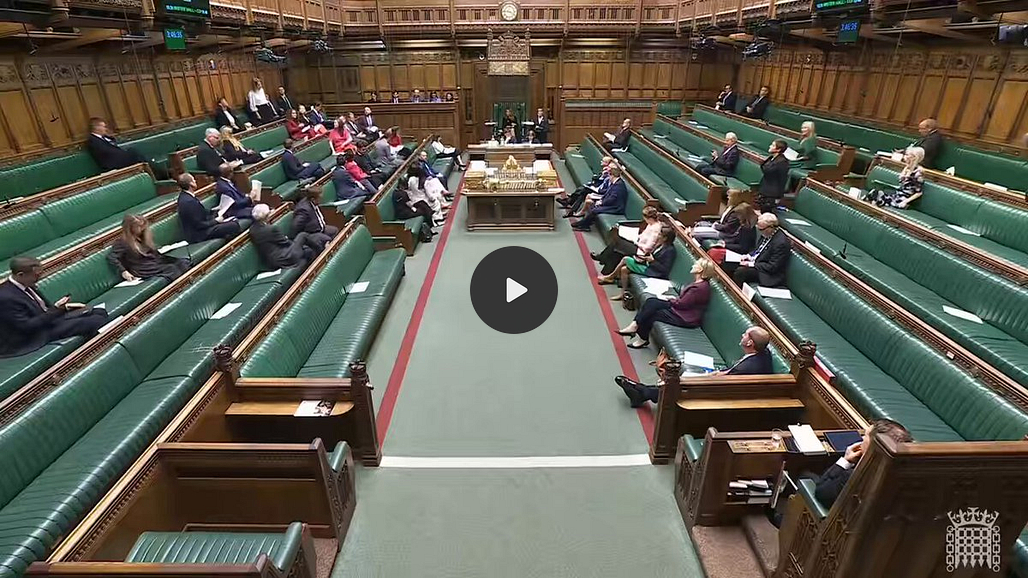
Lisa Nandy, the UK’s Culture Secretary, confirmed that social media will be banned for under-16s from March next year. The minister warned that the fight for online safety is not yet over. Measures are also planned to protect 16- and 17-year-olds, including restrictions on certain websites, AI-related features, and stronger media literacy education in schools, reports The Guardian.
A ban is planned for ‘high-risk’ social media platforms and will come into force in March 2027. Further measures will then follow for 16- and 17-year-olds. These include restrictions on ‘safer’ websites that allow endless scrolling and algorithms promoting harmful content, plus night-time usage limits and the automatic deactivation of addictive features. The aim is to protect the next generation so that when a child turns 16, they are not suddenly exposed to the most addictive features.
In addition, the government is advancing measures to protect children from artificial intelligence. These include mandatory breaks for those under 18 using chatbots and further action on AI systems that offer mental health advice. A plan to ban ‘chatbots that pose a serious risk to children’ is also under consideration. For now, parents, children and carers are advised to follow the guidance drawn up by the government on how to use artificial intelligence safely.

The government has also announced plans to strengthen media literacy teaching in schools, to be integrated across subjects from 2028. There are plans for updated RSHE lessons and a revised national curriculum requiring children to learn how to cope with new technologies, including artificial intelligence and chatbots, and how to identify false information, disinformation, violent and misogynistic content.
Stricter age verification measures are planned, though details have not yet been finalised. Age-based restrictions are expected to rely on existing systems already rigorously enforced by Ofcom. Methods include facial age estimation, bank details, email and digital ID. Ofcom is expected to produce a rapid review by the end of October on how age verification under the new rules should operate. The government wants it to be extremely difficult to circumvent the restrictions. Australia – the first country to introduce a similar ban – has shown that many under-16s remain on social media because the rules are relatively easy to bypass. The UK is keen to avoid similar problems.
Culture Secretary Nandy stresses that the government must go further and not treat the social media ban as the end of the matter. “This is a staging post towards what must be a very active interventionist state, policing and regulating the online space so that people are safe,” she said. New technology has always transformed society, but the internet remains the only sphere where power has been almost entirely left to the private sector. In Nandy’s view this is no longer acceptable. The United Kingdom aims to become a pioneer of technology as a force for good, promoting a web that is truly safe, inclusive and empowering. A new chapter is beginning in which Britain will be “an active and empowering state that shapes those civic spaces so that they work for us”.
According to the Free Speech Union, the state is already “highly intrusive, controlling and regulating the online space”, and has singled out people who criticise the government and its policies online. The organisation noted that over the past five years more than 60,000 people have been arrested for what they have said, both online and offline. “Let’s be honest: this is no longer solely about protecting children online. It is about the state gaining greater control over what people say online,” the group wrote, arguing that Nandy’s comments show Prime Minister Andy Burnham’s government is taking online censorship even further.


Morocco’s Spyware State Silences Activists
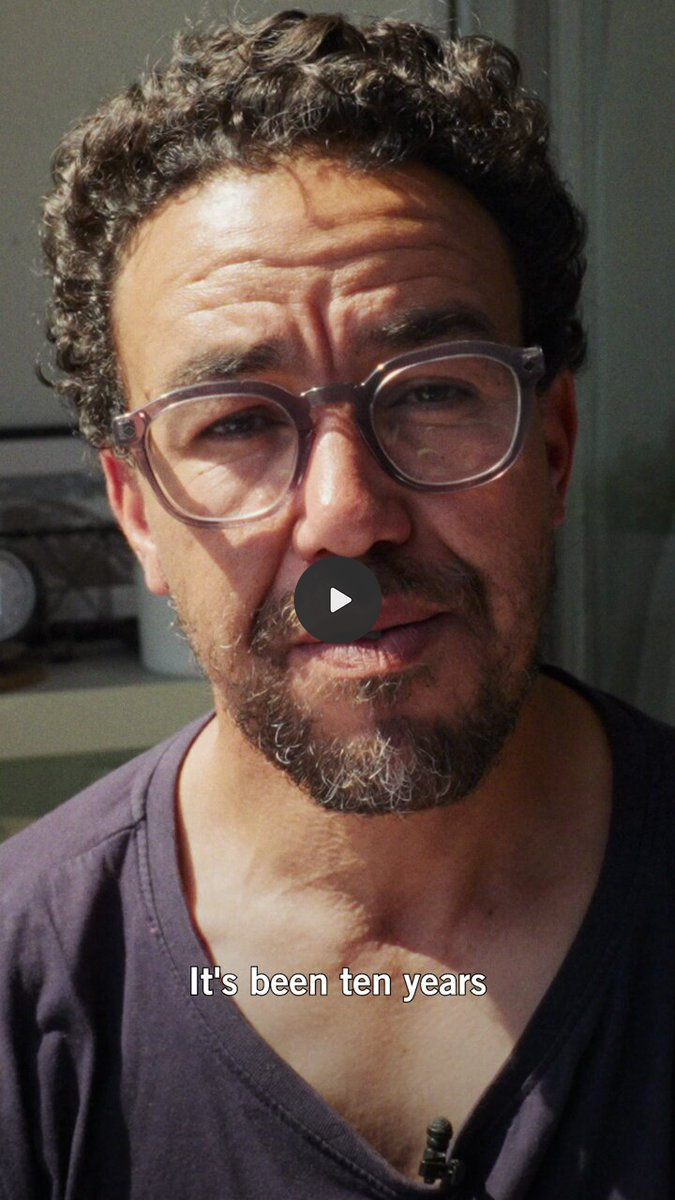
The Moroccan authorities use an extensive surveillance apparatus to monitor and ultimately silence journalists, activists, human rights defenders and others critical of the regime. This illegal surveillance was confirmed by a former security agent from Morocco’s Direction Générale de la Surveillance du Territoire, using the pseudonym Safir. He described how targets are secretly recorded everywhere and how the intelligence services collaborate with mobile phone retailers to ensure that phones are pre-loaded with spyware, although there is a whole range of measures for infecting targets’ devices. All of this is done to subject individuals deemed undesirable by the authorities to criminal prosecution, writes writes Amnesty International.
According to Agnès Callamard, Secretary General of Amnesty International, Morocco has fully embraced techno-authoritarian practices. The state has acquired a wide range of surveillance technologies, such as high-tech spyware, audio recording systems and other surveillance devices. It purchases these systems from companies based in Israel, the European Union and the US, such as the Israeli NSO Group (Pegasus), the Italian Hacking Team (now known as Memento Labs), and the British-German firms Gamma Group and FinFisher. The authorities are actively using these tools to create a repressive system that instils fear amongst human rights activists and journalists, in order to silence them and hinder their work both in Morocco and abroad.

According to Amnesty International, human rights defenders have been targeted by various methods of infection: their devices have been physically compromised, they have been attacked via ‘one-click’ attacks, where the victim clicks on a malicious link, or ‘zero-click’ attacks, where the target’s device is infected without the victim having to click on any link at all. There have also been cyber-attacks facilitated by the state-owned Maroc Telecom.
This information has now been confirmed by a former employee of Morocco’s Direction Générale de la Surveillance du Territoire (DGST), using the pseudonym Safir. This unit carries out surveillance operations and is responsible for the deployment of the Pegasus spyware in Morocco. Safir described how personal devices are infected, and how the individuals under surveillance are secretly filmed and recorded. This applies both to those who have been arrested and prior to arrest – for example, at a person’s home, workplace, in their car, in cafés and even in their bedroom, where microphones and other recording devices have been installed.
Phone calls are routinely tapped, and location data is tracked to monitor the daily movements of activists and others. According to Safir, DGST agents recruited staff at mobile phone shops to sell mobile phones infected with spyware, which appear to be new and unused but, once activated, give the authorities full access to all communications. Neighbours of those under surveillance, meanwhile, are recruited as informants. The authorities also employed such tactics in relation to individuals in transit via Moroccan airports, as well as the families, friends and professional contacts of selected targets. Safir described: “We infected so many internet cafés with Remote Controlled Spyware (RCS). The field agents tell us which internet café the target is visiting, and we were able to monitor what they were doing because we had previously infected all the computers there.” DGST agents operate without a court order, selecting targets in secret and with impunity.
According to Rebecca White, a researcher at Amnesty International’s Security Lab, the Moroccan authorities thus have a wide range of tools at their disposal aimed at “blackmailing, discrediting, shaming and, if necessary, unjustly imprisoning those who speak out in defence of human rights in Morocco”. Ultimately, Moroccan human rights defenders and others have nowhere to hide or flee to, as the Moroccan authorities’ surveillance networks extend far beyond the country’s borders.
Agnès Callamard added that this is yet another example of the global economy of technological repression, facilitated by both companies and states. “This repressive ecosystem makes it difficult, and dangerous, for people in Morocco to exercise their rights to freedom of expression, association and peaceful assembly. Even after they have been released from prison, they continue to live under the shadow of surveillance and are subject to smear campaigns using private details that can only be obtained through surveillance,” said Callamard.
Morocco has repeatedly denied using spyware to monitor its citizens.
Former Leader of Terrorist Organisation Seeks Asylum in Belgium
Fouad Belkacem, the leader of Sharia4Belgium, who is currently serving a prison sentence in Belgium, now seeks asylum to avoid extradition to Morocco. Belkacem promoted Sharia law in Belgium, called on Muslim women to cover themselves completely, compared gay men to paedophiles, and incited Muslims to turn against non-Muslims. He was convicted of brainwashing several young Belgians and sending them to fight - and in some cases die - in Syria, writes The Brussels Times.
Fouad Belkacem (44), also known as Abu Imran, was born in Rumst, near Antwerp, and led the terrorist organisation Sharia4Belgium. Sharia4Belgium was inspired by Al-Qaeda’s ideology but was not part of that group. The organisation planned attacks in Europe and Belgium, and Belkacem himself urged violence against the Molenbeek police station. The rise of Islamic State (ISIS) opened new recruitment channels, which Sharia4Belgium used to send people to Syria. In 2015, Belkacem was convicted of recruiting and brainwashing young Belgians for armed combat in Syria and received a 12-year sentence. The European Court of Human Rights later noted his calls to fight non-Muslims in order to subdue them. In 2018, he lost his Belgian citizenship, leaving him with only Moroccan nationality. His sentence is due to end in 2027.
According to Anneleen Van Bossuyt, Belgium’s Minister for Asylum and Migration, Belkacem has submitted an asylum application. The ministry says the main reason is his fear of being returned to Morocco. The minister confirmed she wants to use every available means to remove him from Belgium, but the application must still be examined by the Directorate-General for Refugees and Stateless Persons (CGRS).
Right-wing MP Francesca Van Belleghem claims Morocco does not want him back. Lawyer Sylvie Sarolea points out, however, that Morocco is obliged to accept its own citizen. Morocco cannot simply refuse, so the asylum claim could prove decisive.
Sarolea stressed that anyone on Belgian territory may apply for asylum, but this does not guarantee refugee status. In Belkacem’s case she believes a serious risk may exist that would bar refugee recognition. Even so, Belgium may be unable to deport him if he shows a real risk of torture or inhuman treatment in Morocco. He could then receive protection against removal until another solution is found. The fact that he has four children in Belgium and was born there will be weighed by the courts against any continuing security risk. If the risk is judged greater, family ties will not prevent deportation.
Claude Moniquet, director of the European Strategic Intelligence and Security Centre (ESISC) and a former French intelligence officer, calls the asylum application utterly implausible. He notes that such individuals must still be allowed to defend themselves, yet releasing Belkacem is not without risk. His connections and influence once stretched far, though after a long prison term it is unclear whether that influence remains; Sharia4Belgium has largely disappeared, and many of those active at the height of the Syrian conflict are dead, imprisoned or have vanished. Moniquet nevertheless insists that Islamist terrorism “never really dies”.
Reportedly, the General Commission for Refugees and Stateless Persons (CGRA) has rejected Fouad Belkacem’s asylum application and decided not to grant him international protection. The agency sees no obstacle to his removal to Morocco. He still has the right to appeal to the Council for Alien Law Litigation (CCE).
They don’t really care about kids.
There are so many things that may be done and aren’t…
Prohibition is very questionable.
This is what they’re after:
“Methods include facial age estimation, bank details, email and digital ID. Ofcom is expected to produce a rapid review by the end of October on how age verification under the new rules should operate. The government wants i to be extremely difficult to circumvent the restrictions.
Australia - the first country to introduce a similar ban - has shown that many under-16s remain on social media because the rules are relatively easy to bypass.
The UK is keen to avoid similar problems.”
Not resisting will advance the globalist agenda.
Neo techno feudalism and slavery.