


Over the past few days, the following topics attracted our attention:
UK to Use ID for Social Media
Europeans Reject State Access to Encrypted Messages
Novaya Gazeta Shuts Down Under Kremlin Pressure
UK’s Social Media Ban Hits Adults With ID Checks
In the UK, a social media ban is set to come into force in March next year, prohibiting under-16s from using ten major platforms, including Instagram, TikTok and Snapchat. Ofcom has set out four methods – photo ID, digital ID, bank checks and facial age assessment – for verifying users’ ages most effectively. If the ban comes into force, adults will likely also have to confirm they are of legal age, the BBC reports.
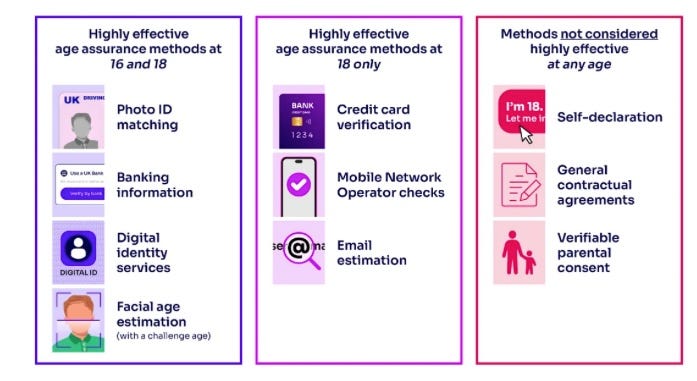
Australia was the first country in the world to introduce a social media ban for young people. Less than a year after its implementation, it has become apparent that young people are not fully complying with the ban. The UK hopes to learn from Australia’s experience and promises much stricter age verification measures. At the same time, it is acknowledged that verifying the age of minors is a complex task. They do not have credit cards or a full driving licence, and may not even have a passport. However, they may appear older or younger than their actual age.
Ofcom is therefore now recommending four ‘highly effective’ age verification methods. The first is comparing a photo ID (e.g. a passport or driving licence) with a photograph taken in real time during the age verification process, as around 94 per cent of people aged 16 and over hold either a passport or a driving licence, whilst only around 150,000 16- and 17-year-olds have neither. Secondly, the agency mentions bank-based verification, which utilises information held by the bank regarding the user’s age, as individuals are required to present a document when opening an account in any case, and nearly 90 per cent of 16–17-year-olds have a bank account. Thirdly, the agency highlights digital ID services, which enable individuals to verify their identity digitally, including their age. To do this, a photo ID can be used, which is verified once via the digital ID system. A fourth method of age verification is facial age estimation, where technology analyses the user’s facial features to determine their age. Whilst the margin of error for 16-year-olds may be a few years, Ofcom therefore recommends implementing a ‘challenge age’ approach, using a second form of age verification, such as an identity card. This reduces the risk of a minor gaining access to the platform simply because the technology estimated them to be slightly older.

The regulator confirmed that if a platform has accurate information about a user’s age, adults with existing accounts will not need to undergo age verification. Nevertheless, Ofcom’s statement reads: “That said, many adults are still likely to be asked by sites and apps to prove their age, using the wider range of methods at age 18 identified in our existing guidance.” At the same time, the authority acknowledged that it does not know the exact number of adult accounts where age verification is required, but there are likely to be a huge number of them. Furthermore, the authority made no secret of the fact that the risk of circumventing the restriction cannot be completely ruled out, and it is likely that some children will manage to bypass the age verification process. However, platforms can mitigate these risks, for example by allowing other users to easily report accounts they believe belong to minors. Ofcom has pledged to ensure and verify that social media platforms do indeed implement the necessary control measures, and that ‘firm action’ will be taken swiftly against those who breach the rules.
Ofcom’s report on age verification recommendations is now being forwarded to the government, and a decision on how the ban will be implemented is expected by the end of the year.
Big Brother Watch states that in future all Britons will need a form of identification to use social media. Indeed, Ofcom has made no attempt to conceal this, as it advises 16–17-year-olds who do not yet have a photo ID to take steps to obtain one. Big Brother Watch therefore believes that the social media ban is in fact a state-run identity system being introduced surreptitiously, and that all citizens, both adults and children, will have to get used to presenting their passports simply to access the internet.


The organisation also emphasises that the plan to ban social media will ultimately destroy online anonymity. “The policy is painfully misguided, an Orwellian assault on free speech and privacy, and will make children no safer at all,” states the organisation’s post. “It is authoritarian madness,” writes the organisation’s representative, Silkie Carlo, in conclusion.
Europeans Reject State Access to Encrypted Messages
According to a study by the digital rights organisation Centre for Democracy & Technology (CDT), citizens in four European countries believe they have the right to communicate privately and that the authorities should not be able to access encrypted messages without a court order. At the same time, however, European Union institutions and Member States are competing to table draft legislation that, in one way or another, weakens encryption, writes EU Perspectives.
The digital rights organisation Centre for Democracy & Technology (CDT) surveyed residents of France, Sweden, Poland and Ireland and found that respondents oppose measures that threaten encrypted communications and increase surveillance. Of those surveyed, 88 per cent in Sweden, 92 per cent in France, 94 per cent in Poland and 93 per cent in Ireland believed they had the right to private online conversations. With regard to judicial oversight, 81 per cent of respondents in Sweden, 86 per cent in France, 92 per cent in Poland and 90 per cent in Ireland believed that no one’s messages should be accessed without a court order. In other words, the majority of people are convinced that they have the right to hold private conversations and that no one should be able to view them without a court order and prior notification from law enforcement agencies.
Covert surveillance powers are not welcomed, and more than a third of respondents would not trust the government to use surveillance powers responsibly. For example, in France, only 11 per cent of respondents would trust government agencies with surveillance powers, and in Poland, 10 per cent. However, 51 per cent of respondents in France, 67 per cent in Poland and 66 per cent in Ireland believe that the government should not have access to encrypted messages, compared with 29 per cent, 19 per cent and 26 per cent respectively who believe that the authorities should have such access if it helps to prevent crime. The results in Sweden were slightly more evenly split on this issue, with 43 per cent believing that the government should not have access to encrypted messages, whilst 38 per cent believed that the government should be able to view them.


It is worth noting that the majority of respondents felt that the security risk outweighs the potential benefits that might arise if law enforcement agencies were to gain access to encrypted messages. Indeed, 70 per cent in France, 61 per cent in Sweden, 82 per cent in Poland and 86 per cent of respondents in Ireland are concerned that such access could, in fact, expose new system vulnerabilities, make personal data more easily accessible to hackers and criminals, and increase fraud, data breaches and cybercrime.
68 per cent of respondents in France and 79 per cent in Ireland were concerned that if the authorities gain access to encrypted messages, this could restrict freedom of expression and open communication, whilst 70 per cent of French respondents and 86 per cent of Irish respondents felt that this could compromise their privacy. In France, 69 per cent of respondents, 52 per cent in Sweden, 83 per cent in Poland and 86 per cent in Ireland fear that law enforcement agencies might abuse their powers, and more than half of respondents believe this could lead to unauthorised access to messages.
Respondents also felt that if the authorities were able to access encrypted messages, they would be likely to change what they say, self-censor or give up social media altogether. In Ireland, 68 per cent of respondents, in Poland 55 per cent, in France 49 per cent and in Sweden 45 per cent would be more careful about what they like, share or comment on online. Many added that they would probably also review their older posts, deleting or editing them.
The majority of respondents in all the countries surveyed are convinced that there are better ways to combat serious crime than monitoring the encrypted messages of all citizens. In fact, 74 per cent of Polish respondents were in favour of strengthening encrypted services.
At the same time, the institutions of the European Union and its Member States have repeatedly put forward proposals that would weaken encrypted messaging in the name of combating crime or protecting children. France, however, attempted last year to introduce an amendment to its drug trafficking legislation that would have required providers of encrypted messaging services to hand over content. The National Assembly rejected the proposal and the law was passed without this amendment, but the government has not abandoned the plan.
The Swedish government tabled a bill that would have obliged messaging service providers, including the encrypted services Signal and WhatsApp, to retain communication data and configure their systems so that law enforcement agencies could access the messages. Even then, the Swedish Armed Forces raised objections, arguing that weakening encrypted services would lead to vulnerabilities and backdoors. Public opposition was also significant, and Signal, for example, threatened to withdraw from the market altogether. Consequently, the government has postponed the bill’s proceedings, claiming it needs more time to coordinate at EU level.
In Ireland, however, the Ministries of Justice, Home Affairs and Migration have expressed plans to seek new powers to access private encrypted messages. Although no such bill has yet been tabled, the government is, however, considering a bill that would amend the rules on communications interception and grant the police the power to intercept encrypted messages as well, using surveillance software for this purpose.
European Union institutions have also sought to gain access to encrypted messages in various ways. As recently as this summer, the European Parliament extended the ‘Chat Control’ ‘temporary’ derogation, allowing service providers to voluntarily scan messages to detect child sexual abuse material. A permanent regulation serving the same purpose is still under negotiation, and there are fears that it could go even further, requiring messages to be scanned directly on the user’s device. At the same time, an action plan on encryption is due to be finalised this year, with the aim of finding ways to grant law enforcement agencies access to encrypted information without compromising rights.
Novaya Gazeta Shuts Down Under Kremlin Pressure
The Russian newspaper Novaya Gazeta has announced that it will cease its remaining operations on 9 November, saying it has been forced to close by a relentless campaign of pressure from the authorities. State prosecutors have pursued some of the newspaper’s senior journalists, whose reporting has frequently criticised the Kremlin and Russia’s war in Ukraine. The newspaper has now been left without financial support or office space, Reuters reports.
Novaya Gazeta has now stated in a press release: “On November 9th, we will turn off the lights in the home where we have lived for 30 years, shut down our servers, and leave. The newspaper no longer exists. The Russian authorities and the Russian security services have forced our editorial team to cease its operations.” The newspaper added that, after more than three decades of operation, its staff had been left without an office or a means of livelihood and were under constant threat of repression. “We carried on as long as we could, but we were evicted from our home and our donations platform, which allowed us to receive financial support from our readers, has been shut down. We have been stripped of all our resources. Entirely,” the statement reads.
Founded in 1993 following the collapse of the Soviet Union, Novaya Gazeta has been one of Russia’s most prominent independent newspapers for more than three decades. Its reporting has frequently criticised the Russian authorities, exposing corruption and human rights abuses, and has repeatedly brought the newspaper into conflict with the authorities. Pressure intensified after Russia launched its full-scale invasion of Ukraine in 2022 and introduced sweeping censorship laws carrying lengthy prison sentences for, among other things, discrediting the Russian military and spreading what the authorities consider to be false information.
Since then, the newspaper’s media registration has been revoked, its website blocked and its printing press seized. Journalists and editors have been questioned, detained and subjected to searches of their homes. The newspaper has also been designated a “foreign agent”, a label widely used by the Russian authorities to stigmatise and restrict independent media and dissenting voices. Its former editor-in-chief and publisher, Dmitry Muratov, was awarded the Nobel Peace Prize in 2021 for his efforts to defend freedom of expression. He was himself designated a “foreign agent” in 2023 and subsequently stepped down from his position.
Six of Novaya Gazeta’s journalists and contributors have been murdered, including investigative journalist Anna Politkovskaya, who was shot dead in 2006 while investigating human rights abuses, including those committed by Russian forces in Chechnya.