


Over the past week, the following topics attracted our attention:
US Committee: EU Punished X for Free Speech Defense
Pfizer Sues Poland for €1.4B over Refused COVID Vaccines
France & UK Push Social Media Bans for Kids
EU Labels WhatsApp a Very Large Platform
Spain Grants Residency to Half a Million Illegals
US Committee: EU Punished X for Free Speech Defense
The social media platform X, owned by U.S. entrepreneur Elon Musk, has long been under investigation in the European Union under the Digital Services Act, also known as the so-called “censorship directive” (DSA). The infringement proceedings, initiated against X in December 2023, investigate, among other things, the spread of “illegal content” and “false information” on the platform, as well as deceptive design, advertising transparency, and researchers’ access to information.
At the end of 2025, the European Commission (EC) reached a decision on some of the charges and imposed a fine of €120 million on the platform, which is approximately 6% of X’s global revenue. It is also worth noting that the fine imposed on X was the first fine imposed by the European Commission under the Digital Services Act.
Now, the Committee on the Judiciary of the U.S. House of Representatives has analyzed the European Commission’s decision and finds that, in summary, the Commission fined X for disobedience, for standing up for freedom of speech, and for innovation.

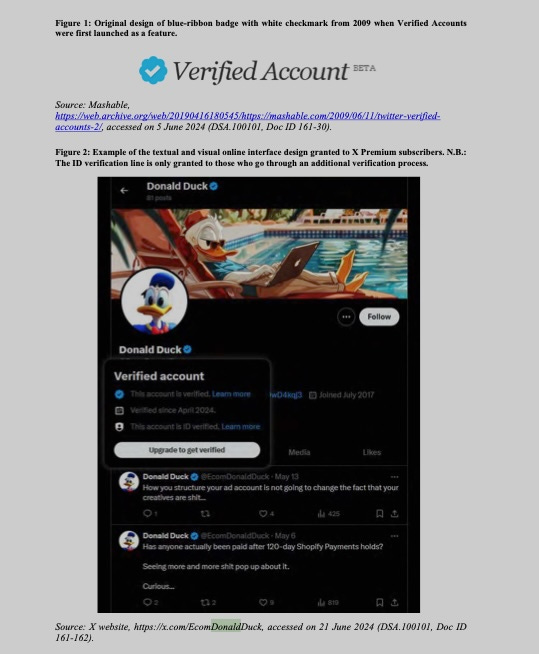
More specifically, the EC accused X of deceptive design, arguing that, unlike before, after the change, anyone can purchase a blue checkmark, i.e. prove that the account belongs to a verified person. However, in the Commission’s view, the blue checkmark should not be sold to just anyone, as users may place too much trust in accounts verified in this way on false grounds. The Commission imposed a fine of €45 million for the “misuse” of the blue checkmark. However, according to the U.S. House of Representatives Judiciary Committee, this fine was imposed simply because X acted differently from other social media platforms and the penalty was imposed for its innovativeness. As an example, the EC’s decision cites a Donald Duck parody account’s blue checkmark badge, which is said to be misleading and could lead users to believe that the duck has come to life and is an actual X user.
The second part of the EC’s decision addressed complaints that X does not provide enough data to researchers to enable them to study systemic risks (such as disinformation). This resulted in a fine of €40 million. The EC also cited the fact that X shared EU data with EU researchers, but refused to share U.S. data as a problem. The U.S. House of Representatives Judiciary Committee believes that the EC seems to think that it has the right to demand U.S. data from an American company for EU researchers and that researchers around the world are automatically receiving data from X. In other words, it appears that under the DSA, the EC believes it has the right to regulate the internet outside the borders of the European Union.
Commentators have previously criticized the requirement for researchers’ access to data, noting that this is an attempt to force X to censor content. Mike Benz, founder and director of the Foundation for Freedom Online, a U.S.-based organization that advocates for internet freedom, noted in a social media post in the summer of 2024 that allegations on researchers having no access to X’s data are unfounded and in fact unrelated to researchers or research work. “They’re NOT researchers. They’re censorship activities & political operatives. This has been their plan the whole time — to use the DSA to force X to restaff the censorship squad fired when Elon took over,” Benz wrote. The U.S. House of Representatives Judiciary Committee has now come to the same conclusion.


In addition to the aforementioned fines for “misconduct,” the Commission imposed a €35 million fine on X for deeming the platform’s catalog of previously displayed advertisements, or ad repository, to be insufficient. All large online platforms (VLOPs) are required to maintain an ad repository under the DSA. All previously displayed ads must be publicly available in the repository or at least those from the last 12 months. The aim is to increase the transparency of advertisements and to enable researchers, journalists, civil society, and officials to check which advertisements have been displayed on the platform, who paid for them, and what risks they may entail.
In X’s case, the EC considered the repository to be inadequate, vague, and difficult to use since ad information was available only as a spreadsheet, and not directly queried and reviewable on the website. The EC considered this technical detail to be a €35 million mistake.
But the December fine did not end the EC’s investigation, which continues with the remaining charges, including those related to false information. In doing so, the Commission seems willing to add new circumstances to the ongoing case, for example, the issue of manipulated/sexualized images created with Grok, which was only recently added to the investigation.

Pfizer Sues Poland for €1.4B over Refused COVID Vaccines
On January 21, 2026, the Brussels court held its first substantive hearing in a case where Pfizer is demanding nearly €1.4 billion from the state of Poland for undelivered COVID vaccines. According to Euractiv, the Polish government refused the vaccines in April 2022 because it had a sufficient stock and demand for it had fallen.
Poland signed a joint procurement agreement for vaccines with the European Commission and vaccine manufacturers, including Pfizer. However, in April 2022, the Polish Ministry of Health informed Pfizer and the EU Health Commissioner that it would refuse the next shipment of vaccine doses. Then-Prime Minister Mateusz Morawiecki and Health Minister Adam Niedzielski cited force majeure, including Russia’s invasion of Ukraine and the resulting financial and humanitarian aid obligations. Poland also pointed to its sufficient vaccine reserves and reduced demand.

Pfizer now believes that Poland must now pay approximately €1.4 billion plus interest for the 60 million undelivered doses. Pfizer emphasized that it has tried to adapt to the needs of EU member states after 2022 and consider the volatile circumstances, for example, by reorganizing its deliveries and creating a European production network. However, the company noted: “Pfizer is seeking to hold Poland to their commitments for COVID-19 vaccine orders placed by the Polish Government, as part of the contract to supply the European Union signed in May 2021, in which Pfizer made unprecedented commitments in terms of volume guarantees, production in Europe, and many other respects.” In other words, Pfizer considers mutual responsibility to be important and believes that all parties should respect their contractual obligations “that facilitated the successful European response to the pandemic, just as the overwhelming majority of countries in Europe and Pfizer have done.”
According to Professor Robert Grzeszczak, head of the Department of Supranational Law at the University of Warsaw, a drop in vaccine demand is typically viewed as a commercial risk, not a force majeure. By contrast, Russia’s war in Ukraine qualifies as an extraordinary event. In the current case, however, the key issue is whether Poland can demonstrate a direct causal link between the effects of the war and the impossibility of fulfilling the obligations. In Grzeszczak’s opinion, it is difficult to predict the most likely outcome of the Pfizer-Poland dispute, as many details are not known to the public, such as the content of the contracts. Nevertheless, a settlement or compromise solution is probable.
It is believed that the Polish case will test the European Commission’s joint procurement model, reminiscent of disputes with Hungary (a claim of €60 million) and Romania (€550 million). The dispute may lead to a need for future EU “crisis contracts” to be worded more precisely, with more flexible negotiation clauses and clearer rules on financial liability.
The case is being heard by a court in Brussels, as the EU-wide vaccine procurement contract was concluded under Belgian law. If the dispute ends with Poland being obliged to pay, it is unclear how Poland would fulfill its obligation. Poland did have funds earmarked for this purpose in its pandemic fund, but these were abolished in 2023 and the money was redirected to finance everyday healthcare needs.
France & UK Push Social Media Bans for Kids
The French National Assembly has overwhelmingly approved a bill banning social media for children under the age of 15. The British Parliament, however, is considering measures that include age restrictions on VPNs for young people in addition to social media access, as concerns have been raised that they are being used to circumvent existing online safety restrictions.
According to the French bill, children under the age of 15 will be prohibited from using social media platforms and other services with social networking features, with the exception of online encyclopedias and educational platforms. Platforms must establish an effective age verification system to block access by under-15s. The authorities aim to enforce the ban on new accounts starting this coming fall, i.e. from the start of the new school year, according to Deutsche Welle. In addition to the social media ban, the legislation also extends the smartphone ban currently in place in primary schools to colleges.
France justifies the social media ban by citing the harmful effects of platforms such as TikTok, Snapchat and Instagram on young people, especially girls, as well as cyberbullying and exposure to violent content. It is emphasized that there is enormous support in France for restricting minors’ access to social media. For example, according to a 2024 survey by Harris Interactive, 73% of the population supported a social media ban for those under the age of 15.
French President Emmanuel Macron has long supported a social media ban for young people and promised last year that a bill to that effect would be introduced by the beginning of the year. Now, in a post on social media platform X, Macron urged the parliament to act more quickly, so that the ban could come into force in the coming fall, emphasizing: “Our children’s brains are not for sale. Not to American platforms or Chinese networks.” In another post, Macron thanked the European Commission for paving the way for the social media ban.


In the UK, however, during the House of Lords’ vote on the Children’s Wellbeing and Schools Bill, peers called for restrictions that were not included in the bill at the time of its introduction. The House of Lords voted in favour of amendments requiring bans on minors using VPNs and social media platforms (for under-16s).
Labour’s Technology Secretary, Liz Kendall, was initially hesitant about outright bans and therefore favored consultations. Now, the government is trying to address the House of Lords’ amendments through a three-month consultation period, promising an evidence-based approach. The government must therefore consider the proposed ban on VPNs and social media for young people, as well as nighttime curfews and other solutions that could help limit doomscrolling. The government promises to consult with parents’ groups, safety organizations, technology companies, and young people.
Conservative MPs believe that the time for consultations is long past and that they are a “playground for lobbyists.” According to Conservative Party leader Kemi Badenoch, the government is dithering and stalling by means of consultations. Badenoch has previously stated that her party would immediately impose a social media ban on those under 16 and has now also been leading urgent calls for the government to do so.

Critics argue that a social media ban is an act of censorship by an authoritarian state and will not keep young people away from social media any more than previous generations were kept away from bars, clubs, smoking and alcohol when they were minors. Teenagers have always had, and still have, a wide range of ways/solutions for accessing the content/websites they want. Critics therefore believe that this is a policy that will fall apart in contact with the reality. As things stand, there can technically be no outright social media ban for young people, but only mandatory digital ID checks for everyone, which seems to speak to the authorities’ desire for greater surveillance and censorship on the internet. The proposed social media is unlikely to fulfill its purpose of providing greater security for young people and reducing their time online. Broadly speaking, this is still a policy that requires large technology companies to verify everyone’s identity, which comes with a significant risk of data leaks, but more importantly, the loss of anonymity, which has so far allowed many to speak freely also on complex and controversial topics without having to risk losing their job or damaging relationships.


The first country to introduce a social media ban for underage users was Australia, where the restrictions came into full effect in December 2025, leaving hundreds of thousands out of their accounts. Many countries have expressed a desire to follow Australia’s example, and more and more are planning to ban social media in one way or another – in other words, to introduce age and identity checks. Among others, that includes the European Union, where the European Commission President Ursula von der Leyen has personally promised to keep an eye on Australia’s example in order to bring similar systems to the whole of Europe. In addition to the Commission’s calls for a social media ban, the European Parliament is now also moving in the same direction.
EU Labels WhatsApp a Very Large Platform
The European Commission has designated WhatsApp as a Very Large Online Platform (VLOP) under the Digital Services Act (DSA). This means that the app will be subject to several of the European Union’s most stringent obligations. WhatsApp must actively prevent the spread of disinformation and manipulation of public opinion, and protect the mental health of its users, especially young people. Any risks, including human rights and freedom of expression violations, election manipulation, illegal content distribution, and privacy issues, must be assessed and mitigated in a timely manner. The reason for designating it as a VLOP was that the app’s “Channels” feature has reached the threshold of at least 45 million monthly active users in the EU.
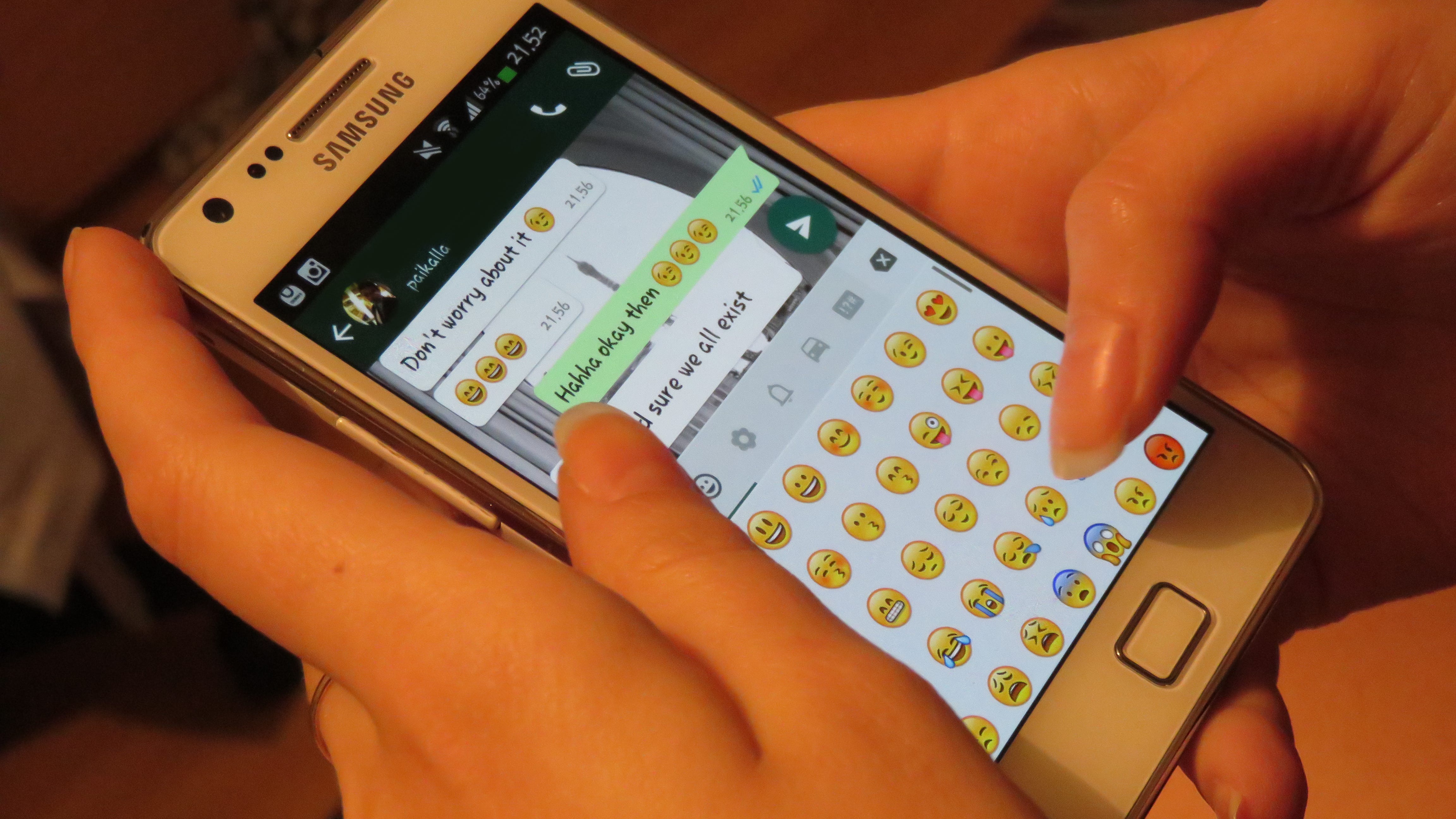
First and foremost, the WhatsApp messaging app allows users to send private text messages, voice messages, photos, videos, documents, and make calls. According to the European Commission, this part of the application is excluded from the scope of the DSA. However, WhatsApp also has a Channels feature, which, according to the Commission, allows information, announcements and news to be disseminated to a large group of users. Due to its large number of users, the latter now falls under the definition of a “online platform service” according to the European Commission and must implement the general VLOP obligations set out in the DSA.
The European Commission now has the right to supervise WhatsApp and has promised to monitor the platform more closely than before. If the messaging service violates DSA requirements, the Commission may impose a fine of up to 6% of its global annual turnover. WhatsApp’s owner, Meta, has four months to comply with DSA obligations on WhatsApp by mid-May 2026.
Currently, VLOPs under the DSA include Meta platforms Instagram and Facebook, as well as YouTube, LinkedIn, Snapchat, Shein, Wikipedia, etc. Facebook and Instagram are under investigation by the Commission for possible violations of DSA requirements regarding the protection of minors. Also under investigation is the social media platform X, some of whose cases have already resulted in fines. The same scrutiny goes or its AI, Grok.
Spain Grants Residency to Half a Million Illegals
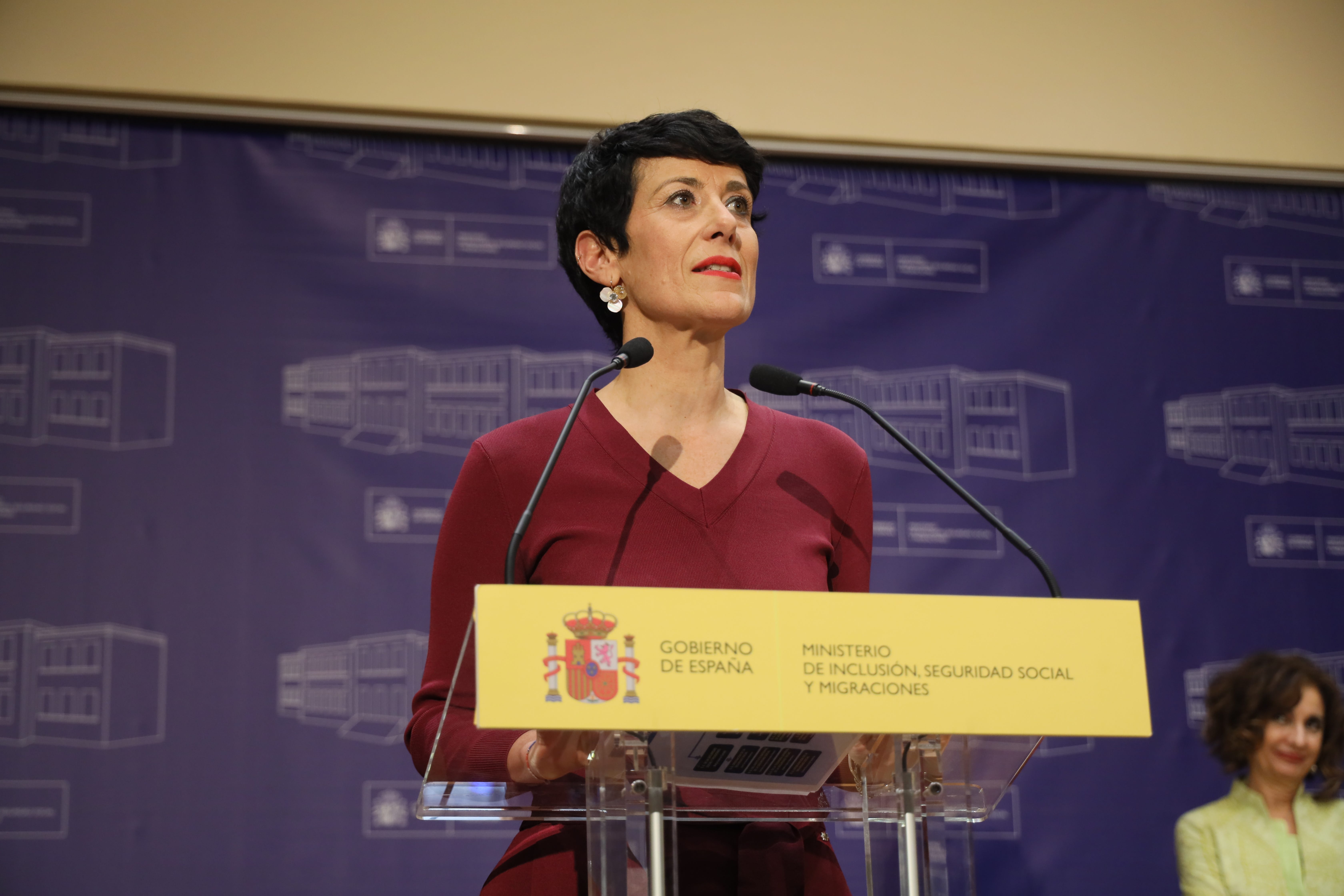
Spain’s left-wing government announced that it has approved a fast-track procedure to grant residence permits to around 500,000 undocumented immigrants. Most of them are from Latin America and Africa. According to Minister of Migration Elma Saiz, the measure applies to those who have been in Spain for at least five months as of December 31, 2025. The main condition is that the person can prove that they have no criminal record, as reported by Deutsche Welle.
The country will accept applications from immigrants from April 1 to the end of June 2026 and plans to grant a one-year renewable residence and work permit, and a five-year residence permit for children. According to the Minister of Inclusion, Social Security and Migration, the government is thus strengthening a migration model based on human rights and integration, which is compatible with economic growth and social cohesion. The plan was adopted by royal decree, which allowed the government to bypass the parliament, where it lacks a stable majority. However, the government’s plan was supported by the far-left party Podemos, whose leaders described it as a moral response to anti-immigration rhetoric.
Spanish Prime Minister Pedro Sanchez has repeatedly argued that immigration is a key driver of the Spanish economy, accounting for about 80% of economic growth over the past six years and approximately 10% of social security revenues. Last year, the country’s unemployment rate fell below 10%, with foreigners accounting for the majority of new jobs in the last quarter of the year.
However, according to Alberto Núñez Feijóo, a leader of the right-wing opposition party Popular Party, the plan is intended to divert attention from the January 18 train accident that killed 45 people. “Socialist Spain rewards illegality. Sánchez’s migration policy is as reckless as his railway policy,” Feijóo said. The right-wing party Vox promised to appeal the measure to the Supreme Court, requesting that its implementation be suspended. Vox believes it is unacceptable for the government to bypass the parliament on an issue with such far-reaching implications.
Spain’s population is currently around 49.4 million, including 7.1 million foreign nationals. According to the economic research institute Funcas, an estimate of 840,000 people were living in the country without a permit at the beginning of 2025. The last time the country undertook a large-scale approval of immigrants was in 2005, during the government of Prime Minister Jose Luis Rodriguez Zapatero. Zapatero and Sánchez belong to the same political party.
Groups fighting for immigrants’ rights and the Catholic Church welcomed the measure, calling it an act of social justice. Opponents, however, warn that it will separate Spain from the rest of Europe, which is moving steadily toward stricter immigration controls (see here, here, here, here, here).
It strikes me that EU governments are citing figures in excess of 70% of the public being in favour of restricting access to the internet for 15 year olds and younger as justification for the ban. I’m dead sure that a similar figure would apply to the opposition to mass immigration but there is absolutely no chance of the EU acting on this in the same way.
I hope the US can summon enough power to shut down the National Socialists of the EU & their Orwellian Mao Zedong censorship laws.