


Over the past week, the following topics attracted our attention:
Trump Pulls US out of UN Climate Convention, IPCC
US Scales Down 72-Dose Childhood Vaccine Schedule
UAE Fears UK Universities Radicalise Students
UK: Debanking Soars to Record High
Scotland’s Biggest Offshore Wind Farm Wastes Three-Quarters of Its Energy
Trump Pulls US out of UN Climate Convention, IPCC
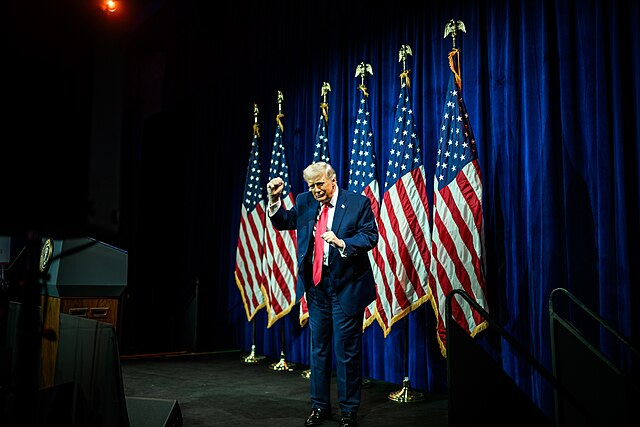
US President Donald Trump has decided that the United States will withdraw from 66 international organizations that the administration considers wasteful, ineffective and harmful. The list includes the UN Framework Convention on Climate Change (UNFCCC) and the Intergovernmental Panel on Climate Change (IPCC)—both central to the propagation of climate alarmism and Net Zero policies. Altogether, the list includes 31 UN organizations or agreements dealing with a variety of issues (e.g., UN Energy, UN Entity for Gender Equality and the Empowerment of Women, and Department of Economic and Social Affairs, and others).
The others are non-UN organizations (e.g. the Intergovernmental Science-Policy Platform on Biodiversity and Ecosystem Services, the International Energy Forum, the International Renewable Energy Agency, the International Solar Alliance, and others).
“As this list begins to demonstrate, what started as a pragmatic framework of international organizations for peace and cooperation has morphed into a sprawling architecture of global governance, often dominated by progressive ideology and detached from national interests. From DEI mandates to “gender equity” campaigns to climate orthodoxy, many international organizations now serve a globalist project rooted in the discredited fantasy of the “End of History.” These organizations actively seek to constrain American sovereignty. Their work is advanced by the same elite networks—the multilateral “NGO-plex”— that we have begun dismantling through the closure of USAID,” read the press statement by Secretary of State Marco Rubio. “The Trump Administration has found these institutions to be redundant in their scope, mismanaged, unnecessary, wasteful, poorly run, captured by the interests of actors advancing their own agendas contrary to our own, or a threat to our nation’s sovereignty, freedoms, and general prosperity.”
“President Trump is clear: It is no longer acceptable to be sending these institutions the blood, sweat, and treasure of the American people, with little to nothing to show for it. The days of billions of dollars in taxpayer money flowing to foreign interests at the expense of our people are over,” Rubio’s statement added.
The list of international organizations the US is leaving can be found here.
US Scales Down 72-Dose Childhood Vaccine Schedule
The US government has cancelled the vaccination schedule that required all children to be vaccinated against influenza, rotavirus, meningococcal disease and hepatitis A, among other diseases—a total of 72 jabs before the age of 18. Under the new schedule, children no longer need to be vaccinated against these diseases, and for other diseases, parents and healthcare professionals can decide together whether to vaccinate.
According to the new plan, it is still recommended to immunize all children against 11 diseases, such as measles, mumps, rubella, polio, whooping cough, and chickenpox. In the case of human papillomavirus (HPV), it is recommended to limit the number of doses to one instead of the current two, which is also supported by the World Health Organization (WHO). The remaining infections are divided into those recommended for risk groups and those decided jointly by healthcare professionals and parents.
For the vaccination schedule change, senior officials from the Department of Health and Social Services and medical researchers Martin Kulldorff and Tracy Beth Hoeg studied the vaccination schedules of 20 other developed countries. It turned out that among developed countries, “the U.S. is a global outlier among peer nations in the number of target diseases included in its childhood vaccination schedule and in the total number of recommended vaccine doses.” It also emerged that the flu vaccine is recommended in four countries, and hepatitis A vaccination is generally only given in Greece. Seventeen countries recommend vaccinating children against rotavirus and 16 countries against meningococcal infection. The lowest vaccination rate is in Denmark, where only 10 diseases are covered. In the US, however, 18 diseases have been vaccinated against so far.
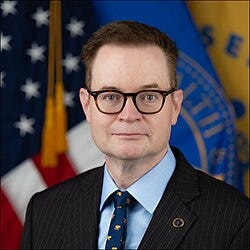
The vaccination schedule cut is part of Health Secretary Robert F. Kennedy Jr.’s larger campaign to reduce the number of vaccines given to children. Centers for Disease Control and Prevention (CDC) Acting Director Jim O’Neill has already approved the decision.
President Trump also praised the change to the vaccination schedule, confirming on the social media platform Truth Social that the new schedule is based on the gold standard of science and brings the US in line with other developed countries. “Effective today, America will no longer require 72 “jabs” for our beautiful, healthy children. We are moving to a far more reasonable Schedule, where all children will only be recommended to receive Vaccinations for 11 of the most serious and dangerous diseases,” the president wrote, concluding: “Many Americans, especially the “MAHA Moms”, have been praying for these COMMON SENSE reforms for many years.”
UAE Fears UK Universities Radicalise Students
The United Arab Emirates (UAE) has restricted funding for its citizens who want to study at British universities as the UK has decided not to proscribe the Islamist Muslim Brotherhood group, Financial Times reports.
Abu Dhabi’s decision to exclude UK institutions from a list of universities eligible for state scholarships comes as relations between the two countries have frayed in recent years. In June, the UAE higher education ministry published a list of global universities for which scholarships would be approved and qualifications certified, as part of reforms that limited funding to the best-performing institutions. The list included universities in countries including the US, Australia, Israel, and France, but not the UK, which is home to many of the world’s top academic institutions. The exclusion of British universities is linked to the anxiety in the UAE over what it sees as the risk of Islamist radicalisation on UK campuses, according to three sources familiar with the matter.
When UK officials queried the absence of British institutions on the June list, UAE officials said the omission had not been an “oversight”, according to a person with direct knowledge of the discussions. “[The UAE] don’t want their kids to be radicalised on campus,” the person added.
In 2023-24, 70 students at UK universities—out of an overall higher education student population of almost 3 mn—were reported for possible referral to the government’s Prevent Deradicalisation programme for showing signs of “Islamist radicalisation”, nearly double of the number the previous year.
UK: Debanking Soars to Record High
A Freedom of Information (FOI) request has found an 453,230 bank accounts were shut down in the UK in 2025, which is around ten times more than the 45,091 accounts closed in 2016-17, The Telegraph reports.
It is an 11% increase on the 408,000 accounts shut down in the 2023-24 tax year – the year that saw the Reform Party leader Nigel Farage also end up as a victim of debanking.
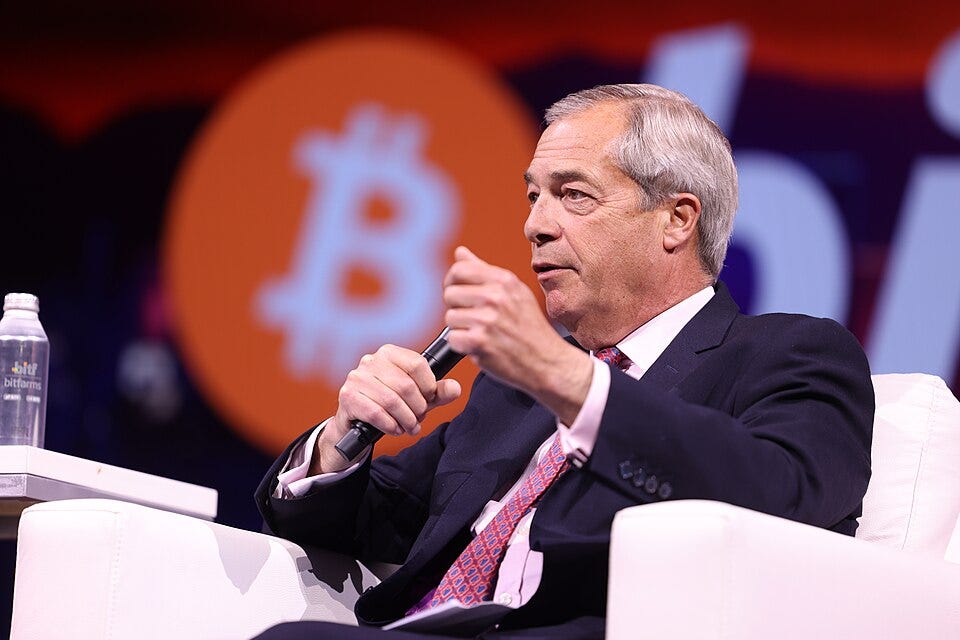
Farage had his bank account closed for no apparent reason at Coutts, a private bank serving wealthy clients. He had been a customer of the same banking group since 1980. “I got a phone call a couple of months ago to say we are closing your accounts. I asked why? No reason was given,” he said. “I was told a letter would come which will explain everything, the letter came through and simply said ‘we are closing your accounts’,” he added.
Farage filed a protest, wrote an email to the bank manager, and finally received another reply – explaining that it was “a commercial decision”. After that, Farage tried to open an account with nine other banks but received a negative response from each.
Later, Farage managed to find out that his account had been closed for political and ideological reasons, i.e. because of his views. Farage had been one of the main spokesmen for the campaign to leave the European Union in the UK, he is constantly criticising the country’s immigration policy, etc. In internal documents assessing him, which is what led to the closure of his account, bank staff even called him a ‘xenophobe’.
The Farage case caused a major scandal because the bank initially lied that the reasons for closing Farage’s account were commercial, i.e. not related to his views. So the bank eventually had to apologise to Farage and the scandal cost the job of Alison Rose, CEO of the NatWest banking group, the owner of Coutts.
It is all the more surprising to see that the number of people debanked has actually gone up rather than decreased since then. In the majority of circumstances, banks and building societies referred to “financial crime reasons” as the main reason for account closures.
Under UK law, banks and building societies are within their right to close accounts for commercial reasons, and if they suspect potential criminal activity. In the UK people do not have a legal right to a bank account, whereas those living in France and Belgium are protected under their laws.
Starting in April this year, a new law has been introduced that requires banks to give at least 90 days’ notice before they close an account. According to the new legislation, the institutions will have to provide an explanation as to why each account closure has taken place.
Scotland’s Biggest Offshore Wind Farm Wastes Three-Quarters of Its Energy
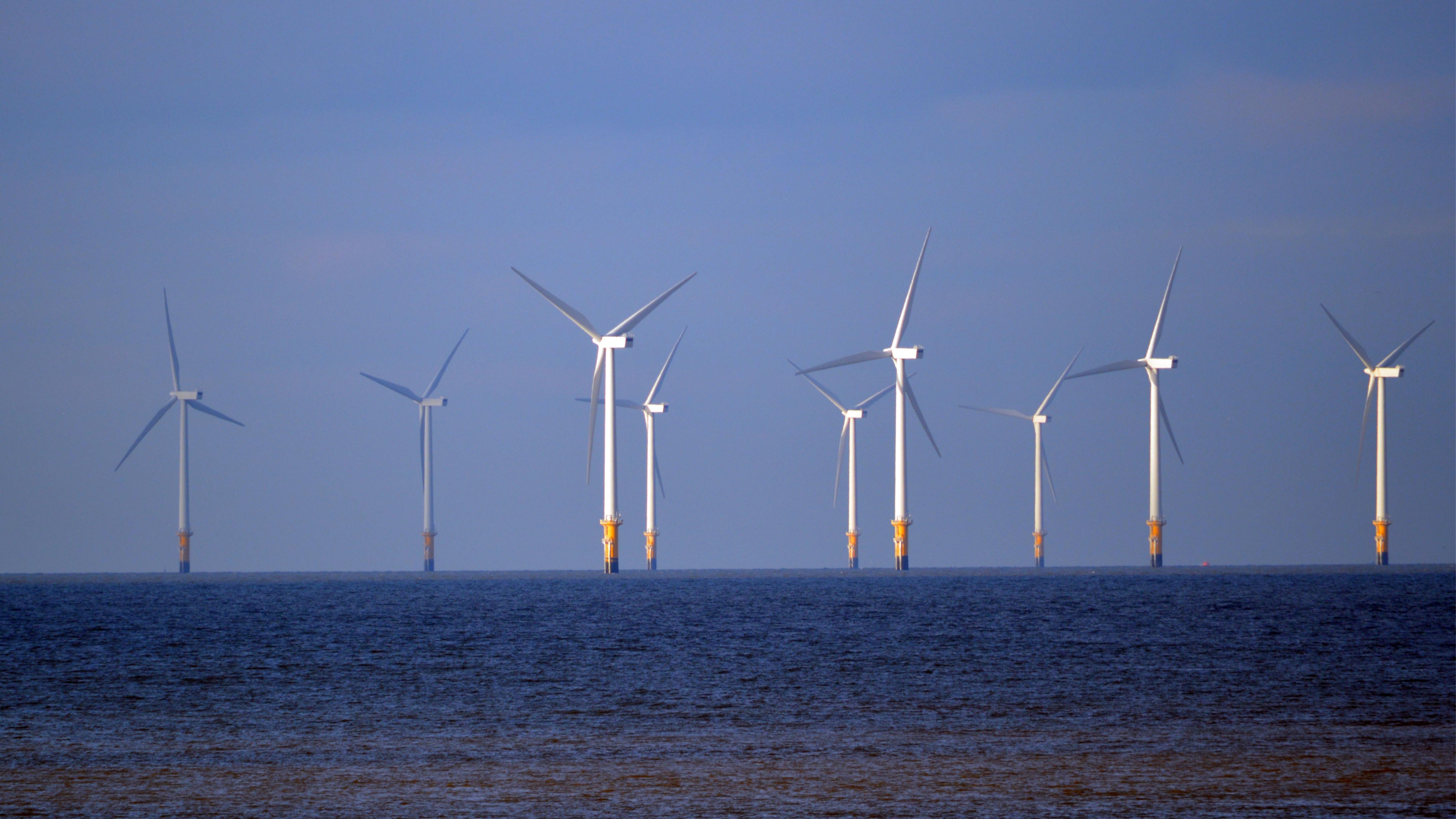
Scotland’s biggest offshore wind farm wasted three quarters of the energy it produced last year, after being paid to switch off its turbines, The Telegraph reports.
The Seagreen wind farm off Scotland’s east coast is squandering vast amounts of its power because there is not enough grid capacity to transport it to areas of the country where it is needed most.
This inability to handle surplus electricity led to 77% of Seagreen’s total output going to waste last year, new accounts show, from a total of 114 turbines.
This is likely to have sparked hundreds of millions of pounds in so-called constraint payments for the wind farm, which is run by Scottish energy giant SSE and France’s TotalEnergies.
These payments are made under a government scheme to encourage renewables, aimed at guaranteeing cash for green power even when it cannot be used.
SSE, which is the lead partner in the Seagreen wind farm, refused to disclose how much it was paid for switching off the turbines.
However, estimates from the Renewable Energy Foundation suggest it could amount to more than £200 million (€230 million) for the year.
Constraint payments relating to wasted wind are added to consumer and business energy bills in the form of network charges.