


Over the past couple of days, the following topics attracted our attention:
Von der Leyen Admits Nuclear Phase-Out Was a Mistake
Swiss Referendum: Enshrine Cash Rights in Constitution
Britain Plans “Islamophobia Czar” Post
Von der Leyen Admits Nuclear Phase-Out Was a Mistake
In 2011, German Chancellor Angela Merkel decided that Germany should abandon nuclear energy because of earthquakes and tsunamis around the world. Ursula von der Leyen, who was Germany’s Labour Minister and deputy chairwoman of the Christian Democratic Union at the time, supported the decision and staunchly defended Merkel’s policy. She emphasized that the government had to respond to new developments and that the Fukushima nuclear disaster had shown everyone that the previously unthinkable had become reality – the worst possible accident in a high-tech country, writes Eugyppius: a plague chronicle.
Since 2011, Germany has been shutting down its nuclear reactors one by one and lobbying other European countries to do the same. The policy supported by von der Leyen has now effectively “gifted” Germany far more expensive electricity and a struggling industrial sector.
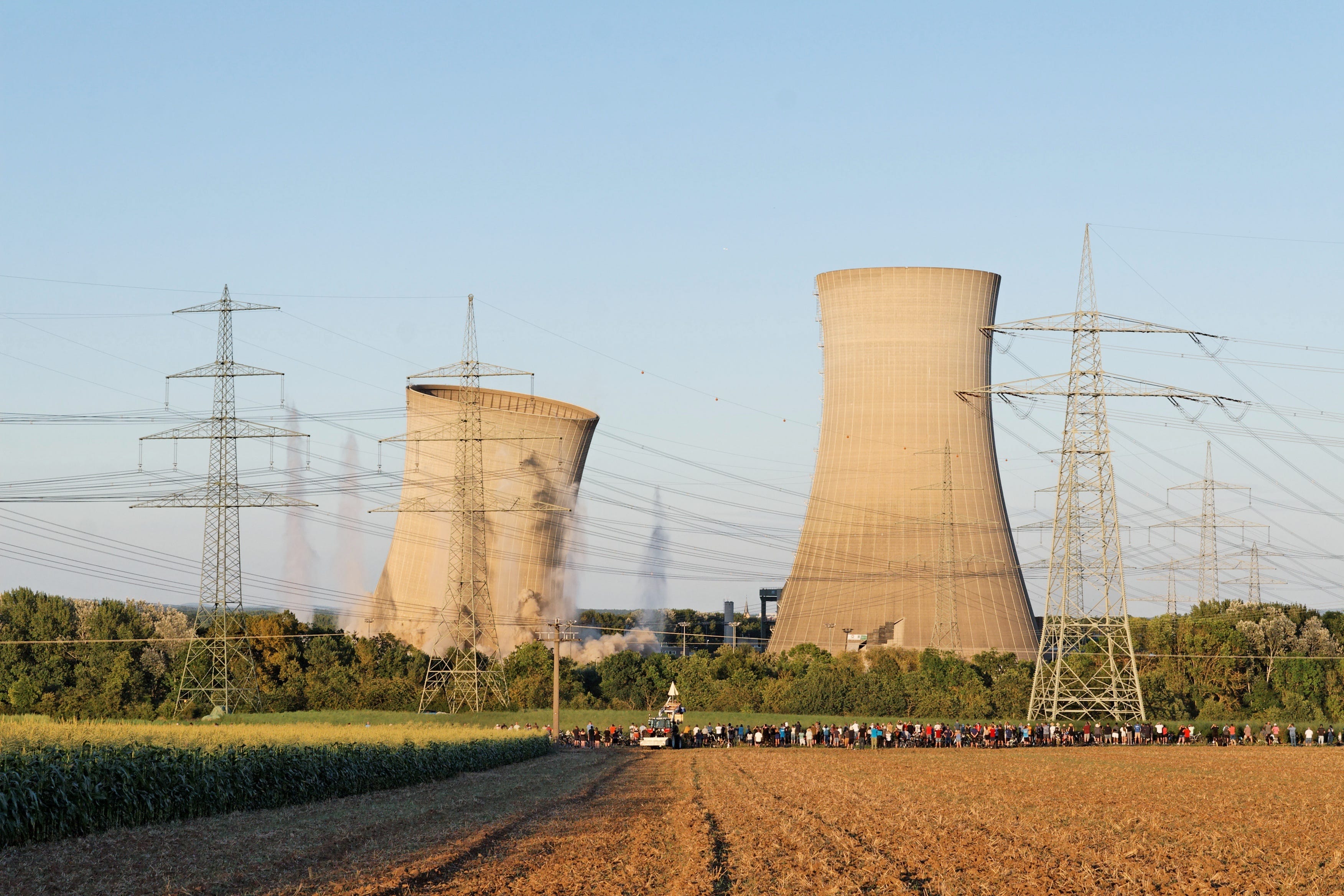
Now, however, Ursula von der Leyen has suddenly changed her mind and realized that perhaps closing nuclear power plants was not such a good idea after all. Von der Leyen said: “The nuclear story, unfortunately, is different. While in 1990 one-third of Europe’s electricity came from nuclear, today it is only close to 15%. This reduction in the share of nuclear was a choice. I believe that it was a strategic mistake for Europe to turn its back on a reliable, affordable source of low-emissions power.”

So contrary to what she had said before, von der Leyen now believes that the story of nuclear energy in Europe must change and that both renewable and nuclear energy are needed, as together they constitute the strongest solution. “Renewables produce the lowest-cost electrons – but they are volatile, depending on sunshine and wind, and sometimes the best sites are far from industrial demand centers. That is why we need to also invest in storage and in demand flexibility and build out our grids,” von der Leyen explained. She added that nuclear energy is reliable, producing electricity year-round and at all times. “So the most efficient system combines nuclear and renewables, and is underpinned by storage, flexibility, and grids.” Von der Leyen described Europe as a pioneer in nuclear technology and said that Europe could once again lead the world in this field. “Next-generation nuclear reactors could become a European high-tech high-value export,” she said.
However, these bold statements do not mean that Germany will start using nuclear energy again. German Chancellor Friedrich Merz has said that although he agrees with von der Leyen, this will have no impact on Germany because the federal government has decided to phase out nuclear energy. “The decision is irreversible. I regret it, but that’s the way it is,” Merz said.
Swiss Referendum: Enshrine Cash Rights in Constitution
In a referendum held on Sunday, Swiss voters supported a proposal to enshrine the right to use Swiss francs banknotes and coins in the constitution. The proposal received an impressive 73.4% of the vote, according to Politico.
The referendum followed the Swiss Freedom Movement collecting more than 100,000 signatures for its more radical initiative. However, only about 46% voted in favor of that proposal, because the government considered some provisions too extreme. The version that reached the referendum was the government’s counter-proposal. According to the government, the result will not affect everyday life and will not entail any new tasks or costs. Still, the people symbolically declared that they value cash and consider it necessary to enshrine its existence in the constitution, not just in ordinary law.
Switzerland joins Hungary, Slovakia, and Slovenia, which have already enshrined the right to use cash in their constitutions. Austrian politicians are also discussing whether to follow suit, as people’s payment habits are becoming increasingly digital – a trend that has accelerated since the Covid-19 pandemic. Cash payments have declined steadily in Switzerland as well. While in 2017 at least seven out of ten payments were made in cash, by 2024 they accounted for only 30% of transactions in shops.
South African anthropologist and activist Brett Scott said before the Swiss referendum that enshrining cash in the constitution would send an important signal to the rest of the world. According to Scott, banks everywhere have been promoting digital payments for decades, making it even more important for the state to take a clear position in favour of protecting cash. He believes that cash is important to people, often out of nostalgia, but for many it is also vitally essential. For example, older people may not have the best digital skills or much trust in institutions. Those with fewer financial opportunities also prefer cash because it helps them stick to a limited budget. Increasingly, people are also concerned about the monitoring and restriction possibilities associated with digital money. This is particularly true of central banks’ plans to issue digital currencies, which could give institutions complete control over how people spend their money. According to Scott, security experts have also raised concerns about the risks of not being able to use cash. “Lots of people like to preserve an informal sphere for themselves – they don’t want institutions between themselves and their life,” Scott added, noting that collection plates in church or poker games at home would be odd without cash.
Swiss sociologist Nadine Frei, who wrote her doctoral thesis on the use of money, also confirmed the importance of cash for people. According to her, many view only cash as “real” money, unlike the digital forms, which seem artificial. “When it’s tangible, it’s viewed with a certain control,” Frei added. Digital money, by contrast, is more abstract and less controllable. According to Frei, the criticism that digital payment methods can socially exclude certain groups is often justified.
The Swiss Freedom Movement, which submitted the original proposal on the right to use cash, has organized several important campaigns in the past. For example, it has pushed proposals to dismiss unpopular ministers, ban electronic voting, and protect citizens from punishment and retaliation if they refused Covid-19 vaccination. None of these earlier proposals made it to a vote.
Britain Plans “Islamophobia Czar” Post
According to a document leaked from the UK government, there are plans to create the position of a special representative for combating anti-Muslim hatred. The role is part of a broader social-cohesion strategy, but the media have begun to refer to it as the Islamophobia czar. The special representative will be responsible for supporting the fight against hatred and hostility toward Muslims or people perceived to be Muslim throughout the country, according to The Independent.
The document also addresses how to combat extremism and identifies Islamist extremism as the greatest threat to social cohesion. New requirements are proposed to ensure that those arriving in the UK strive to integrate and learn to speak English well. According to the document, language skills are a foundation for participation in the society and an essential prerequisite for considering the UK one’s home. The latest census revealed that more than a million people do not speak English well or not at all. The document states: “Newcomers must make a real effort to integrate and participate in our shared way of life.”
It also notes that over the past 25 years, Islamists have been responsible for three-quarters of the workload of the counter-terrorism police and 94% of all terrorism-related deaths. The plan also rejects demands, mainly by British Muslims, to introduce blasphemy laws and allows authorities to reject attempts that those offended by alleged blasphemy would intimidate, threaten, or harass others. “We do not recognize blasphemy laws in the United Kingdom,” the plan states. The document also mentions new powers that could help shut down extremist charities and restrict individuals convicted of hate crimes. The plan also aims to improve monitoring of extremism, exclude preachers who promote hatred, and ensure that public institutions do not give legitimacy, money, or influence to extremist groups.

However, even these seemingly positive plans are raising concerns among critics about freedom of speech, as they include new measures to combat divisive content and promote “trustworthy” news sources. There are fears that these measures could be used to silence critics of radical Islam or even whole TV channels, such as GB News, which some Labour politicians have considered too right-wing. According to Andrew Gilligan, a senior fellow at Policy Exchange and a former advisor to 10 Downing Street, there is a clear threat to freedom of speech. He argues that the new strategy will be implemented by the same identity-politics activists, politicians, and police officers who contributed to the current confusion.
According to the draft, part of the fight against anti-Muslim hatred is the introduction of a new definition of the term “Islamophobia.” This definition has been softened to avoid defining Muslims as a race, but it still condemns prejudicial stereotyping of Muslims. However, critics argue that this wording could still function as a de facto blasphemy law, where any criticism of Islam could be punished as blasphemy.
In any case, the strategy claims to protect freedom of expression, but it remains unclear how it will address the culture of cancellation. Many Britons do not dare to express their opinions about changes they say they have noticed in their communities. The document also emphasizes that everyone must accept LGBT rights, which, according to critics, could allow condemnation of those who, for religious or other reasons, do not approve of same-sex relationships or reject the rights of transgender people. In addition, the document proposes adding religious education to the national curriculum and recommends the government to promote religious education councils.
The project is planned for 40 areas where social cohesion is said to be under enormous pressure. A total of £800 million (approximately €924 million) has been earmarked for these areas over a 10-year period. Another £750 million (about €866 million) is planned to be allocated over four years for youth, sports, and community infrastructure, and £5.5 million (around €6.4 million) to restoring local news services where they have disappeared. According to ministers, the leaked document is not yet final, but they have promised to release the final plan by the end of this week.
A representative of the Conservative Party said that the party opposes what it describes as divisive tactics. The representative also referred to remarks made earlier this week by Kemi Badenoch, who argued that identity politics has reached an impasse and warned that the country could head down a dark path if it moves away from shared values and freedoms in favour of sectarian interests. According to the Conservative Party, Islamophobia does exist, but it should be addressed through existing laws without undermining general freedom of speech.