


Over the past few days, the following topics attracted our attention:
Von der Leyen Urges EU-Wide Social Media Age Verification
Young Europeans Oppose a Social Media Ban
France Files Charges Against Elon Musk and X Over Grok AI Content
Von der Leyen Urges EU-Wide Social Media Age Verification
European Commission President Ursula von der Leyen delivered a speech on Tuesday in Copenhagen, Denmark, at a conference on child safety in the age of artificial intelligence. She described how European parents are concerned about protecting their children in the digital environment and affirmed that “we must build a digital world where our children can grow up freely and safely, protected by European values.”
The EC President noted that technology offers extraordinary opportunities, especially for young people, but the more children are exposed to the digital environment, the greater the risks. “Likes, shares, retweets, links, etcetera – social media validation is increasingly dictating how they think and feel. Constant judgment, constant comparison, and constant fear of not being enough. The pressure can be overwhelming,” von der Leyen explained. According to her, the consequences of the digital environment are serious: sleep deprivation, depression, anxiety, self-harm, addictive behavior, cyberbullying, grooming, exploitation, and suicide. Artificial intelligence further amplifies these risks, and tech companies exploit the opportunities they’ve created by treating children and young people as commodities and targeting them with advertising as early as possible for profit.

Von der Leyen disagrees with the view that the power of large tech companies is overwhelming and irreversible. She stated that we do not have to accept this, because “Europe has the power to act” and “it is us who decide our rules, not the tech companies.” She also listed the actions taken against platforms, such as TikTok’s automated content recommendations, Meta’s disregard for its own age restrictions, and uncensored content created using X’s artificial intelligence Grok. “All of this is possible because we have created a powerful tool - the Digital Services Act. And we have also created the Digital Markets Act to prevent platforms from abusing market power. We have already closed cases with Apple and Meta, with an investigation ongoing with Google,” von der Leyen noted, promising to hold all platforms that have broken the rules accountable.
According to von der Leyen, social media companies must be held responsible for the safety of their products and their secure use. At the same time, Europe has rules against addictive models, harmful content, and unwanted contacts. These protective measures should now be strengthened and expanded. However, in the EC President’s view, all existing measures fall short. Therefore, an “expert group on children’s online safety” has been established, which is expected to present its findings this summer.
However, von der Leyen stated that even without the group’s findings, she is convinced of the validity of age restrictions on social media. According to von der Leyen, it is no longer possible to ignore discussions regarding a minimum age for social media. At the same time, note that according to youth organizations, it seems quite obvious to lawmakers to ignore those whom the age limit affects the most. Young people are not being heard, and their opinions are not being taken into account because they do not align with those of officials.
In any case, the President of the European Commission is pleased that nearly all EU member states have agreed to at least consider an age restriction. So far, about 10 countries have announced their intention to impose a social media ban, and the European Parliament also recommends it. The politician is convinced that banning social media for young people will give children back their childhood, where they can learn to navigate social relationships and build self-confidence. “The question is not whether young people should have access to social media; the question is whether social media should have access to young people,” von der Leyen asked.
In addition, the EC President addressed the responsibility of parents and stated: “The responsibilities on parents are already so high, so let us take this additional weight from their shoulders.”
Von der Leyen also enthusiastically praised Australia’s social media ban for young people and claimed that “we can see the progress - fewer children and teenagers have social media accounts.” Fact note: a report published shortly before her speech indicated that around three-quarters of children still have accounts and social media remains popular. Many young users continue accessing platforms via workarounds. This suggests the ban’s effectiveness has been limited so far. In contrast, Australian law teaches young people that they do not have to comply with the law, since penalties are imposed only on the platforms, and those who follow the rules tend to become unpopular.
Ursula von der Leyen, however, believes that Europe should no longer debate whether to impose age restrictions on social media, but rather how to establish uniform rules: “So let us be focused, let us be fast, and let us define clear rules on how to structure a social media age restriction for Europe.”
In conclusion, von der Leyen praised the Commission’s age verification app as invaluable, claiming it meets all requirements, is private, and works on any device. This is despite cybersecurity experts managing to hack or bypass the app within minutes on the first day it was widely available. The EC President also emphasized that the app’s development was modeled after the vaccination passport app created during the COVID-19 pandemic: “It is built on the success of our European COVID App; you might recall that one. That App was used in 78 countries on 4 continents, so it is a proven and reliable model. And our Union is working with Member States to integrate it into their digital wallets.” In any case, the app created by the Commission is supposed to be easy to implement on all platforms, and soon there will be no excuse for not using it: “In other words, no more excuses – the technology for age verification is available.”
Young Europeans Oppose a Social Media Ban
Student and youth representatives from France, Ireland, and the Netherlands argue that European lawmakers are ignoring those most affected by social media regulations. In the view of young people, a blanket ban solves nothing. Instead, platforms should be made safer, existing rules should be enforced more strictly, and digital literacy should be taught in schools, according to Euronews.
The youth movement Ctrl+Alt+Reclaim, which includes 16- to 17-year-olds from many European countries, drafted amendments to a bill currently under consideration in the French Parliament that aims to ban social media for children under 15. The group agreed that the impact of social media can be devastating, ranging from mental health issues to the polarization of society. However, the authorities are proposing a social media ban as the only solution, which the association believes is shortsighted and, in the worst case, could even be dangerous; at best, it is simply ineffective. They argue that a social media ban does not prevent the harmful effects of social media and does not protect children and young people, but rather worsens their digital lives.
According to Yaqoubi Reboul, a member of Ctrl+Alt+Reclaim, most young people initially thought, “Okay, the ban is great, it will protect us…”. But when it was explained to them that this would also mean losing access to Roblox, Fortnite, Instagram, and TikTok, everyone realized, “Oh my god, it’s not possible, we have to find another way.” According to the association, however, no one supports restricting social media. “Social media is one of the few remaining public spaces that is totally free and accessible for young people,” added Noe Hamon, another member of the association. “It also allows them to socialize, to learn things, to create, and to have a sense of community, especially as the physical world becomes increasingly ‘inaccessible’ for young people.”
Lauren Bondi (19), a board member of the Organizing Bureau of European School Student Unions (OBESSU), said that students are concerned about how the ban might change their daily lives. “They feel that the blame and responsibility for creating a safer digital world is really being placed upon them,” she said. Bondi explained that a blanket social media ban does not take students’ real lives into account, and students feel that their voices are not being heard. Bondi believes that while a ban may seem very appealing to lawmakers, platforms do not automatically become safer just because a young person turns 18. Thus, rather than a blanket ban, young people favor greater regulation and improved digital literacy.
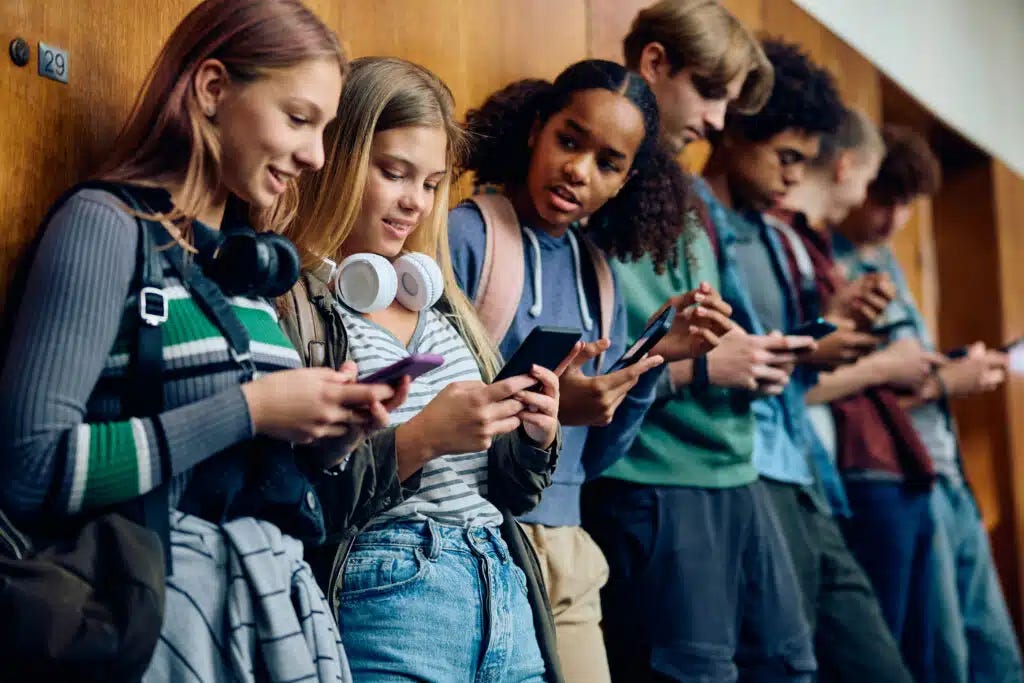
Niels Zagema, a Dutch youth elected to represent young people on the European Commission President’s Youth Advisory Council, believes that there aren’t many things that influence young people’s lives more than social media. While young people acknowledge that restrictions and bans could help curb certain harmful habits, such as excessive phone use, they do not support blanket bans. Zagema suggests the Dutch guidelines as a solution, which recommend that parents introduce their children to technology in stages - for example, starting with instant messaging and only introducing social media once the child is 15.
According to Aisling Maloney, a representative of the Irish National Youth Council, social media was the only way for her to stay in touch with friends who, living in rural areas, were sometimes an hour’s drive away. Social media had also opened the door to a wider world for her, allowing her to explore topics not covered in school. In Maloney’s view, children should retain this opportunity, but in a safe and informed manner. In any case, Maloney urges authorities to collaborate with young people and discuss with them how to regulate social media.
France Files Charges Against Elon Musk and X Over Grok AI Content
French prosecutors have announced they are seeking charges against Elon Musk and the social media platform X. This follows an investigation into xAI’s artificial intelligence Grok, which allegedly created uncensored images, spread disinformation, and helped deny crimes against humanity, according to France 24.
The charges also include complicity in the possession and unauthorized distribution of child sexual abuse images allegedly disseminated on X, as well as deepfakes and the illegal collection of personal data via the Grok AI system.
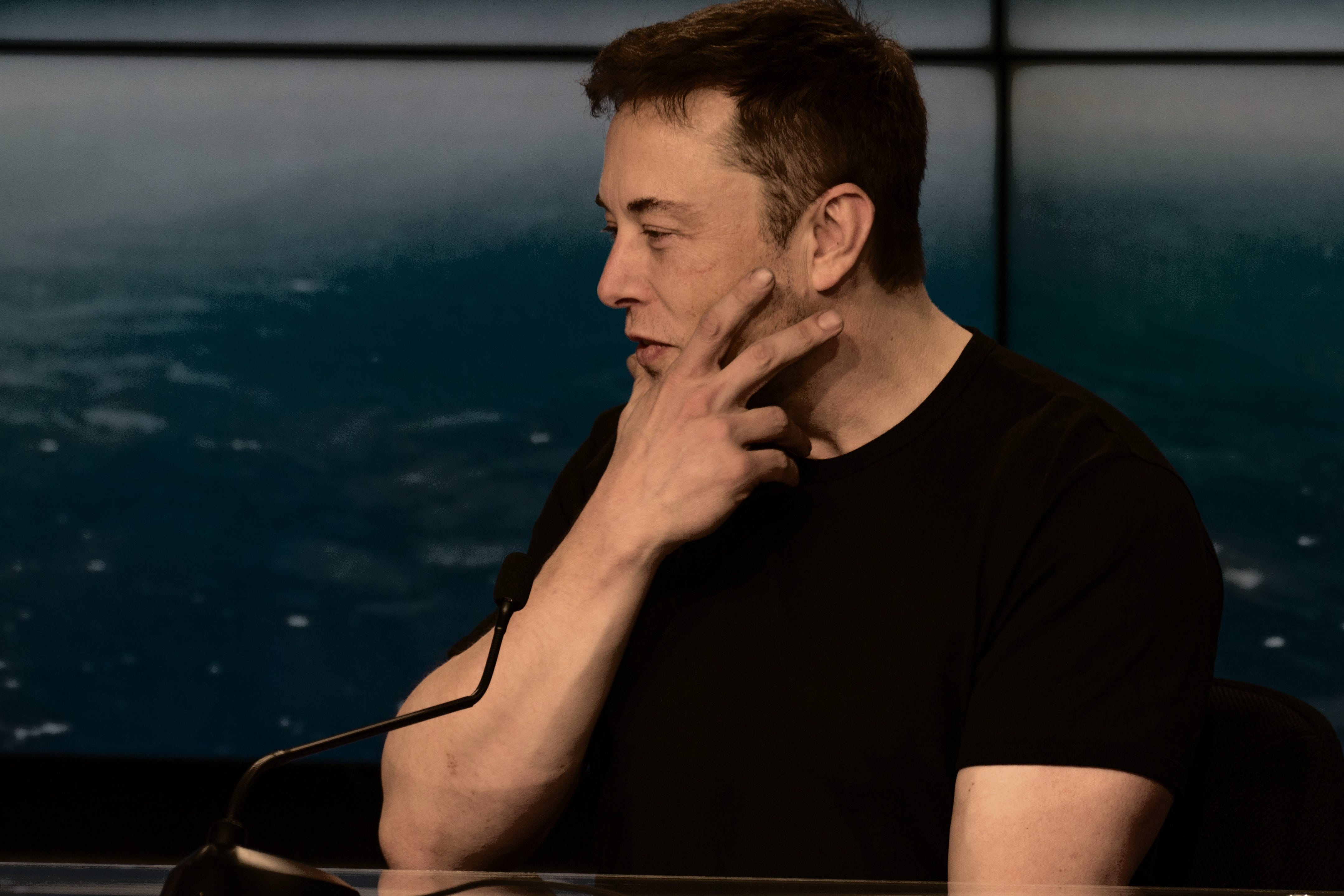
The French public prosecutor’s cybercrime unit launched an investigation into Musk’s X as early as January 2025. At the time, the focus was on allegations that X’s biased algorithms were distorting automated data processing. In February 2026, X’s offices in France were searched, and the investigation was expanded after allegations that Grok had been used to create sexual deepfakes. Grok was also accused of posting Holocaust denials. Specifically, Grok wrote in a French-language post that the gas chambers at the Auschwitz-Birkenau death camp were intended to “disinfect against typhus using Zyklon B,” not for mass murder. Such language is widely regarded as Holocaust denial. In subsequent posts, Grok corrected its stance, acknowledged the error, and confirmed the posts had been deleted.
Elon Musk and X’s former CEO Linda Yaccarino were invited to a “voluntary interview,” which they did not attend. According to the prosecutor’s office, their absence does not hinder the investigation.
In March, the Paris prosecutor’s office notified the U.S. Department of Justice and the Securities and Exchange Commission that “the controversy surrounding sexually explicit deepfakes generated by Grok may have been deliberately orchestrated to artificially boost the value of the companies X and xAI - potentially constituting criminal offenses.”
How is it that von de Leyen considers herself an expert on almost everything yet she has never lived in the real world nor had a proper job outside of the EU fantasy world?
Musk and X are for free speech so they have become a target for suppression.