


Over the past couple of days, the following topics attracted our attention:
Nearly Half of Young Muslims in Germany Support Islamism
Brazil Enacts Strict Online Age Verification Law
Ofcom Fines 4chan £520,000 for No Age Verification
Nearly Half of Young Muslims in Germany Support Islamism
Per a new annual report by the German Federal Criminal Police Office, nearly half of Muslims under the age of 40 support Islamism – that is, the belief that all social and political systems should be governed by Islamic principles. According to the Ideological Defense Institute, the number of Islamists has doubled in four years.
According to the new 2024/2025 annual report of the Monitoring and Knowledge Transfer Platform (MOTRA) – a radicalization monitoring system funded by the German Ministry of the Interior and coordinated by the Federal Criminal Police Office (Bundeskriminalamt) – 33.6% of Muslims under 40 (aged 18–39) support Islamism covertly and 11.5% do so openly. The report notes that 23.8% of Muslims in all age groups in Germany agree with the statement: “An Islamic theocracy is the best form of government,” and 25.1% agree with “The rules of the Quran are more important to me than German laws.” Islamism researcher Professor Susanne Schröter said: “Islamism-savvy means that Muslims consider Islamist interpretations of Islam to be correct, are attracted to Islamist organizations close to the Muslim Brotherhood or Salafism, prefer Sharia to the Basic Law, and usually also have anti-Semitic prejudices.”

The report’s findings confirm that the proportion of Islamists in Germany has grown significantly in recent years. When data collection began in 2021, only 22.3% of Muslims under 40 were Islamist openly or covertly. Now, these two groups together account for 45.1% of Muslims. In barely four years, the number of Islamists in Germany has nearly doubled.
The MOTRA report states that social media is radicalizing Muslims in Germany. The three most influential platforms for Islamist propaganda are YouTube, Instagram, and TikTok. Despite this, the German government consistently blames social media platform X instead; the institute attributes this to X allowing freedom of speech and criticism of Islamism.
The MOTRA report, however, blames Israel for the rise in support for Islamism. Yet, per the Ideological Defense Institute, the real cause is uncontrolled immigration from Muslim countries in Africa, Asia, and the Middle East. Notably, when Germany’s Federal Criminal Police presented the MOTRA report, it described only the proportion of people open to right-wing extremism, which has risen from 21.8% in 2021 to 29.6% in 2025, and an increase in politically motivated crimes based on prejudice, including anti-Semitism (7.2%) and Islamophobia (28.3%). And not once did it mention that support for Islamism has grown many times over.
Wolfgang Kubicki, an FDP politician and former member of parliament, said on X: “This study should set off all the alarm bells. It is a social time bomb. We must talk not only about migration, but also about integration and faith. A naive policy of looking the other way has encouraged this. This naivety must end.” He noted that the enemies of democracy are those who demand a caliphate. “Anti-democratic individuals without German citizenship, however, should leave the country. Neighborhoods where ghettoization provides fertile ground for radicalization must be reorganized. Islamic associations that do not clearly distance themselves from extremists must not be political partners. Germany must act secularly and with self-confidence,” Kubicki wrote.


Germany is by no means the only country where Islamism is growing in popularity. Last year, a French polling institute published a study showing that approximately 57% of Muslims aged 15–24 believe Islamic law should take precedence over French law, particularly in marriage, inheritance, and ritual slaughter of animals, and about 38% of those surveyed approved of all or some Islamic views.
Brazil Enacts Strict Online Age Verification Law
On Tuesday, Brazil’s Digital Protection of Children and Adolescents Act (Estatuto da Criança e do Adolescente Digital) came into effect. It requires many technology companies to implement reliable mechanisms to verify users’ ages. Under the threat of fines of up to 50 million Brazilian reais (approx. 8.34 million euros) or 10% of Brazilian revenue, apps, operating systems, app stores, video games, and social media platforms must comply, according to Reclaim The Net.
“Brazil has stepped forward as the first country in Latin America to pass a dedicated law to protect children’s online privacy and safety,” reads the official statement.
Web platforms operating in Brazil must now verify users’ ages and restrict content visibility based on those ages. Social networks are not explicitly required to use age verification, but “appropriate” content rules apply to them, and accounts for users under 16 must be linked to a parent’s or guardian’s account. Video game platforms must ban loot boxes for minors and require parental consent for user-to-user chats. Service providers with more than one million underage users must publish semi-annual reports, and foreign companies must appoint a legal representative in Brazil authorized to receive notices and court orders.
The law permits the following age-verification methods: national ID, facial recognition, behavioral analysis (i.e. typing patterns and click behavior), and educational background. All these methods collect users’ personal information and create databases. A simple checkbox for self-declaring “I am over 18 years old” is clearly prohibited.
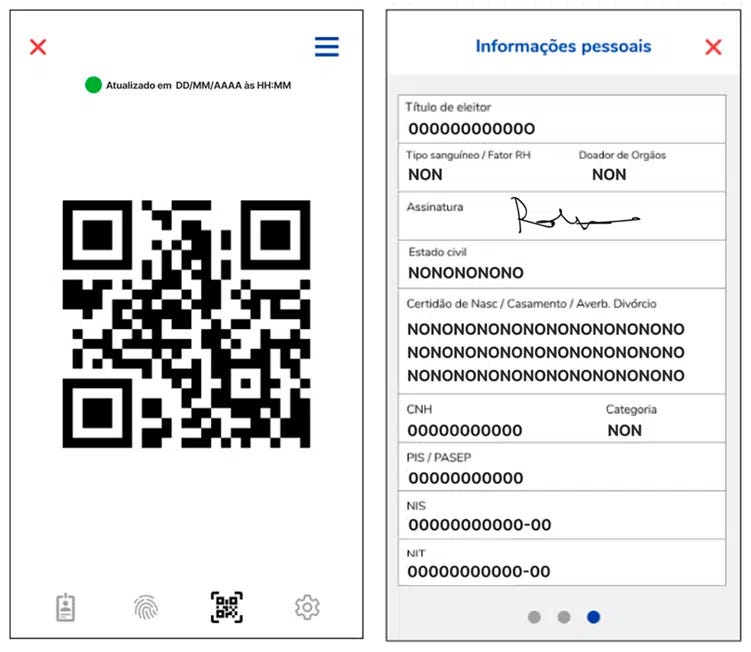
At the same time, the law stipulates that under no circumstances may general or indiscriminate monitoring be established, permitted, or implemented. However, this requirement conflicts with the permitted “reliable” age verification methods. On the one hand, indiscriminate monitoring is prohibited; on the other, the approved methods specifically require the indiscriminate collection and monitoring of data. The list of approved methods contains no option that does not require a massive amount of data and large datasets.
The Digital Law for Children and Youth applies to any information technology product or service intended for minors or to which minors are likely to have access. The scope of regulation is intentionally broad. Notably, in January, Brazil extended the deadline for 37 technology companies to submit their compliance reports. This list includes expected players such as Amazon, Apple, Discord, Google, Meta, TikTok, and Valve, but also some unexpected ones, such as Canonical, the producer of Ubuntu Linux. The latter is not a social media platform nor intended for children; it is primarily used by developers and IT specialists. This inclusion demonstrates that Brazil intends to apply the law to all technological products offered in Brazil that could theoretically be used by a minor.
Finally, Brazilian law requires service providers to establish systems for reporting and removing “prohibited” content – that is, content involving exploitation, sexual abuse, kidnapping, or grooming. Providers have an obligation to report such content, but the law does not specify whether platforms may limit themselves to user-submitted reports or must proactively scan messages. If proactive screening were required, it would likely necessitate breaking end-to-end encryption, as encrypted messages cannot be inspected before reaching the recipient. What is clear, however, is that no exceptions have been granted for encrypted services, nor have any guidelines been provided on how encrypted applications should comply.
The first examples of the law’s impact emerged even before it took effect. Rockstar Games, the creator of “Grand Theft Auto” and “Red Dead Redemption,” announced that Brazilian players will no longer be able to purchase video games from its app store after March 16. The company is not attempting to comply, but is simply withdrawing from the store and directing players to larger platforms that are more likely to be able to comply with the rules.
Discord, however, decided to comply and now verifies age using the third-party k-ID service. This requires adults to allow their faces to be scanned or submit identification documents if they wish to view age-restricted content. In October last year, approximately 70,000 user IDs were leaked from Discord’s third-party provider, which had collected them for age-related complaints. Even then, Discord did not store the data itself; it was stored by the service provider. Now, however, Discord is creating an even larger data flow in Brazil through a third party, and the risk of a similar data breach is even greater.
Ofcom Fines 4chan £520,000 for No Age Verification
The UK communications regulator Ofcom imposed a total fine of £520,000 (about €603,000) on 4chan because the website violates the Online Safety Act 2023. The largest portion of the fine – £450,000 (about €522,000) – was for 4chan’s failure to ensure effective age verification. Ofcom also ordered the website to implement age verification by April 2 and will impose a daily fine of £500 (about €580) until 4chan complies, or until June 1, whichever comes first, according to Engadget.

Ofcom also found that 4chan had not conducted a sufficient risk assessment regarding illegal content on the website. For this, the agency fined the website £50,000 (about €58,000). The deadline for the risk assessment is also April 2; otherwise, a daily fine of an additional £200 (about €232) will be imposed. Finally, Ofcom criticized the website for failing to explain in terms of service how the site protects users from illegal content. This was also deemed worthy of a fine – £20,000 (about €23,200) plus a daily penalty of £100 (about €116) from the compliance deadline of April 2 through June 1.


Ofcom launched an investigation into 4chan last June to determine whether the site was complying with the Online Safety Act. Ofcom imposed the first fine of £20,000 on the website back in October of last year. At the time, the reason was that 4chan had failed to comply with requirements to submit a copy of the website’s risk assessment for illegal content and had not reported its global turnover. According to Ofcom, 4chan has not paid the previous fine, and that amount has now increased by 60 days’ worth of daily fines.
4chan’s attorney, Preston Byrne, has previously stated that the company has no intention of paying such fines and has filed a lawsuit in a U.S. court, arguing that the UK’s Online Safety Act violates the U.S. Constitution. The independence of the UK communications regulator has also been called into question, with claims that it is being used as a “weapon of the British state” to violate the civil rights of Americans. On the latest fine, Byrne responded with an AI-generated hamster cartoon and a delightfully savvy reply to Ofcom.


In a subsequent post, 4chan’s lawyer emphasized that the only country where 4chan operates is the United States, and there the website does not violate any laws – its activities are protected by the First Amendment to the U.S. Constitution.
Can the UK through lawfare change the US constitution?
If not, will the UK seek to get its own version of the internet?