


Over the past couple of days, the following topics attracted our attention:
EU Parliament Voted on Ending Chat Control of Private Chats
Spain Targets Online Hate with New Tracking System
Great Britain: Children’s Drawings May Conflict with Islam
EU Parliament Voted on Ending Chat Control of Private Chats
On Wednesday, the European Parliament voted to extend measures allowing the scanning of private messages, but it insists on significantly narrowing their scope. In other words, MEPs did not outright reject the Chat Control measure, but approved it with significant amendments, as reported by EU Observer.
The EU introduced a temporary Chat Control measure in 2021 to combat child sexual abuse material (CSAM) online. This measure was intended to last only until a permanent law was adopted. However, the temporary rules include a controversial provision permitting large tech companies to scan private texts and images for CSAM or potential child grooming. Disputes over the permanent legislation remain unresolved, and the Commission has been unable to enact it. Now, the European Commission has asked Parliament to extend the temporary measure until 2028.
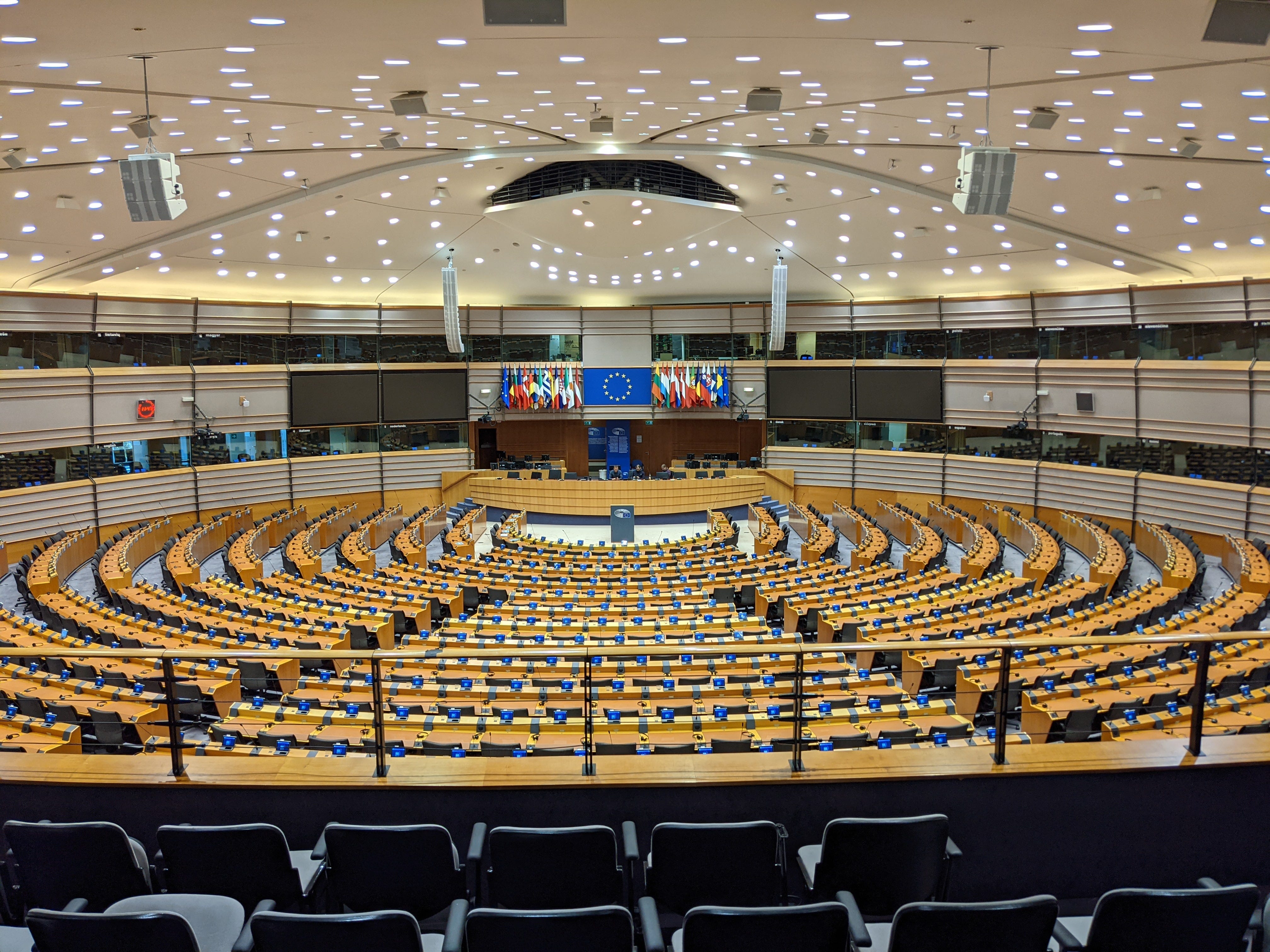
On March 11, the European Parliament voted overwhelmingly to extend the temporary measure until August 3, 2027. However, it demanded restrictions on message monitoring and the removal of preventive scanning. According to the Parliament, the measure should only target already known material or content reported by trusted flaggers. Messages should be monitored solely for users or groups suspected by a competent judicial authority. Parliament also stated that messages that use, have used, or will use end-to-end encryption must not be scanned at all. “Monitoring should only apply to the communications of suspected individuals and only with judicial authorization,” said Markéta Gregorová, a Czech member of the European Parliament’s Green Party.
Patrick Breyer, a former MEP and opponent of chat control measures, described the Parliament’s vote as a major victory for message privacy advocates. “Digital privacy is alive! Just as with our physical mail, the warrantless screening of our digital communications must remain taboo. EU governments must finally realize that true child protection requires secure apps (’Security by Design’), the removal of illegal material at the source, and targeted investigations against suspects with a judicial warrant – not overreaching, pointless mass surveillance,” Breyer wrote.
Regardless, the European Parliament’s decision has sparked an institutional conflict, as neither the European Commission nor the Council wishes to alter the legislation or restrict scanning of private messages in any shape or form. Therefore, increased pressure to extend the 2021 temporary measure is expected, as that version expires on April 3, if the Commission and Council do not accept Parliament’s amended and narrowed version. At the same time, negotiations on permanent legislation will continue.
Spain Targets Online Hate with New Tracking System
Spain plans to introduce a new artificial intelligence system that will monitor the spread, intensity, and patterns of hate speech on social media, as well as how algorithms amplify polarising content. The European Commission has warned that countries should not go too far with social media restrictions, since these are covered by the Digital Services Act and handled by the Commission at the European level, according to Euronews.
Spanish Prime Minister Pedro Sánchez presented the new HODIO (Huella del Odio y la Polarización – Trail of Hate and Polarisation) system at the first international summit on combating hate and digital harassment held in Madrid. Sánchez said in his speech: “If hate is already dangerous, social networks have turned it into a weapon of mass polarisation that ends up seeping into everyday life,” adding: “The digital environment cannot be a space without rules, today social networks are a failed state.” Incidentally, French President Emmanuel Macron recently described something exactly the same.
According to the Spanish Prime Minister, the HODIO system uses a large amount of public information on social media and analyses the spread and development of hateful messages online over time, along with their intensity, scope, and patterns. The system then seeks to understand how the dynamics of certain platforms contribute to polarisation and it generates reports comparing the prevalence of hate speech on the main social networks used in Spain, such as Instagram, TikTok, X, YouTube, and Facebook. The Spanish government hopes that HODIO will provide data to shape more effective policies against digital hate and to put greater pressure on technology platforms for taking more responsibility.
This is part of the Spanish government’s broader plan to improve oversight of social media. In February, Sánchez announced plans to impose a social media ban on those under the age of 16, which would require platforms to verify the age of all users. The government defends this proposal by arguing that cyberbullying has increased and that teenagers are exposed to harmful content on the internet.
European Commission Technology spokesperson Thomas Regnier warned back in February that social media control measures are already set out in the Digital Services Act. “Of course we value the fact that member states want to go a step further, potentially by restricting social media access for kids. Taking measures or putting additional obligations on platforms (...) is a clear no-go, because this is regulated by the DSA,” Regnier said at the time, speaking of Spain’s social media ban plan. “We don’t want to protect only kids in Spain, we want to protect everyone in Europe with the DSA,” Regnier summed it up.
However, it is worth remembering that the European Commission is similarly considering options for a social media ban and age verification, and the European Parliament has in fact recommended the same. Additionally, the Commission has numerous other initiatives regarding the control of social media platforms and the content published on them in one way or another. Therefore, Regnier’s “warning” and words sound more like a desire to keep social media restrictions and the right to decide on “permitted” content (examples here, here, here, here, here, here, here) solely in the hands of the Commission and the decisions not to be handed over to individual countries.
Great Britain: Children’s Drawings May Conflict with Islam
Local authorities in the United Kingdom have issued a new guideline entitled “Sharing the Journey” to schools in northern England. It teaches schools how to foster a “sensitive and positive attitude among students, parents, and carers toward religious and cultural diversity”. Among other things, the guidelines warn that students’ drawings, music, and dance lessons may conflict with Islamic teachings or even be deemed blasphemous, according to the Daily Mail.
The guidelines require schools to remain flexible when taking religious differences into account. Schools must be aware that some Muslim parents may have sensitivities about art, dance, drama, and music lessons, and especially about physical education, religious education, and RSHE.
For example, in art education, the guidelines note that Islamic culture and civilization have a rich artistic tradition, but some schools may encounter religious exceptions. Some Muslims may consider three-dimensional imagery of humans to be idolatrous. Schools must therefore understand this sensitivity and avoid asking students to depict Jesus, the Prophet Muhammad, or other prophetic figures in Islam. As a result, some Muslim students may refuse to draw human figures at all.

Regarding music education, the guidelines state that in Islam, music is usually limited to the human voice and non-tunable percussion instruments – as was the case in the time of the Prophet Muhammad, when such instruments were used only at weddings and in battle. The guidance also notes that Muslims have varying attitudes toward music, and schools should not require students to sing songs that conflict with their religious beliefs.
In drama classes, teachers must be particularly careful and avoid asking students to play roles that could appear offensive to their faith. In both drama and dance classes, schools must ensure that girls and boys do not come into physical contact with each other. Furthermore, performances that “encourage immodesty or sexual feelings” should not be allowed.
The guidelines also cover other religiously “sensitive” topics, such as the dietary requirements and fasting rules of Jews, Hindus, Sikhs, Rastafarians, Mormons, and Jehovah’s Witnesses.
Critics argue that such extensive rules for young children echo the Taliban regime. Although the authorities claim that students will not be punished for blasphemous drawings or similar acts, there are examples that show severe punishments in practice. Critics point out that recent years have demonstrated how seriously schools take the concerns of Islamic fundamentalists over alleged blasphemy. For example, in 2021, a teacher at Batley Grammar School in Yorkshire showed a cartoon of Muhammad in a religious education class; afterward, his contract was suspended, and he was forced to go into hiding due to death threats from Islamists.
There are also students that have faced consequences. For example, in 2023, four students at Kettlethorpe High School in Yorkshire were temporarily suspended for “desecrating” the Koran. The students had brought the Koran to school as part of a bet and read excerpts from it, but the book happened to get knocked out of a student’s hand, causing minor scratches to it. This was enough for the school to suspend the children and call the police, who recorded the incident as a hate crime – even though the school had confirmed that the children had no malicious intent. The incident escalated further: the student who had brought the book to school began receiving death threats. Neither the school nor the police prioritised these threats over the child’s alleged “offense.” Ultimately, the child’s parent was forced to apologise publicly to ensure their child would not be harmed.
I want my country back.
"... and shut the door on the way out!"