


Over the past few days, the following topics attracted our attention:
EU Aims To Block VPN Bypass To Enforce Age Verification
Moderna Has Been Developing mRNA Vaccine for Hantavirus Since 2023
Conviction of Comedy Writer Graham Linehan Overturned
EU Aims To Block VPN Bypass To Enforce Age Verification
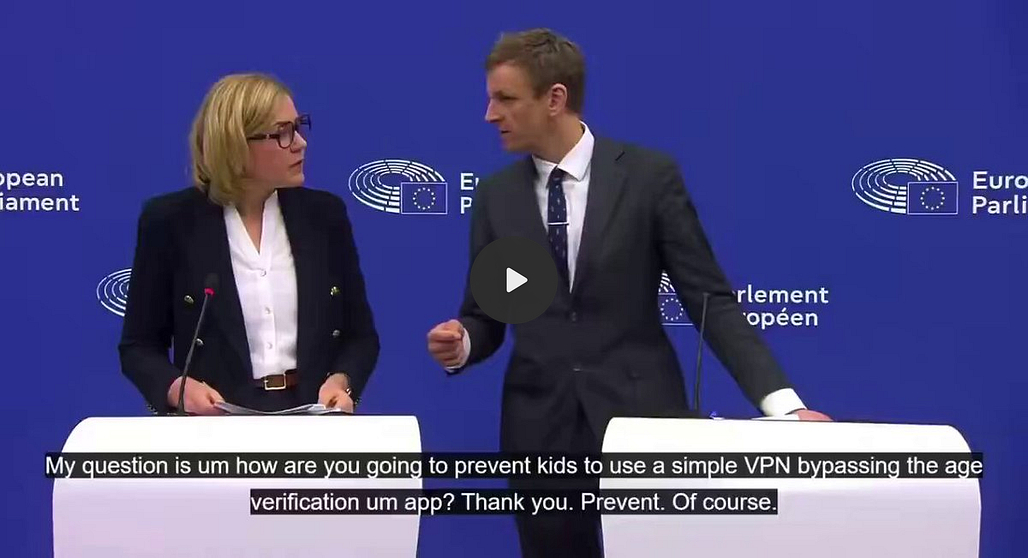
The European Commission held a press conference on age verification for social media. Henna Virkkunen, Executive Vice-President for Tech Sovereignty, Security and Democracy, explained that the Commission has issued recommendations on age verification. Specific expectations have been set for member states, but the Commission particularly wants countries to develop their own national solutions.


Journalists asked how the Commission plans to address VPNs that help users circumvent age verification. Henna Virkkunen confirmed that such technology exists and stressed that the Commission must find effective ways to enforce age verification. She noted that the Commission’s age verification app is already secure and privacy-friendly, but the next challenge is preventing bypasses, for example via VPNs. Her remarks indicated a focus on stricter enforcement of existing rules rather than seeking new powers. “The DSA requires platforms to enforce their own rules: terms and conditions should not be mere written statements, but rather the basis for concrete action to protect users, including children,” she said.

Virkkunen emphasized that the EU age verification system goes hand in hand with enforcement of the Digital Services Act (DSA) and added that the Commission has already identified violations, noting that Instagram and Facebook have failed to keep children under 13 off their platforms – despite Meta’s own 13+ age limit. According to the Commission, around 12% of children under the limit still access these platforms. Currently, however, the platforms are doing far too little to enforce their own rules, and it is easy for children to provide a false date of birth. The Commission expects Meta to significantly strengthen its practices.
Finally, Virkkunen highlighted a strong link to digital identity wallets: “There is a very strong connection now to our digital identity wallets as well, because this is required by our legislation – Member States are supposed to provide this by the end of this year – and this is now an opportunity to include this age verification app as part of the digital wallet solution, which Member States are supposed to provide for their citizens by the end of this year, so there is already binding legislation.”
Virkkunen acknowledged that full results on social media age restrictions are not expected until summer, but warned that the situation requires immediate action, as many Member States are already preparing national social media bans (see here, here, here, here, here).
Moderna Has Been Developing mRNA Vaccine for Hantavirus Since 2023
The Vaccine Innovation Center at Korea University and the U.S. biotechnology company Moderna have been jointly developing a hantavirus mRNA vaccine since 2023. The vaccine candidate is currently awaiting funding to begin clinical trials on humans, according to Brussels Signal.
Korea University and Moderna signed an agreement under Moderna’s mRNA Access initiative. This program provides preclinical mRNA vaccine candidates to academic groups working on new or neglected infectious diseases. In February 2025, a research team led by Professor Park Man-Sung of the Department of Microbiology at Korea University College of Medicine announced that experimental doses prevented hantavirus infection in mice.
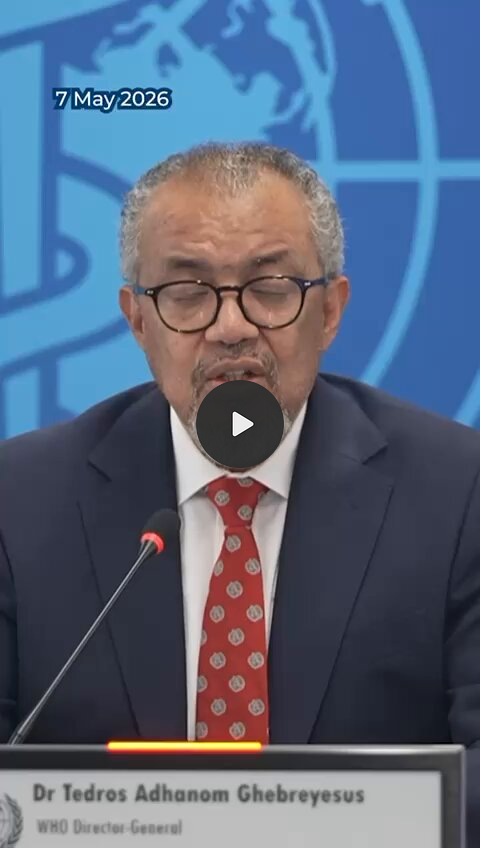
Hantavirus has been in the spotlight in recent days after several infected individuals were identified among passengers on a cruise ship sailing on the Atlantic Ocean. According to the WHO, eight cases have been identified so far (as of 8 May), including three deaths. Although this is a serious incident, the organization assesses the public health risk as low.

The virus is usually transmitted to humans via rodents, but certain strains – such as the Andes virus, found in South America – are currently known to allow limited human-to-human transmission among very close contacts. However, according to WHO data, such transmission is very rare. Hantavirus can cause several illnesses, including haemorrhagic fever with renal syndrome (HFRS), which occurs mostly in Europe and Asia and primarily affects the kidneys, and hantavirus cardiopulmonary syndrome (HCPS), which occurs mostly in the Americas and primarily affects the lungs and heart.
In Korea, approximately 300–400 cases of hantavirus are reported annually, primarily among young men in military service. For this reason, Korea has placed hantavirus on its list of future pandemic threats. Since 1990, Korea has had access to the inactivated vaccine Hantavax, which offers limited long-term protection and does not cover the strains causing hantavirus pulmonary syndrome found in the West.
The current collaboration has been supported by Hyundai Motor Group Honorary Chairman Chung Mong-Koo with 10 billion won (about 6.5 million euros), but clinical-grade material requires an additional 10–20 billion won (6.5–13 million euros). Due to a lack of funds, clinical trials on humans have been suspended for about a year, pending additional funding.
Conviction of Comedy Writer Graham Linehan Overturned
Irish screenwriter Graham Linehan has been on trial for some time, accused of harassing transgender woman Sophia Brookes on social media and damaging her phone. Last November, a court acquitted Linehan of the harassment charge, but found him guilty of damaging the phone. The court has now overturned that latter conviction and acquitted Linehan of property damage as well, reports the Free Speech Union.
According to Linehan, the harassment and property damage charges stemmed from an incident at the “Battle of Ideas” conference held in London in October. Linehan allegedly took the phone of Sophia Brookes, a man who identifies as a woman, threw it to the ground, causing £369 (approximately €427) in damage, and posted insulting comments about her.
Last November, a district court acquitted Linehan of the harassment charge. The court found that while his posts were “highly unpleasant, offensive, and even unnecessary,” they were not particularly oppressive. However, the court found him guilty of causing property damage.
Now, the Court of Appeal has also acquitted Linehan of causing property damage, concluding that it has not been proven that Linehan caused any damage at all. “Having considered all the evidence before us, we cannot be sure that the damage to the complainant’s phone was caused by Mr. Linehan on the evening of October 19, 2024. We therefore find Mr. Linehan not guilty of the offense,” the judge explained.


At the appellate court hearing, Sophia Brookes said she had hoped to “shame Graham Linehan into apologizing” after he previously referred to her on social media as a “domestic terrorist.” According to Linehan’s attorney, this made it clear that Brookes was there to cause disruption, provoke, and irritate critics of trans ideology, hoping to elicit a negative reaction from them.
Linehan said after the court hearing: “There has been a troubling pattern of police forces across the country who time and again believe trans rights activists, even when there has been overwhelming evidence that complaints against gender-critical campaigners were made in bad faith. The police have failed in their duty to properly and fairly investigate, preferring instead to support one side over the other in an important debate. All this has done is erode the faith the public should be able to have in the police.”
More bullshit about a pretend injectable mRNA cure. All mRNA injections (pretend vaccines) are dangerous, if not deadly.
If, by now, you still believe anything Big Pharma claim about Safety and Efficacy, you should realise that all mRNA jabs are at best useless, at worst deadly.
Do not take another jab! You'll live longer.
Just my opinion, after reading reems of mRNA jab data since 2021.
Unjabbed Mick.
I wonder where they will find people to "participate" in their hantavirus vax clinical trials...?