


Over the past week, the following topics attracted our attention:
Europe Escalates Pressure on Musk’s X
Blocking the Net: How Governments Tighten Censorship
Spain Bans Social Media for Under-16s
University of Sussex Challenges OfS Free Speech Fine
Digital Euro Is in Political Deadlock in Brussels
Europe Escalates Pressure on Musk’s X
The Paris prosecutor’s office announced on Tuesday that it had conducted a search of the French office of the social media platform X, owned by Elon Musk. This was a continuation of an investigation launched in January 2025, and Europol and the French police cybercrime unit also participated in the raid, according to France 24. In addition to France, Musk’s companies are also being investigated by the UK and the European Commission. While in Europe this is seen as part of the fight against uncensored content that threatens children, in the US it is seen as pressure to force the hitherto unruly platform to comply with European censorship rules.
Last year, the Paris prosecutor’s office launched an investigation into X after receiving reports of an alleged biased algorithm that distorted the automatic data processing system. This investigation has now been expanded to include alleged involvement in the distribution of pornographic images of minors and deepfakes, as well as a denial of crimes against humanity.
The prosecutor’s office also announced that it had summoned Musk and former X CEO Linda Yaccarino for voluntary questioning on April 20, 2026, in Paris, as it considers them to have been the de facto and de jure leaders of X at the time of the events. Yaccarino resigned as CEO of X in July last year after two years in the role. The Paris prosecutor’s office also announced that it was leaving the social media platform X and would henceforth share announcements on LinkedIn (Microsoft) and Instagram (Meta). The prosecutor’s office’s X account has now been closed.
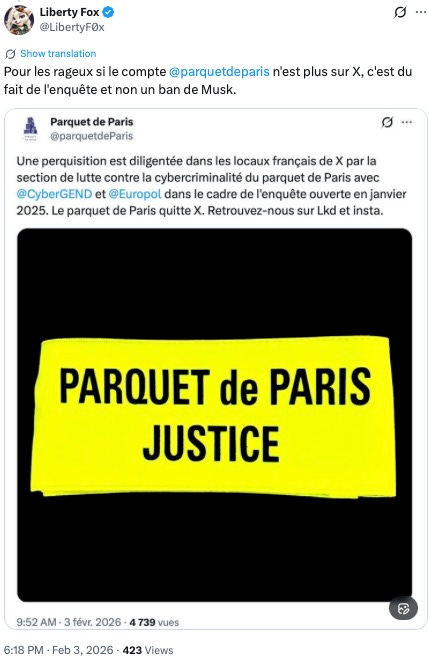
X’s global government relations unit responded in a post: “The Paris Public Prosecutor’s office widely publicized the raid—making clear that today’s action was an abusive act of law enforcement theater designed to achieve illegitimate political objectives rather than advance legitimate law enforcement goals rooted in the fair and impartial administration of justice.” According to X’s assessment, the accusations are unfounded and the platform categorically denies any wrongdoing. X also stated in the post: “The Paris Public Prosecutor’s Office is plainly attempting to exert pressure on X’s senior management in the United States by targeting our French entity and employees, who are not the focus of this investigation,” adding that the French authorities have disregarded international agreements, procedural rules, and X’s right to defend itself. In X’s view, the state is bypassing due process and threatening freedom of expression.

Musk also criticized the French authorities’ raid, writing, “This is a political attack.” Referring to another post about the brutal rape of a child, Musk stated that the French authorities should focus on catching sex offenders instead.


The EU has been investigating Musk’s social media platform X since December 2023. In December 2025, Brussels imposed a €120 million fine on X for violating the transparency obligations of the Digital Services Act. Allegedly, verified accounts had a deceptive “blue tick” design, and researchers were denied access to public information. However, critics argue that the real purpose is to pressure X into implementing censorship in the EU. The U.S. House Judiciary Committee also analyzed the fine and concluded that the American company was punished for minor technical issues and for defending freedom of speech.
In January 2026, the European Commission announced that, because Grok had generated approximately three million sexual images of women and children in just a few days, it would extend its ongoing investigation into X – adding deepfake photos to its probe into illegal content.
In early January 2026, UK Prime Minister Keir Starmer announced that he was prepared to support regulations that could lead to blocking the social media platform X in the UK. The reason was X’s AI tool Grok, which enabled the creation of uncensored – and often non-consensual – sexualised images. Authorities were instructed to act swiftly, and the communications regulator Ofcom promptly launched an investigation, which remains ongoing.
On Tuesday, however, another UK authority – the Information Commissioner’s Office (ICO) – announced it had also opened an investigation into Elon Musk’s X and xAI. This probe focuses on the use of personal data, specifically whether the companies complied with data protection laws in relation to deepfake photos generated by Grok. “Such content creation and distribution raises serious concerns under UK data protection law and represents a significant potential risk to the public,” the ICO stated.
On Tuesday, however, another UK authority, the Information Commissioner’s Office, announced that it had also launched an investigation into Elon Musk’s X and xAI. This time, the investigation will focus on the use of personal data, i.e. whether the companies complied with personal data laws in relation to deeply fake photos created using the artificial intelligence Grok. “The reported creation and circulation of such content raises serious concerns under UK data protection law and presents a risk of significant potential harm to the public,” the Information Commissioner’s Office (ICO) said in a statement.
Blocking the Net: How Governments Tighten Censorship
The Swiss company Proton, which offers encrypted email and virtual private network (VPN) services, provides users with greater anonymity and enables them to circumvent restrictions imposed by the state. The company has been monitoring how authoritarian governments implement censorship for years and warns that countries are increasingly using internet shutdowns to silence dissent and strengthen censorship, including by upgrading firewalls, according to The Japan Times.
Proton’s product manager, Antonio Cesarano, pointed out in an interview that governments in countries such as Iran and Myanmar often emerge from internet shutdowns with an advanced capacity to censor the internet and restore web connectivity. In doing so, authorities have been implementing much longer interruptions, during which countries often upgrade their censorship capabilities, including their increased ability to combat VPNs.
David Peterson, CEO of Proton VPN, believes that such a sudden increase in capabilities may indicate “censorship as a service,” i.e. countries with greater expertise are selling their technology. “For example, over the past couple of years, we’ve seen the Chinese ‘great firewall’ technology used by Myanmar, Pakistan, and some African nations,” Peterson said.
This trend is growing alongside the increase in the total number of internet shutdowns. Cesarano added that a once unthinkable measure – completely blocking the internet – has been implemented three times in the last six months alone. The most recent example occurred in Iran, where more than 90 million people were forced to go without internet for nearly three weeks during nationwide protests, which thereby helped conceal the crackdown on demonstrations that killed thousands of people. This is, of course, not the first time that Iran has blocked the internet, as the country also imposed a week-long blackout during the conflict with Israel in June last year. Iran is not the only country to have done so. Afghanistan also implemented a large-scale internet shutdown last year, and Uganda did so for nearly a week immediately ahead of last month’s elections.

Proton notes that completely blocking the internet is an extreme, dangerous, and costly measure, as it brings the entire country’s economy to a standstill and disrupts essential services for the population. In some countries, such as Myanmar, where VPN use is illegal, the authorities have even deployed fake VPNs “as honeypots” to detect dissidents. There, the police may also stop a person on the street and search their phone to check for VPN apps or usage.
Finally, Proton has noted that a significant spike in demand for their VPN service often signals that something is happening in a country. For example, in Iran, demand for VPN services grew by 1000% immediately before the latest internet shutdown on January 8. The same pattern occurred in Uganda, where VPN registrations increased by 890% before the elections, and in Venezuela at the beginning of the year, when demand for VPNs increased by 770% in the days after the US removed the long-time president Nicolas Maduro from office.
Spain Bans Social Media for Under-16s
At the World Government Summit in Dubai on Tuesday, Spanish Prime Minister Pedro Sánchez promised to impose a social media ban on young people under the age of 16 and announced that he intends to enforce the ban vigorously. Essentially, this means an end to anonymity on the internet, which Sánchez has promised also before. The prime minister confirmed that he will present a draft bill next week that, in addition to the ban, will hold social media executives responsible for illegal and hateful content, according to Euronews.
Information about the details of Spain’s social media ban is currently still scarce. It is not clear exactly which platforms would be affected by the law or whether messaging apps would also have to verify age. Nevertheless, the prime minister’s goal appears to be to implement the ban as quickly as possible and to enforce effective age verification. According to the prime minister, age verification would not simply involve self-declared ages in boxes, but “real barriers that work.”
In his speech, the Spanish prime minister described social media as the digital Wild West and he has previously made harsh statements on “ending anonymity on social media.” Sánchez was particularly critical of TikTok, Instagram, and X, and confirmed that the government, together with the prosecutor’s office, is seeking to investigate violations of the law by X, Instagram, and TikTok. Sánchez also criticized Musk for what he believes is Musk’s use of X to “spread disinformation.” In addition, the prime minister criticized algorithms, which he called distorters of public debate, especially for children. “Today, our children are exposed to a space they were never meant to navigate alone: a space of addiction, abuse, pornography, manipulation, and violence,” Sánchez said. “We will no longer accept that. We will protect them.”
According to Sánchez, however, the social media ban is only part of a larger plan to regulate social media companies. The plan also includes holding platform managers accountable when their sites violate the law, banning algorithmic amplification of illegal content, and implementing a system to monitor how social media incites division and promotes hate speech.
The owner of social media platform X, Elon Musk, commented on Spain’s plan, calling the prime minister a tyrant.

As you may recall, Australia was the first country in the world to impose a social media ban on young people. Since then, many countries have announced plans to ban social media for young people, led by France, the United Kingdom, Denmark, Greece, and several US states. The solution is considered excellent also by the European Union authorities, where European Commission President Ursula von der Leyen has promised to personally follow the Australian example and where the European Parliament has begun to recommend a ban.
In addition to the rush in Western countries, totalitarian states such as China, Russia, North Korea, Iran, as well as India, Turkey, Saudi Arabia, and Uganda have imposed various forms of social media bans. Viewers have generally regarded the ban a form of politically motivated censorship, but Australia and other so-called free countries claim the ban is imposed only for the safety of children and teens. At the same time, the narrative still talks of a need to combat false information, misinformation, information manipulation etc. – along with the need to verify the age and thus the identity of all users.
University of Sussex Challenges OfS Free Speech Fine
The University of Sussex has challenged a £585,000 (€672,165) fine imposed by the Office for Students (OfS), the regulator of higher education institutions, for failing to uphold freedom of speech in the High Court. The university claims that the OfS has exceeded its legal powers and placed an inordinate emphasis on the trans and non-binary equality policy, though it was in force at the time of the fine, according to the BBC.
As is well known, the University of Sussex was embroiled in controversy when Dr. Kathleen Stock, a former lecturer (and professor) at the university, resigned in 2021 after student protests and a campaign against her. In her lectures and her book, Dr. Stock had expressed her honest and unembellished views on gender issues, stating that biological sex is more important than gender identity (read more here, here, and here).
The fine was imposed largely on the basis of this incident, following the OfS’s three-and-a-half-year investigation into the university’s handling of the matter. The regulator found that the university’s trans and non-binary equality policy, with provisions such as requiring a solely positive representation of trans people, created a “chilling” effect on free speech, leading staff and students to self-censor for fear of repercussions. In the OfS’s view, the university failed in its duty to protect freedom of speech and academic freedom on campus.
University representatives are convinced that, given Sussex’s proud tradition of promoting freedom of expression, the fine has had a serious impact on the university’s reputation as a “bastion of free speech.” The university argues that the two-page policy was not a “guiding document,” and therefore the regulatory body had no right to rule on it. The university also claims that the investigation was biased because OfS Director for Freedom of Speech Dr. Arif Ahmed and Dr. Stock were former acquaintances – and Dr. Ahmed had publicly supported Stock’s views. In addition, the university has criticized the OfS investigation for allegedly interviewing only Dr. Stock and not other students, nor the students’ union.
The OfS is now expected to defend its role in protecting the core values of free speech and academic freedom, and point out that the university did not follow its own procedures when developing and implementing the trans and non-binary equality policy. In addition, the OfS has stated in its court filings that it offered Sussex the opportunity to meet and discuss a settlement as early as October 2022, provided that the university acknowledged that it had breached the rules. However, the OfS firmly rejects accusations of bias, stating that Dr. Ahmed had a “limited professional acquaintance” with Stock, as well as the claim that it singled out the University of Sussex for punishment.
Digital Euro is in Political Deadlock in Brussels
The European Union’s plan to introduce a digital euro has suffered a setback in the European Parliament. The Parliament is unable to reach an agreement or find a compromise on what the digital euro should be, what it should look like, and how much the public sector should intervene in the payment market. The lack of consensus is complicating progress on the digital euro project and jeopardizing the legislative process, Euronews reports.
Fernando Navarrete, the rapporteur for the European People’s Party (EPP), who is leading the digital euro debate in the European Parliament, has presented a new proposal for the digital euro concept, favoring a simpler “e-cash” solution. This model would only be used for offline payments and would serve as a tokenized digital form of cash, without users being given retail accounts in the European Central Bank’s (ECB) ledger. Navarrete emphasized that the digital euro should not be seen as a single universal tool, but as part of a broader payment system. In his words, the role of the digital euro is to ensure continuity in the event of cyberattacks, network failures, or external dependencies, without incurring additional costs for merchants or users.
However, the Socialists and Democrats (S&D) and Renew Europe support the European Commission’s proposal, under which users would have a retail account with the ECB and would be able to use the digital euro for both online and offline payments. According to S&D shadow rapporteur Nikos Papandreou, Europe must have control over critical infrastructure. “At a time of unprecedented geopolitical change, as we witness the dissolution of rules bases international order, payment sovereignty must be anchored in common infrastructure,” Papandreou said. He criticized the EPP’s e-cash proposal, saying it would bring the issue of cash and ATM availability back onto the table.
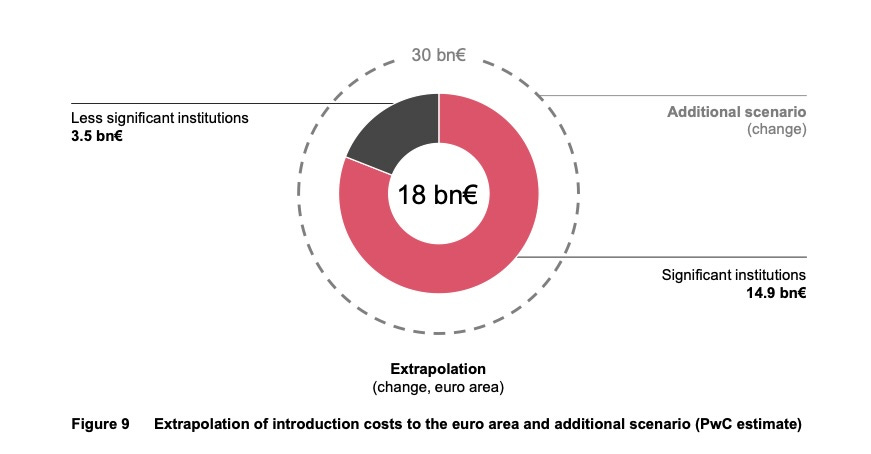
The Patriots for Europe group took a clearly more sceptical stance. Their shadow rapporteur, Auke Zijlstra from the Netherlands, raised serious doubts about the European Central Bank’s ability to handle a project of such magnitude. He also criticised the ongoing lack of transparency regarding costs, pointing to estimates of up to €18 billion based on a PwC study published last summer. According to a representative of the Patriots, many national payment systems already operate more efficiently, but the new European-level system may ultimately leave the costs to be borne by taxpayers. The Patriots also do not support the creation of a digital wallet for citizens.
As things stand, the European Parliament is the only institution that has not yet formed its opinion on the digital euro. Fundamental disagreements over the scope of the project, the level of management, and the degree of appropriate public sector intervention in the payments market have led to an unprecedented number of amendments in Parliament – more than 1,400 – which in turn may cause the plenary vote to be postponed.