


Over the past week, the following topics attracted our attention:
German Police Launch Investigation against a Pensioner for Calling Chancellor Merz ‘Pinocchio’
EU’s New Democracy Centre: Free Speech Threat
Sweden’s Media Watchdog: You Cannot Call Illegal Migrants ‘Illegal Migrants’
Netflix and Others Face Huge Fines If Shows Offend British Viewers
Only 1 in 36 Foreign Criminals Deported from Sweden
German Police Launch Investigation against a Pensioner for Calling Chancellor Merz ‘Pinocchio’
Last October, German Chancellor Friedric Merz and Baden-Württemberg Prime Minister Winfried Kretschmann visited Heilbronn for the ceremony of the Innovation Park Artificial Intelligence (IPAI). To ensure security, the Heilbronn police posted on Facebook about a temporary local flight ban, Remix News writes.
Underneath that post, the local pensioner left a brief remark, writing, “Pinocchio is coming to HN,” followed by a long-nose emoji.
The man who wrote the “Pinocchio” comment said he viewed it as a harmless jab, but the authorities did not see the humour. Three months later, he received a letter from the criminal police informing him that he was under investigation for a suspected insult under Section 188 of the Criminal Code. The pensioner’s reaction was one of complete disbelief. “It’s a joke and completely disproportionate. When I told friends and acquaintances about the letter, everyone thought I was trying to make a joke,” he said.
Legal experts suggest the pensioner likely has little to fear and some are deeply critical of the move. “This is hysterical madness,” said constitutional lawyer Prof. Volker Boehme-Neßler in an interview to Apollo News.
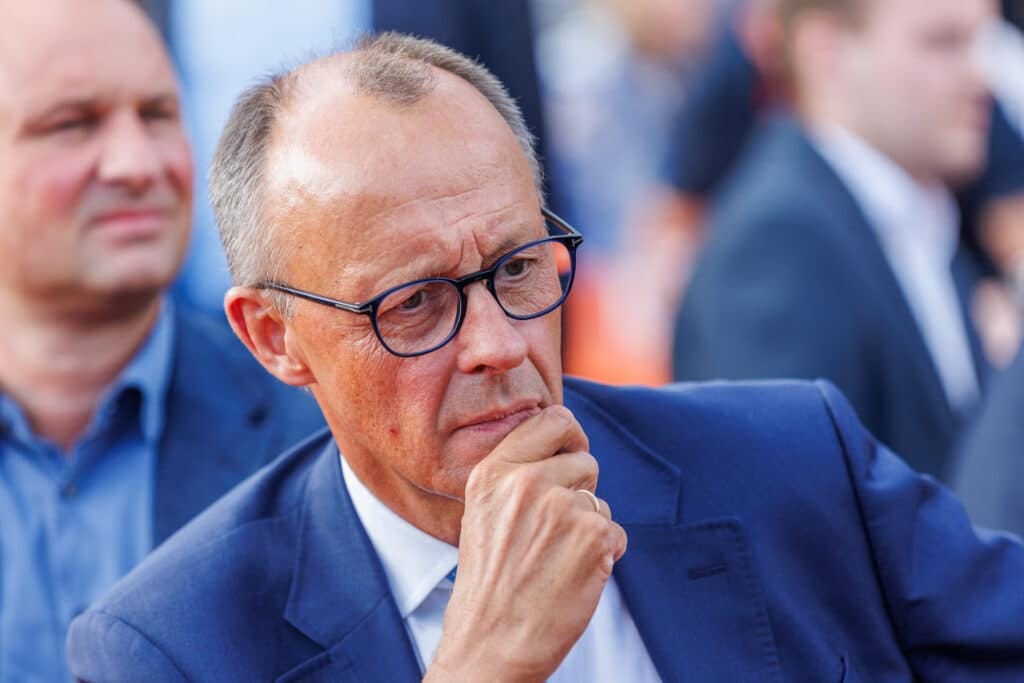
After a request from Nius news outlet, police also revealed that another 30 comments were under investigation, with many of them referring to Merz as being untrustworthy. “The Baron of Lies was traveling with Kretsche” read one comment. Another read: “Nobody needs the liar here.” Another stated: “Is Munchausen coming with the cannonball?“ The last comment refers to the story of Baron von Münchhausen, who is portrayed as the “baron of lies.”
Politicians, with the help of law firms running artificial intelligence searches, are often filing these complaints directly and earning money every time they win a case. However, this investigation was not actually launched by Merz. Reportedly, the Heilbronn police headquarters have a dedicated social media team that monitors comments for potential criminal content.
Police spokesman Andreas Blind explained the protocol: “If we come across criminal behaviour in individual cases as part of the social media monitoring of our channels, this will be reported or submitted to the public prosecutor’s office for review.”
The police then refer the matter to a public prosecutor who can determine whether an investigation is called for.
EU’s New Democracy Centre: Free Speech Threat
This week saw the launch of the European Centre for Democratic Resilience, which aims to strengthen democracy by combating disinformation, but which the US sees as yet another threat to freedom of speech in Europe.
President of the European Commission, Ursula von der Leyen, said: “In a world where information is increasingly weaponised to undermine our democracies, we are taking action. With the European Centre for Democratic Resilience, we will level up our collective capacity to counter foreign information manipulation and disinformation. This will strengthen our resilience, ensure Europe’s public debate remains open and fair, and empower citizens to participate in democratic life.”

However, behind these empty slogans, the reality is yet again the suppression of free speech. Just recently, the US House Judiciary Committee published a report that also drew attention to the initiative. It called it an initiative that threatens to further exacerbate the crisis of freedom of speech in Europe.
For example, the plans of the new centre include “launching a dedicated Stakeholder Platform bringing together independent actors like civil society organisations, think tanks, researchers, academia, fact-checkers and media organisations to support the dissemination of research and other outputs and encourage exchange among different stakeholders, providing knowledge and insights to work with Member States in the Centre.” In other words, it is putting together a force to constantly monitor and decide what is allowed to be said online and what is not.
According to the press release, emerging priority areas for the first year include:
Developing tools to support resilient elections, including by bringing together relevant existing EU rules, soft measures and tools for Member States that help address Foreign Information Manipulation and Interference (FIMI) and disinformation campaigns targeting electoral processes in the Member States.
An EU Blueprint to counter FIMI and disinformation intended to support preparedness and help to build capacities across the Union.
Fostering capacity building and mutual learning, including sharing of expertise and best practices, enabling Member States with advanced experience in countering FIMI and strengthening democratic resilience to support others, raising the overall level of preparedness across the EU.
Identifying adequate modalities of cooperation with EU candidate countries and potential candidates in the framework of the Centre, to ensure a mutually beneficial cooperation.
Explore various models for involving citizens in our efforts to protect democracy, building on the valuable experience developed in many Member States. The Commission will support this reflection by organising this year two citizen panels, one on preparedness and one on building democratic resilience.
Just recently, we published an analysis of how FIMI works in practice – and how you can get your accounts frozen, your travel banned, and your job taken just for having the ‘wrong’ opinions. These plans would make it even easier to enforce the same.
Sweden’s Media Watchdog: You Cannot Call Illegal Migrants ‘Illegal Migrants’
Sweden’s public broadcaster Sveriges Television (SVT) has been reprimanded by the country’s media watchdog after one of its correspondents referred to migrants crossing the English Channel as “illegal migrants” during a news segment, Remix News reports.
The ruling was issued by the Review Board, following complaints about a report broadcast on SVT’s flagship news program “Rapport” in September 2025.
The feature covered anti-immigration protests in the United Kingdom against hotels housing asylum seekers. During the segment, SVT’s U.K. correspondent Anna-Maja Persson stated, “So far this year, a record number of illegal migrants have crossed the English Channel to the U.K., where asylum seekers are being placed in hotels, among other measures.”
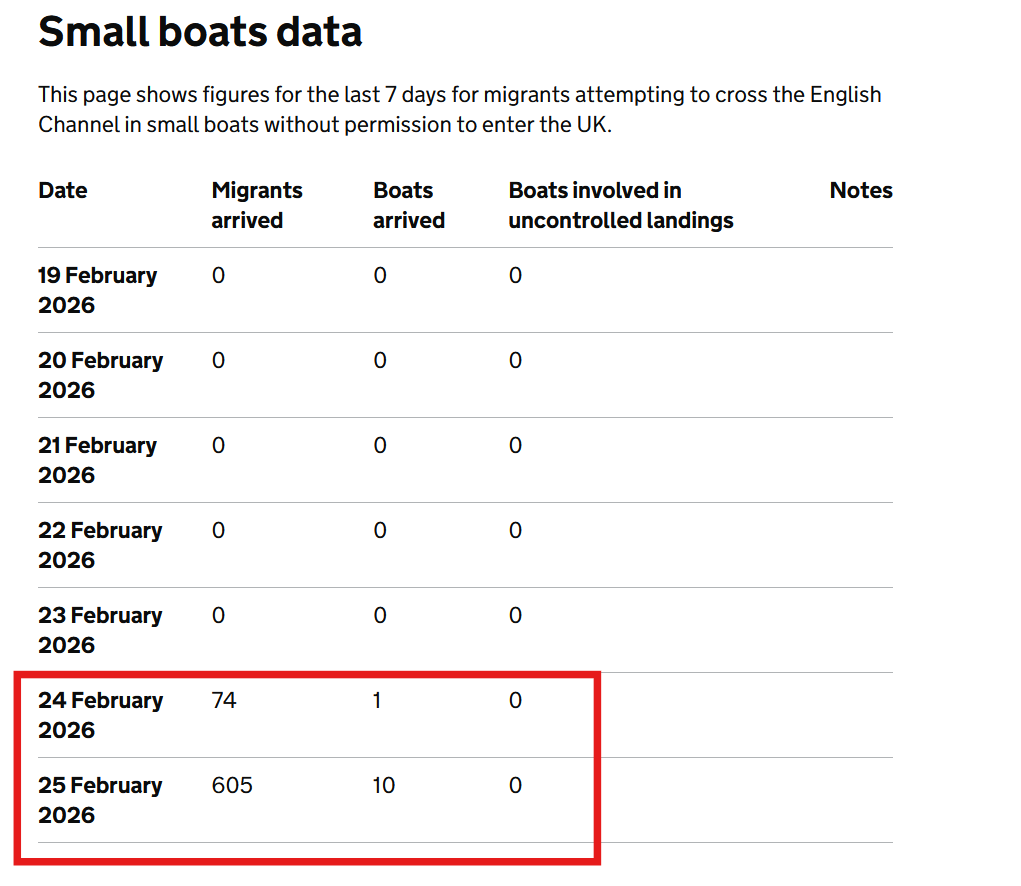
As Samnytt reported, two viewers reported the broadcast, arguing that the expression “illegal migrants” was evaluative and created the impression that people seeking asylum had committed crimes.
In its response to the Review Board, SVT maintained that the wording was intended to reflect the legal classification under British law of the method of entry – not to describe the individuals concerned as criminals. The broadcaster argued that those arriving via irregular routes lack valid entry permits and that this form of entry is described as illegal migration in the UK legislation, including under the Illegal Migration Act 2023. Under the legislation, a migrant is considered to be “in breach of immigration control” if they enter “without leave where leave is required,” enter “via irregular routes such as small boats,” or arrive “without valid entry clearance.”
Despite the legal definition, Sweden’s Review Board rejected that defense. In its decision, it stated that even if British authorities classify the phenomenon as illegal migration, that “does not legitimize the use of the term illegal migrant for individuals who arrive in the country in this way.”
Netflix, Others Face Huge Fines If Shows Offend British Viewers
Streaming giants including Netflix and Amazon Prime Video risk fines of up to £250 000 (€285 000), or five per cent of revenues, if they offend British viewers under new laws, GB News reports. Video‑on‑demand services will be placed under ‘enhanced’ regulation by Ofcom and required to follow a new standards code.
Under the rules, companies must ensure news content is reported accurately and impartially and that audiences are protected from harmful or offensive material.
Viewers will be able to lodge complaints directly with Ofcom, which will have the power to impose financial penalties for breaches, following a public consultation on the code.
The measures apply to streaming services with more than 500,000 UK users, covering major US platforms such as Netflix, Amazon Prime Video and Disney+, as well as British broadcaster‑run services including ITV and Channel 4.
They will not apply to YouTube, which is regulated separately as a video‑sharing platform under online safety legislation.
Only 1 in 36 Foreign Criminals Deported in Sweden
Only 2.8 per cent of verdicts against foreign nationals in Sweden led to deportation between 2020 and 2023, The Nordic Times reports. The government has now presented a legislative proposal expected to increase the number of criminal deportations to 3,000 per year.
The figures underpinning the new legislative proposal come from the Ministry of Justice’s review of sentencing statistics and show that the legislation left behind by the previous government resulted in only one in 36 foreign criminals being sentenced to deportation.

The government is now proposing that criminal offences should, as a general rule, constitute grounds for deportation for any penalty stricter than a fine. The legislative changes are proposed to take effect on September 1, 2026.
“Sweden will now have the Nordic region’s toughest framework for criminal deportations. Those who come to Sweden and commit crimes have forfeited Swedish hospitality and should be deported. This is ultimately about standing up for the victims of crime and for all law-abiding people. Step by step, we are making migration policy more just,” said Migration Minister Johan Forssell (Moderaterna, the Moderate Party).
If the proposal is implemented, the number of deportation sentences is expected to rise from the current number of approximately 500 to the said 3,000 per year, constituting a sixfold increase.
At age 77, I find it unlikely that I will travel to Europe anytime soon. It is appalling that the Europeans do not understand free speech and its virtues. Thank God for our Founding Fathers who gave us the second amendment!
It is offensive when tyrants set totalitarian policies afronting peaceful free speech. When will they be investigated and arrested?